Desserts · Part 2 of 3: Instructions
Lemon Glaze Pound Cake Step-by-step instructions
- Prep
- Cook
- Total
- Serves
- 10
Before you start
Preheat the oven to 350°F (175°C) and position a rack in the center. Grease and flour a 9x5-inch loaf pan, or line it with parchment paper for easy removal.
Measure all ingredients and bring the eggs and milk to room temperature. Soften the butter if not already at room temperature. Zest and juice the lemons, and set everything within reach.
Ingredients at a glance (14)
- 2 cups all-purpose flour
- 1 tsp salt
- 2 tsp baking powder
- 1 tbsp fresh lemon zest
- 1 1/4 cups granulated sugar
- 3/4 cup unsalted butter, softened (170g)
- 3 tbsp vegetable oil
- 4 large eggs, room temperature
- 1/2 cup whole milk
- 3 tbsp fresh lemon juice
- 1 tbsp vanilla bean paste
- 1 cup powdered sugar
- 2 tbsp fresh lemon juice
- 1 tbsp milk
Instructions
Batter and Bake
- Prepare the Dry and Wet MixturesPreheat the oven to 350°F (175°C). Grease and flour a 9x5-inch loaf pan. In a medium bowl, whisk together the flour, salt, and baking powder. In a large bowl, rub the lemon zest into the granulated sugar with your fingertips until the sugar is fragrant and pale yellow. Add the softened butter and vegetable oil to the sugar mixture and beat with an electric mixer on medium speed until light and fluffy, about 3 minutes. Add the eggs one at a time, beating well after each addition.Look for The sugar should look like wet sand and the butter mixture should be pale and airy.Tip Make sure the butter is truly softened for the best creaming.
- Combine Wet and Dry IngredientsWith the mixer on low speed, add the flour mixture to the butter mixture in three additions, alternating with the milk. Begin and end with the flour. Mix just until combined after each addition. Add the lemon juice and vanilla bean paste and mix until just incorporated. Do not overmix.Look for The batter should be smooth and thick, with no dry streaks.Tip Stop mixing as soon as the flour disappears to keep the cake tender.
- Bake the CakePour the batter into the prepared loaf pan and smooth the top. Bake for 55 to 65 minutes, until a toothpick inserted into the center comes out clean or with a few moist crumbs. If the top browns too quickly, tent loosely with foil. Let the cake cool in the pan for 15 minutes, then turn out onto a wire rack to cool completely.Look for The cake should be golden brown and spring back when lightly pressed.Safe temperature 160°F (71°C) internal temperature (egg dishes)Tip Cooling completely prevents the glaze from melting into the cake.
The batter should be smooth, thick, and well combined. The cake should rise evenly and become golden brown. The aroma of lemon and butter will fill the kitchen.
A toothpick inserted into the center should come out clean or with a few moist crumbs. The cake should feel springy to the touch.
Glaze and Set
- Make the GlazeIn a small bowl, whisk together the powdered sugar, lemon juice, and milk until smooth. If the glaze is too thick, add a few more drops of milk; if too thin, add more powdered sugar.Look for The glaze should be thick but pourable, like heavy cream.Tip Whisk thoroughly to remove any lumps.
- Glaze the CakePlace the cooled cake on a serving plate or wire rack. Pour the glaze over the top, letting it cascade down the sides. Use a spatula to spread if needed. Let the glaze set for 10 to 15 minutes before slicing.Look for The glaze should be glossy and set, not sticky.Tip Place a sheet of parchment under the rack for easy cleanup.
The glaze should be smooth and pourable, with a glossy sheen. When poured over the cooled cake, it should cascade down the sides. Let it set until the glaze is no longer sticky. The cake should be completely cool to prevent the glaze from melting.
Slice and Savor
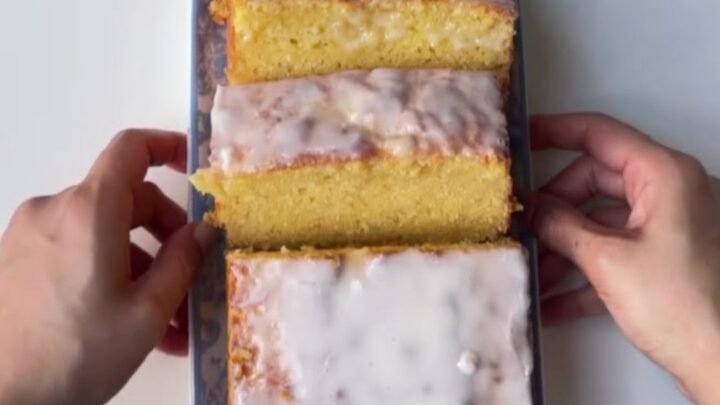
- Slice and ServeUsing a serrated knife, slice the cake into thick pieces. Serve at room temperature. The crumb should be tender and moist, with the glaze adding a sweet citrus finish.Look for The slices should show a velvet lemon-yellow crumb.Tip For clean slices, wipe the knife between cuts.
The slices should reveal a tender, moist crumb with a lemon-yellow hue. The glaze should be set and slightly crisp on the outside. Each bite should be a balance of sweet and tangy, with a buttery richness. Serve at room temperature for the best texture.
Common mistakes
Overmixing the batter can develop the gluten and make the cake dense and tough. Mix just until the flour is incorporated.
Adding eggs too quickly can cause the batter to curdle; beat well after each addition and scrape the bowl. Opening the oven door during baking can cause the cake to sink. Wait until the cake is nearly done before checking.
How to tell it’s done
The cake is done when a toothpick inserted into the center comes out clean or with a few moist crumbs. The top should be golden brown and spring back when lightly pressed.
The internal temperature should reach at least 160°F (71°C) when tested with an instant-read thermometer. If the cake is browning too quickly, cover loosely with foil.
- Egg dishes: 160°F (71°C) in the thickest part
Up next · Part 3 of 3
4 variations · storage & make-ahead · 5 answers · printable card
Tips, FAQ & printable recipe (Part 3)← Back to the ingredients (Part 1)