Breakfast · Part 2 of 3: Instructions
Lemon Blackberry Cheese Danish Made With Puff Pastry Step-by-step instructions
- Prep
- Cook
- Total
- Serves
- 8
Before you start
Gather everything before you turn on the oven, because the danishes move quickly from shaping to baking. Set the oven rack in the middle position and heat the oven to 375°F (190°C). Line a baking sheet with parchment paper. Keep the puff pastry cold in the refrigerator until you are ready to cut it, and use a wooden cutting board with a sharp chef's knife.
Grate the firm white cheese on a box grater and keep the shreds and crumbles in a small bowl. Spoon the ricotta into a bowl, drain it briefly if it looks loose, and have the lemon curd, the lemon halves and the berries within reach. Sift the confectioners' sugar so the glaze stays smooth, and set a wire rack nearby for cooling.
Ingredients at a glance (10)
- 1 sheet pre-rolled puff pastry (store-bought or made ahead)
- 2 oz firm white cheese, such as Parmesan, for grating
- 1 cup whole-milk ricotta cheese
- 1 fresh lemon, halved and sliced into rounds
- 1/3 cup lemon curd
- 1 egg yolk, optional, in place of part of the lemon curd
- 1 cup confectioners' sugar, sifted
- 1 tbsp fresh lemon juice
- 1/2 cup fresh blackberries
- 1/2 cup fresh raspberries
Instructions
Cut and shape the pastry
- Cut the puff pastry pinwheelsUnroll the puff pastry on a wooden cutting board. Using a chef's knife, slice the rolled layers into pinwheel pieces about 1 inch thick, then set them aside on the board.Look for Each pinwheel shows clear spiral layers and sits flat on the board.Tip Keep the pastry cold so the layers stay separate and puff evenly in the oven.
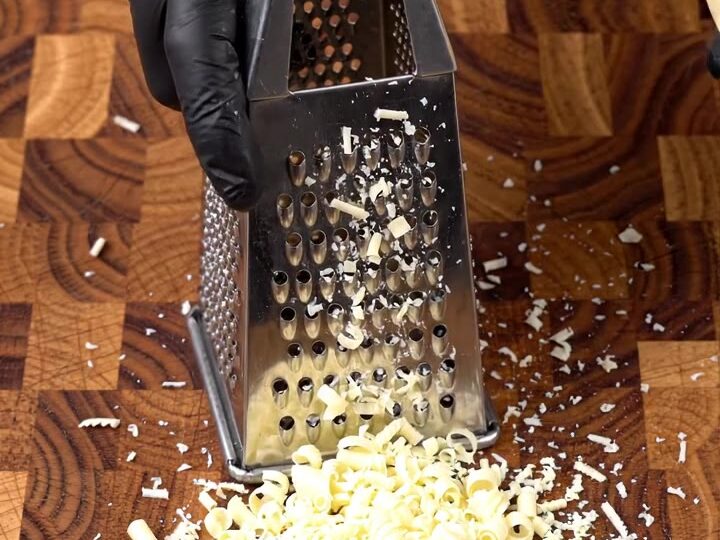
- Grate the firm white cheeseGrate the firm white cheese on the small holes of a box grater. Keep some fine shreds and small crumbles to sprinkle over the finished danishes, and set them aside.Look for You get fine shreds mixed with small crumbles, ready to scatter.Tip Grate the cheese just before using so it stays dry and sprinkles evenly.
- Shape the wells and fill themArrange the pastry pieces on a parchment-lined baking sheet, leaving space between them. Press the center of each piece with your thumb to form a shallow well, then spoon in a portion of ricotta cheese.Look for Each pastry piece has a shallow dip in the center that holds the filling.Tip Press firmly but not through the pastry so the well keeps its shape.
After this phase, the pastry should be cut into even pinwheel pieces with clear spiral layers, arranged on the parchment with space between each one. Each piece should have a shallow, clean well pressed into the center, deep enough to hold a spoonful of ricotta without spreading over the edges. Check that the pieces look flat and cool to the touch, not warm or soft. If the pastry has softened and the layers look smeared, chill the tray for 10 minutes before filling and baking, so the layers puff properly in the oven.
Fill and bake until golden
- Add the lemon and lemon curdSlice the lemon halves into thin rounds and tuck a slice beside each filled well for flavor. Spoon a little lemon curd (or a little egg yolk mixed into lemon curd) into the center of each well.Look for The center of each well shows a bright yellow curd sitting on the ricotta.Tip Use a small spoon and add only enough curd to fill the well without spilling over.
- Bake until golden and setBake the danishes in the preheated oven at 375°F (190°C) for about 18 minutes, until the edges are deep golden and flaky and the filling is set. Let them cool on the baking sheet for a few minutes before moving them.Look for The pastry edges are deep golden and the filling looks firm and creamy.Tip Rotate the sheet halfway through baking if your oven heats unevenly.
- Make the lemon glazeWhisk the sifted confectioners' sugar with the fresh lemon juice in a small bowl until the glaze is smooth and glossy. Add a few drops of water only if it is too thick to drizzle.Look for The glaze is smooth, glossy and runs slowly from the whisk.Tip Add the juice slowly, since a little too much will loosen the glaze quickly.
After this phase, the ricotta should sit neatly in each well with a slice of lemon beside it and a spoonful of bright yellow lemon curd in the center. Once baked, the pastry edges should be deep golden and visibly flaky, and the filling should look firm and creamy rather than wet.
Give each danish a gentle tap to check that the pastry is crisp and the center has set. If the edges are pale or the center still looks loose, return the tray to the oven for 2 to 3 minutes and check again, then let the pastries cool before glazing.
Glaze, sprinkle and top
- Glaze and sprinkle the cheeseOnce the danishes have cooled, drizzle the lemon glaze over each one so it shines on top. Sprinkle the reserved grated cheese over the glaze.Look for The glaze shines on the golden pastry and the cheese clings to it.Tip Wait until the pastries are warm, not hot, so the glaze stays glossy.
- Top with blackberries and raspberriesPress whole blackberries and raspberries onto the top of each danish. Serve the danishes once the glaze has set.Look for Dark berries sit on glossy glaze with the creamy filling just visible.Tip Press the berries gently so they stay whole and do not bleed into the glaze.
After this phase, the danishes should be cool enough to handle without the glaze running off, and the lemon glaze should be glossy, smooth and drizzled evenly over the top. The grated cheese should cling to the wet glaze, and the blackberries and raspberries should sit firmly on the surface without crushing.
Check that each danish looks finished and balanced, with the golden pastry, the bright glaze and the dark berries clearly visible. If the glaze has thickened too much, warm it briefly, or whisk in a few drops of lemon juice before drizzling again.
Common mistakes
The most common mistake is filling the danishes while the pastry is warm or soft. Warm butter in the pastry melts into the filling and the layers collapse, so the danishes come out flat instead of flaky. Keep the pastry cold until you shape it, and work quickly. Another frequent error is overfilling the wells. Too much ricotta or lemon curd spills over the edges, burns on the sheet and keeps the center from setting.
A spoonful of ricotta and a small spoonful of curd is enough. Pressing the wells too deeply can also punch through the pastry, so press gently with your thumb. Finally, do not glaze the danishes while they are still hot, or the glaze will soak in and lose its shine. Wait until they cool slightly, then drizzle and top.
How to tell it’s done
The danishes are done when the pastry edges are deep golden and feel crisp and flaky when lightly touched, and the layers look fully puffed. The filling should look set, firm and creamy rather than wet, with the lemon curd glossy in the center. Bake at 375°F (190°C) for about 18 minutes, checking at 15 minutes. If the bottoms still look pale, leave them on the sheet for a few extra minutes after baking so the heat finishes browning them. The danishes contain no raw protein, so there is no meat or poultry temperature to check.
Up next · Part 3 of 3
4 variations · storage & make-ahead · 5 answers · printable card
Tips, FAQ & printable recipe (Part 3)← Back to the ingredients (Part 1)