Dinner · Part 2 of 3: Instructions
Juicy Skillet Pork Chops with Garlic Potatoes Step-by-step instructions
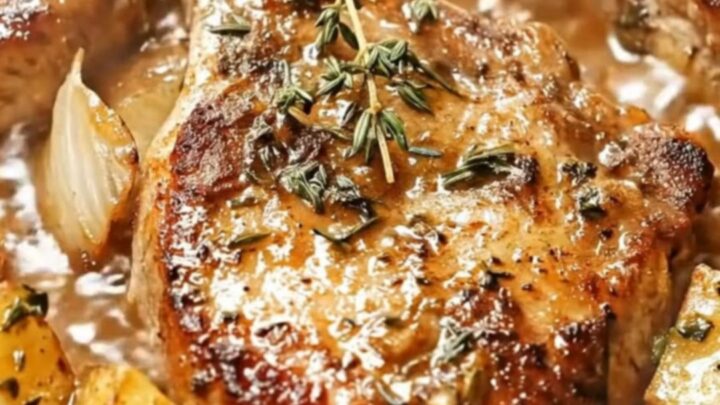
- Prep
- Cook
- Total
- Serves
- 4
Before you start
Before beginning, ensure all ingredients are measured and ready, as the searing process moves quickly once the pan is hot. Take the pork chops out of the refrigerator about 20 minutes before cooking to bring them closer to room temperature, which helps them sear more evenly.
Scrub and dry the potatoes thoroughly before cutting them into uniform wedges to ensure they roast at a consistent rate. Having your garlic minced and herbs chopped in advance will keep the workflow smooth.
Ingredients at a glance (4)
- 4 bone-in pork chops
- 1 1/2 lb potatoes, cut into wedges
- 4 cloves garlic, minced
- 2 tbsp fresh herbs, chopped
Instructions
Searing the Pork
- Sear the PorkPlace the bone-in pork chops into a hot cast-iron skillet. Sear the meat until a deep golden-brown crust forms on the bottom, then flip to sear the other side thoroughly.Look for The pork develops a deep brown, caramelized crust and releases easily from the pan surface.Tip Ensure the pan is hot enough before adding the meat to achieve the best sear.
The pork should have a deep, mahogany-brown crust on both sides. The skillet will be hot and fragrant, with a thin layer of rendered fat forming at the bottom. Ensure the meat is seared properly before moving to the next stage, as this crust provides the foundation for the entire dish's flavor profile.
Roasting the Potatoes
- Roast the PotatoesRemove the pork chops from the skillet and set aside on a plate. Add the potato wedges to the same skillet, tossing them in the rendered pork fat. Cook the potatoes, stirring occasionally, until they start to soften and turn golden brown around the edges.Look for Potatoes should be tender when pierced with a fork and show golden, crispy edges.Tip Do not crowd the skillet to ensure the potatoes roast rather than steam.
The potato wedges should be turning golden brown at the edges and beginning to soften in the center. They will be coated in the pork drippings, making them look glossy and savory.
Check that they are not burning; if the edges brown too quickly, reduce the heat slightly to allow the centers to finish cooking.
Final Assembly
- Finish and CombineReturn the pork chops to the skillet, nestling them among the potatoes. Add the minced garlic and fresh herbs. Continue cooking until the pork reaches an internal temperature of 145°F (63°C). Remove from heat, let the meat rest for at least 3 minutes, then serve immediately with the pan sauce spooned over the top.Look for The sauce is thickened and glossy, the garlic is fragrant, and the pork is cooked through.Safe temperature 145°F (63°C) internal temperature (steaks, chops and roasts)Tip Use a meat thermometer to check the thickest part of the chop to prevent overcooking.
The pork and potatoes are now nestled together, with the garlic and herbs released into the pan sauce. The sauce should be bubbling gently and coating the ingredients. Once the pork reaches 145°F (63°C), the dish is ready to be removed from the heat and allowed to rest before serving.
Common mistakes
A common mistake is overcrowding the skillet, which causes the meat and potatoes to steam rather than sear, resulting in a lack of color and flavor. If the pan is too small, cook the pork and potatoes in batches to maintain the necessary heat.
Another error is failing to let the meat rest after cooking; cutting into the pork too soon causes the flavorful juices to escape, leading to dry meat. Finally, using heat that is too low will prevent the proper crust formation.
How to tell it’s done
The pork chops are perfectly done when they reach an internal temperature of 145°F (63°C) when measured with a meat thermometer in the thickest part, away from the bone. The meat should be juicy and slightly blushing in the center.
After reaching this temperature, it is crucial to remove the skillet from the heat and allow the chops to rest for at least 3 minutes, which allows the juices to redistribute throughout the meat, ensuring a tender result.
- Steaks, chops and roasts: 145°F (63°C) in the thickest part, then a 3-minute rest
Up next · Part 3 of 3
2 variations · storage & make-ahead · 3 answers · printable card
Tips, FAQ & printable recipe (Part 3)← Back to the ingredients (Part 1)