Dinner · Part 2 of 3: Instructions
Juicy Skillet Pork Chops with Garlic Potatoes Step-by-step instructions
- Prep
- Cook
- Total
- Serves
- 4
Before you start
Pat the pork chops dry with paper towels to ensure a good sear. Season them generously with salt and pepper. Have all ingredients measured and ready: sliced garlic, thyme sprigs, quartered potatoes, onion wedges, and broth.
Preheat a large cast-iron skillet over medium-high heat. If the skillet is not large enough to hold all chops without crowding, sear them in two batches.
Ingredients at a glance (10)
- 4 bone-in pork chops, about 1 inch thick
- 1 tsp kosher salt
- 1/2 tsp black pepper
- 2 tbsp olive oil
- 3 tbsp unsalted butter
- 6 cloves garlic, thinly sliced
- 6 sprigs fresh thyme
- 1 1/2 lb baby potatoes, quartered
- 1 yellow onion, cut into wedges
- 1 cup chicken broth
Instructions
Sear and Sauce
- Season and Sear the Pork ChopsPat the pork chops dry with paper towels. Season both sides with kosher salt and black pepper. Heat the olive oil in a large cast-iron skillet over medium-high heat until shimmering. Add the pork chops in a single layer and sear without moving until golden brown and crusty, about 3-4 minutes per side. Transfer the chops to a plate and set aside. Let it rest for 3 minutes before slicing.Look for The chops should have a deep golden crust on both sides.Safe temperature 145°F (63°C) internal temperature (steaks, chops and roasts)Tip Do not overcrowd the skillet; sear in batches if needed.
- Make the Garlic Butter SauceReduce the heat to medium. Add the butter to the skillet and let it melt, scraping up any browned bits from the bottom. Add the sliced garlic and fresh thyme sprigs. Cook, stirring constantly, until the garlic is fragrant but not browned, about 1 minute.Look for The butter will foam and smell nutty and garlicky.Tip Keep the garlic moving so it doesn't burn and turn bitter.
The pork chops are golden brown on both sides, and the garlic butter sauce is bubbling with fresh thyme. The kitchen smells of savory garlic and herbs. The chops are set aside, and the skillet holds a fragrant, foamy butter sauce.
Simmer and Cook
- Sear the Potatoes and OnionsAdd the quartered potatoes and onion wedges to the skillet. Toss them in the garlic butter to coat, then spread them in an even layer. Let them cook undisturbed for 4-5 minutes, until they begin to brown on the edges.Look for The potatoes should have golden spots and the onions will soften slightly.Tip Resist stirring too often so the potatoes get a nice crust.
- Add Broth and SimmerPour the chicken broth into the skillet. Scrape the bottom to release any browned bits. Bring to a simmer, then return the pork chops to the skillet, nestling them among the potatoes. Cover and cook over medium-low heat for 8-10 minutes, until the potatoes are tender and the pork chops reach 145°F (63°C) in the thickest part. Let it rest for 3 minutes before slicing.Look for The sauce will thicken slightly and the potatoes will be fork-tender.Safe temperature 145°F (63°C) internal temperature (steaks, chops and roasts)Tip Use an instant-read thermometer to check the pork chops for doneness.
- Rest the Pork ChopsRemove the skillet from the heat. Transfer the pork chops to a clean plate and let them rest for at least 3 minutes. This allows the juices to redistribute throughout the meat.Look for The chops will be juicy and the juices will settle.Safe temperature 145°F (63°C) internal temperature (steaks, chops and roasts)Tip Cover them loosely with foil while resting to keep warm.
The potatoes and onions are beginning to brown at the edges, and the broth is simmering gently.
The pork chops are nestled back in the skillet, and the sauce is reducing. The potatoes are nearly tender, and the chops are approaching the target temperature.
Finish and Serve
- Finish the SauceWhile the pork rests, return the skillet to medium heat. Simmer the sauce with the potatoes and onions for 2-3 minutes, until it reduces slightly and becomes glossy. Spoon the sauce over the potatoes and onions to coat them well.Look for The sauce will be thick enough to coat the back of a spoon.Tip Taste and adjust seasoning with salt and pepper if needed.
- Baste and ServeReturn the pork chops to the skillet. Spoon the garlic butter sauce over the chops and potatoes. Garnish with fresh thyme leaves from the sprigs used earlier, if desired. Serve hot, spooning extra sauce over each portion. Let it rest for 3 minutes before slicing.Look for The chops are glossy with sauce and the potatoes are coated.Safe temperature 145°F (63°C) internal temperature (steaks, chops and roasts)Tip Serve directly from the skillet for a rustic presentation.
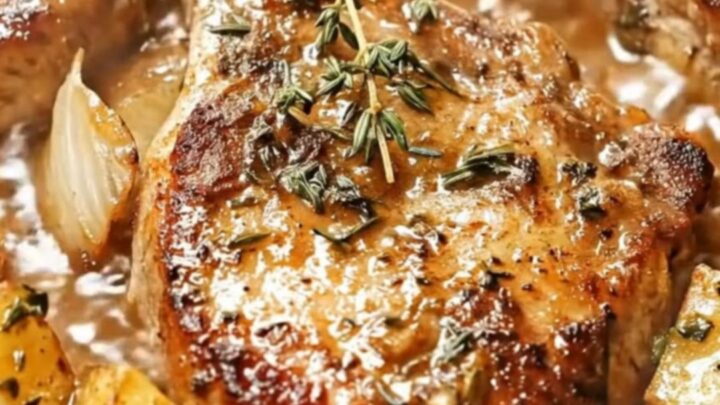
The sauce has thickened and coats the potatoes and chops. The pork chops are glossy with garlic butter, and the thyme leaves add a fresh finish. The dish is ready to serve, with steam rising and a rich aroma.
Common mistakes
Avoid overcrowding the skillet when searing the pork chops; this lowers the temperature and prevents a good crust. Do not move the chops too early—let them sear undisturbed for a few minutes.
Be careful not to overcook the garlic; it should be fragrant but not browned, as burnt garlic turns bitter. Also, resist stirring the potatoes too often so they can develop a golden crust.
How to tell it’s done
The pork chops are done when an instant-read thermometer inserted into the thickest part reads 145°F (63°C).
Let them rest for at least 3 minutes before serving; the temperature will rise slightly during resting. The potatoes should be fork-tender, and the sauce should be slightly thickened and glossy.
- Steaks, chops and roasts: 145°F (63°C) in the thickest part, then a 3-minute rest
Up next · Part 3 of 3
4 variations · storage & make-ahead · 5 answers · printable card
Tips, FAQ & printable recipe (Part 3)← Back to the ingredients (Part 1)