Dinner · Part 2 of 3: Instructions
Juicy Pan-Seared Filet Mignon with Roasted Vegetables Step-by-step instructions
- Prep
- Cook
- Total
- Serves
- 2
Before you start
Before starting, bring the steaks out of the refrigerator and let them sit at room temperature for about 20 to 30 minutes. This helps the meat cook more evenly.
Prepare the vegetables by peeling the carrots and snapping the woody ends off the asparagus. Ensure the mashed cauliflower is ready to be reheated so that everything can be assembled promptly once the steak is finished cooking.
Ingredients at a glance (4)
- 2 pieces filet mignon steaks
- 4 whole carrots
- 1 bunch asparagus
- 2 cups mashed cauliflower, prepared ahead
Instructions
Preparing the vegetables
- Roast the vegetablesPreheat the oven to 400°F (200°C). Trim the carrots and asparagus. Place them on a baking sheet, drizzle with oil, and season with salt. Roast until tender, approximately 15 to 20 minutes.Look for Vegetables should be golden brown and tender when pierced with a fork.Tip Ensure vegetables are in a single layer for even roasting.
The vegetables should be prepped, seasoned, and placed in the oven. They will begin to soften and develop a natural sweetness as they roast.
Check that they are spread in a single layer and not overlapping to ensure they roast rather than steam. By the end of this phase, the kitchen should smell aromatic and the vegetables should be nearing their desired level of tenderness.
Searing the steak
- Sear the steakHeat a heavy skillet over high heat. Season the steaks generously. Once the pan is smoking hot, carefully place the steaks inside. Sear undisturbed for 3 to 4 minutes per side until the internal temperature reaches at least 145°F (63°C), then remove from the heat and let rest for at least 3 minutes.Look for A rich, mahogany-colored crust should form on the surface of the meat.Safe temperature 145°F (63°C) internal temperature (steaks, chops and roasts)Tip Use a heavy-bottomed skillet for the best heat retention and crust development.
The skillet must be properly heated before the meat is added. Listen for a loud, immediate sizzle the moment the steak touches the pan. Do not move the meat for the first few minutes to allow the crust to form properly. Watch for the edges to turn opaque and the color to shift, signaling that the sear is developing correctly and the heat is penetrating the exterior.
Resting and final assembly
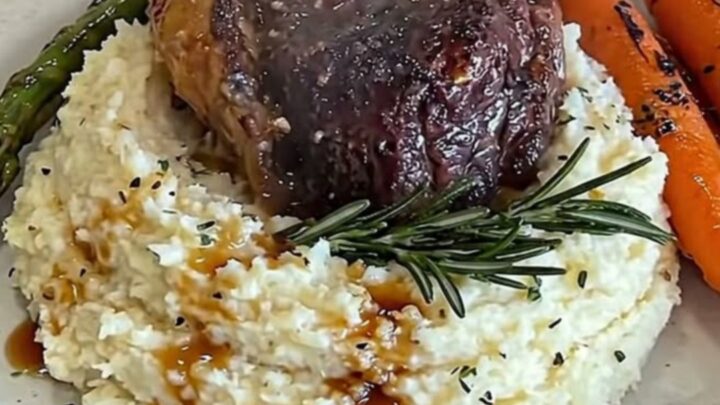
- Rest and serveTransfer the steaks to a cutting board and allow them to rest fully. Arrange the steaks over the warm mashed cauliflower alongside the roasted carrots and asparagus, then drizzle with pan drippings before serving.Look for The juices should redistribute within the meat, ensuring a tender bite.Tip Do not skip the resting period, as it is essential for maximum juiciness.
The steak must be removed from the heat source and placed on a clean board or plate. The meat will look dark and crusty on the outside. During this resting period, the steak will relax, and the internal temperature will stabilize.
Check that the mashed cauliflower is warmed through and ready to serve as the foundation for the steak, ensuring the entire meal is served at the correct temperature.
Common mistakes
A common mistake is overcrowding the pan, which lowers the temperature and causes the meat to steam rather than sear. Always leave enough space between the steaks. Another error is using a pan that is not hot enough; the pan must be smoking hot before the steak is added. Finally, never cut into the steak immediately, as this causes the juices to run out.
How to tell it’s done
The filet mignon is done when it reaches a safe internal temperature of 145°F (63°C) followed by a 3-minute rest. Use a meat thermometer inserted into the thickest part of the steak to verify.
The exterior should be deeply browned and crispy, while the center remains tender and juicy. Remember that the internal temperature will continue to rise slightly during the required resting phase.
- Steaks, chops and roasts: 145°F (63°C) in the thickest part, then a 3-minute rest
Up next · Part 3 of 3
2 variations · storage & make-ahead · 3 answers · printable card
Tips, FAQ & printable recipe (Part 3)← Back to the ingredients (Part 1)