Dinner · Part 2 of 3: Instructions
Juicy Marinated Flank Steak, Sliced Thin Step-by-step instructions
- Prep
- Cook
- Total
- Serves
- 4
Before you start
Before you start, take the steak out of the refrigerator and let it sit at room temperature for about 30 minutes. This helps it cook more evenly. Meanwhile, prepare the marinade and place the steak in a bag or dish with it.
Make sure you have a hot skillet ready and a clean cutting board for resting and slicing. Have your serving platter warmed in the oven at a low temperature if you like.
Ingredients at a glance (7)
- 1 1/2 lb flank steak
- 1/4 cup low-sodium soy sauce
- 2 tbsp olive oil
- 3 cloves garlic, minced
- 1 tbsp brown sugar
- 1 tsp black pepper
- Kosher salt, to taste
Instructions
Marinating and Prepping
- Marinate the SteakIn a small bowl, whisk together the soy sauce, olive oil, minced garlic, brown sugar, and black pepper. Place the flank steak in a large resealable bag or shallow dish and pour the marinade over it, turning to coat evenly. Seal the bag or cover the dish and refrigerate for at least 30 minutes, or up to 4 hours for more flavor.Look for The steak is fully coated in the marinade and the bag is sealed without excess air.Tip For a deeper flavor, marinate longer, but not overnight as the acid can break down the meat's texture.
- Bring to Room TemperatureRemove the steak from the refrigerator about 30 minutes before cooking. Pat it dry with paper towels to remove excess marinade, then season both sides lightly with kosher salt. This helps achieve a good sear.Look for The steak feels cool but not cold, and the surface is dry to the touch.Tip Patting dry is key for a nice crust; too much moisture steams the meat.
At this stage, the steak is coated in the marinade and resting in the fridge. The marinade should be well combined and the steak fully coated. When you remove it from the fridge, the steak should feel cool and the surface should be slightly tacky from the marinade. Patting it dry before searing will help achieve a nice crust.
Searing and Resting
- Heat the SkilletPlace a cast-iron skillet or heavy-bottomed pan over high heat and let it get very hot, about 2-3 minutes. Add a thin layer of olive oil (about 1 tablespoon) and swirl to coat the bottom.Look for The oil shimmers and just begins to smoke, indicating the pan is ready.Tip Use an oil with a high smoke point like canola or grapeseed if you have it.
- Sear the SteakLay the steak in the hot skillet, laying it away from you to avoid splatter. Cook without moving for 3-4 minutes, until a deep brown crust forms. Flip and cook for another 3-4 minutes for medium-rare, or until the internal temperature reaches 130-135°F (54-57°C) for medium-rare. Let it rest for 3 minutes before slicing.Look for The steak releases easily from the pan and has a deep brown crust on both sides.Safe temperature 145°F (63°C) internal temperature (steaks, chops and roasts)Tip Don't overcrowd the pan; cook in batches if needed to maintain high heat.
- Rest the SteakTransfer the steak to a cutting board and let it rest for at least 5 minutes. This allows the juices to redistribute throughout the meat, ensuring a moist and tender result.Look for The steak rests on the board, and juices begin to pool around it.Tip Resting is essential; slicing too soon loses the juices.
The skillet is smoking hot, and the steak sizzles as it hits the pan. You'll hear a vigorous sear and see a deep brown crust forming. After flipping, the steak should feel firm to the touch but still give slightly.
During resting, the juices will pool around the steak—resist the urge to cut into it. The kitchen will smell richly of toasted garlic and caramelized sugars.
Slicing and Serving
- Slice Against the GrainUsing a sharp chef's knife, slice the steak thinly against the grain, at a slight angle. This shortens the muscle fibers, making each bite more tender.Look for The slices are thin and show a pink, juicy interior with a browned crust.Tip Find the direction of the grain by looking at the lines on the surface; slice perpendicular to them.
- Serve ImmediatelyTransfer the sliced steak to a warm platter or individual plates. Spoon any accumulated juices from the cutting board over the top. Serve right away while still warm.Look for The steak is glistening with juices and ready to eat.Tip For extra flavor, sprinkle with flaky sea salt just before serving.
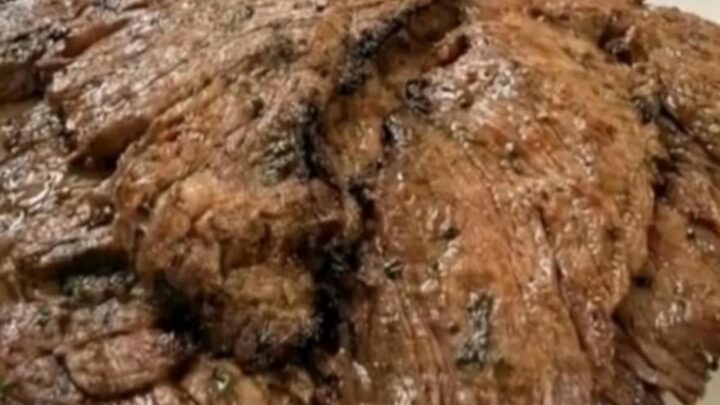
The steak rests on the cutting board, and when you slice, the interior is a rosy pink with a juicy sheen. The slices are thin and even, with a charred edge. The aroma is savory and slightly sweet. Serve immediately, spooning the accumulated juices over the top for extra moisture and flavor.
Common mistakes
One common mistake is moving the steak too often in the pan. Let it sit undisturbed to develop a good crust. Another is skipping the resting period, which leads to dry meat.
Also, be sure to slice against the grain—if you slice with the grain, the meat will be chewy. Finally, don't overcrowd the pan; if cooking more than one steak, do it in batches.
How to tell it’s done
The steak is done when it reaches your desired internal temperature. For medium-rare, aim for 130-135°F (54-57°C) when measured with an instant-read thermometer inserted into the thickest part.
Remember that the temperature will rise a few degrees during resting. For medium, cook to 140°F (60°C). The safe minimum temperature for beef is 145°F (63°C) with a 3-minute rest, but for best flavor and texture, medium-rare is recommended.
- Steaks, chops and roasts: 145°F (63°C) in the thickest part, then a 3-minute rest
Up next · Part 3 of 3
4 variations · storage & make-ahead · 5 answers · printable card
Tips, FAQ & printable recipe (Part 3)← Back to the ingredients (Part 1)