Dinner · Part 2 of 3: Instructions
Juicy Garlic Butter Pork Chops in a Cast-Iron Skillet Step-by-step instructions
- Prep
- Cook
- Total
- Serves
- 4
Before you start
Before beginning, ensure all ingredients are measured and ready to use. Take the pork chops out of the refrigerator approximately 20 minutes before you intend to cook them to take the chill off, which helps them cook more evenly.
Prepare your garlic and herbs by mincing and chopping them finely. Have your cast-iron skillet, tongs, and a meat thermometer within easy reach, as the cooking process moves quickly once the skillet is hot and the pork hits the surface.
Ingredients at a glance (4)
- 4 pieces pork chops
- 3 tbsp butter
- 3 cloves garlic, minced
- 1 tbsp fresh herbs, chopped
Instructions
Preparation
- Prepare the PorkPat the pork chops completely dry with paper towels to ensure a crisp, golden sear on both sides before cooking.Look for The surface of the meat should feel dry to the touch.Tip Removing surface moisture is essential for achieving a golden-brown crust rather than steaming the meat.
The pork chops should be thoroughly patted dry with paper towels. Ensure the cast-iron skillet is clean and heating properly on the stove. This stage is all about surface preparation, ensuring that the meat is ready to react immediately when it touches the hot surface of the skillet, which is crucial for achieving that signature golden sear.
Achieving the Sear
- Sear the ChopsHeat a heavy cast-iron skillet over medium-high heat until hot. Place the pork chops into the dry skillet and sear undisturbed for 4 to 5 minutes per side until a deep golden crust forms.Look for The pork chops should release easily from the skillet surface when the crust is fully developed.Tip Avoid moving the chops too frequently to allow the heat to create a flavorful, caramelized crust.
The pork chops should have a deep, mahogany-brown crust on both sides. The skillet should remain hot, and you should hear a consistent, steady sizzle throughout the searing process. If the chops are browning too quickly before the center is cooked, lower the heat slightly to ensure the meat cooks through without burning the exterior surface.
Basting to Perfection
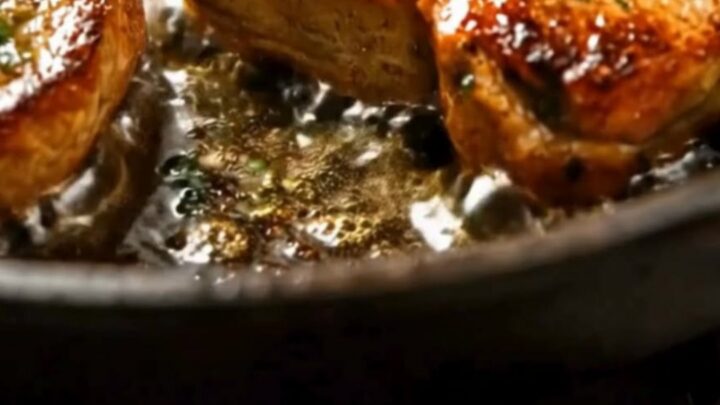
- Baste and FinishReduce the heat to medium. Add the butter, minced garlic, and fresh herbs to the skillet. Once melted, spoon the foaming garlic herb butter over the chops repeatedly. Continue cooking until the internal temperature reaches 145°F (63°C). Remove from heat and let the meat rest for at least 3 minutes before serving.Look for The butter should be bubbling and fragrant, and the pork should reach the required safe internal temperature.Safe temperature 145°F (63°C) internal temperature (steaks, chops and roasts)Tip Basting with the garlic herb butter ensures rich flavors coat the meat while keeping it moist during the final stage.
The garlic butter should be foaming, fragrant, and golden. The pork should be glistening with the infused butter. Check the internal temperature with your thermometer to ensure it has reached 145°F (63°C).
Once reached, remove the skillet from the heat immediately to prevent overcooking and prepare the meat for its necessary resting period before serving.
Common mistakes
A common mistake is overcrowding the skillet, which causes the temperature to drop and leads to steaming rather than searing. Cook in batches if necessary to maintain sufficient heat.
Another frequent error is using heat that is too high, which can burn the garlic and herbs before the pork is cooked through. Always adjust the flame to medium once you add the butter to ensure the garlic infuses the butter slowly and effectively without turning bitter.
How to tell it’s done
The pork is done when a meat thermometer inserted into the thickest part of the chop, away from the bone, registers at least 145°F (63°C). At this stage, the meat should be slightly firm to the touch but still springy.
It is essential to let the meat rest for at least 3 minutes after removing it from the heat. This resting period allows the juices to redistribute throughout the fibers, resulting in a more tender and moist eating experience for every serving.
- Steaks, chops and roasts: 145°F (63°C) in the thickest part, then a 3-minute rest
Up next · Part 3 of 3
2 variations · storage & make-ahead · 3 answers · printable card
Tips, FAQ & printable recipe (Part 3)← Back to the ingredients (Part 1)