Dinner · Part 3 of 3: Tips & recipe card
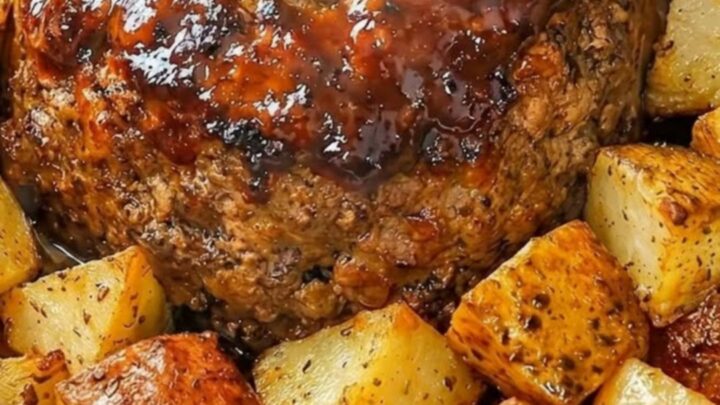
Juicy BBQ Glazed Meatloaf with Roasted Potatoes Tips, FAQ & printable recipe
- Prep
- Cook
- Total
- Serves
- 6
Tips for success
To achieve an even crispier crust on the potatoes, toss them lightly in a small amount of oil and salt before placing them on the baking sheet.
This ensures they do not stick and helps them achieve a uniform golden color that complements the soft, savory meatloaf perfectly.
If you find the BBQ sauce is darkening too quickly, tent the meatloaf loosely with a piece of aluminum foil during the final 10 minutes of cooking.
This protects the glaze from burning while allowing the internal temperature of the meat to continue rising safely without compromising the flavor or texture of the outer layer.
Variations
- Spicy BBQ Meatloaf: Add two tablespoons of chopped jalapeños or a teaspoon of crushed red pepper flakes into the meat mixture for a spicy kick. Serve with a spicy chili-infused BBQ sauce to enhance the heat levels.
- Herbed Meatloaf: Incorporate two tablespoons of finely chopped fresh parsley and one tablespoon of fresh thyme into the meat mixture. The fresh herbs add a bright, aromatic dimension that balances the sweetness of the BBQ glaze.
Storage and make-ahead
- Fridge
- Keep refrigerated in an airtight container for up to 3 days.
- Freezer
- Wrap individual slices tightly in plastic wrap and store in a freezer-safe bag for up to 2 months.
- Reheat
- Reheat in the oven at 350°F (175°C) until warmed through, or use a microwave on medium power for shorter intervals.
Store any leftovers in an airtight container to maintain moisture. The meatloaf and potatoes can be kept together, but separating them can help preserve the texture of the potatoes.
Ensure the food has cooled to room temperature, but do not leave it out for more than two hours after cooking to maintain food safety standards.
You can assemble the meatloaf up to 24 hours in advance and keep it refrigerated in the loaf pan, covered with plastic wrap.
When ready to cook, let it sit at room temperature for 30 minutes, then apply the glaze and roast as directed. This makes the recipe ideal for busy schedules or planned dinner parties.
Serving ideas
Serve the meatloaf in thick slices alongside the roasted potatoes. A simple green salad or steamed vegetables like broccoli or green beans works well to provide a fresh, crisp contrast to the rich, savory flavors of the BBQ glaze and the hearty meat base.
If desired, you can serve additional BBQ sauce on the side for those who prefer an extra kick of flavor. The meatloaf is best served warm, allowing the glaze to remain slightly tacky, which creates an appealing presentation when plated for guests or family members.
Frequently asked questions
Can this meatloaf be made without the potatoes?
Why is the meatloaf falling apart when sliced?
Can a different type of meat mixture be used?
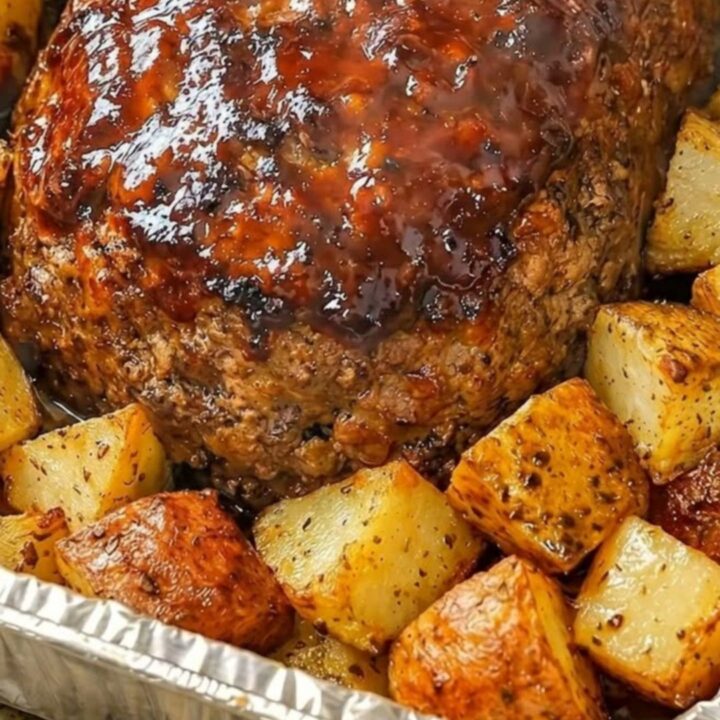
Juicy BBQ Glazed Meatloaf with Roasted Potatoes
Ingredients
- 2 lb meatloaf mixture
- 1/2 cup BBQ sauce
- 1.5 lb potatoes, cut into wedges
Instructions
- Place the meatloaf mixture into a foil loaf pan. Press the mixture down gently to ensure it holds its shape during the roasting process, but avoid over-packing it to keep the final texture tender and juicy.
- Arrange the potato wedges around the foil pan on a baking sheet. Roast in a preheated oven at 375°F (190°C) for 60 minutes. Brush the BBQ sauce over the meatloaf during the final minutes of cooking to create a glossy, caramelized finish.
- Remove the meatloaf from the oven and let it rest for 10 minutes before slicing. This allows the juices to redistribute throughout the meat, ensuring every slice remains moist and flavorful. Serve warm with the roasted potato wedges.
Estimated nutrition per serving
- Calories
- 450
- Protein
- 28.5 g
- Carbohydrates
- 22 g
- Fat
- 26 g
- Fiber
- 2 g
- Sugar
- 8 g
- Sodium
- 650 mg
Next recipe

Cheesy Ground Beef and Potato Casserole for a Cozy Dinner
See the recipe → →This recipe is based on a short cooking video and is published under the pen name Clara Weller. It was checked before publication, but errors can slip through. Nutrition, when shown, is an estimate. Read more in our editorial policy and on our food safety page.
More recipes to try

Cheesy Chili Cheese Dog Casserole for a Crowd
Total time: 45 min
Honey Garlic Apple Pork Roast for an Easy Dinner
Total time: 1 h 20 min
Crispy Copycat Mexican Pizza with Seasoned Beef
Total time: 30 min
Slow Cooker Orange Herb Pork Chops for a Tender Dinner
Total time: 4 h 15 min
Savory Dirty Cabbage with Smoked Turkey Sausage
Total time: 40 min