Dinner · Part 2 of 3: Instructions
The Juiciest Marinated Steak Ever with Perfect Cast-Iron Sear Step-by-step instructions
- Prep
- Cook
- Total
- Serves
- 6
Before you start
Before beginning the cooking process, ensure the flank steak and the chosen marinade are ready. Place the flank steak in a large, resealable plastic bag or a shallow glass dish, pour the marinade over it, and seal or cover tightly.
Always marinate the steak in the refrigerator, never at room temperature, to ensure food safety. Remove the steak from the refrigerator about thirty minutes before cooking to take the chill off, allowing for more even cooking throughout the meat.
Ingredients at a glance (2)
- 2 lb flank steak
- 1 cup steak marinade
Instructions
Preparation and Marination
- Marinate the SteakPlace the flank steak in a shallow dish or a large resealable plastic bag. Pour the steak marinade over the meat, ensuring it is completely coated. Cover or seal the bag tightly, then place it in the refrigerator to marinate for at least 4 hours or overnight to allow the flavors to penetrate.Look for The steak should be completely coated or submerged in the marinade.Tip Flip the bag occasionally to ensure even marination throughout the meat.
At the end of the marinating phase, the flank steak should look slightly darker in color, having absorbed the rich tones of the marinade. The meat will feel noticeably softer to the touch as the acids have begun their tenderizing work. A rich, savory aroma from the marinade should be highly apparent, indicating the meat is fully prepped.
High-Heat Searing
- Prep and Preheat the SkilletRemove the marinated flank steak from the refrigerator 30 minutes before cooking to take the chill off, which helps it cook more evenly. Discard the excess marinade. Heat a heavy cast-iron skillet or grill pan over high heat until it is smoking hot.Look for The pan is ready when a drop of water evaporates instantly upon contact.Tip Ensure the kitchen is well-ventilated, as high-heat searing will produce smoke.
- Sear the SteakCarefully place the flank steak in the hot skillet. Sear without moving for 4 to 5 minutes, allowing a deep, dark crust to form. Flip the steak using tongs and sear the other side for an additional 4 to 5 minutes.Look for The steak should release easily from the pan when a solid crust has formed.Tip Do not crowd the pan; cook only one steak at a time if making multiple.
During the searing phase, the skillet should be incredibly hot, producing a loud, satisfying sizzle the moment the steak touches the metal. Wisps of smoke will rise from the pan as the surface caramelizes. By the end of this phase, both sides of the steak must have a deep, dark brown, almost charred crust, and the meat will feel firm but springy when pressed.
Resting and Slicing
- Verify Doneness and RestInsert an instant-read thermometer into the thickest part of the steak to verify it has reached an internal temperature of 145°F (63°C). Immediately transfer the steak to a clean cutting board and let the meat rest at least 3 minutes before slicing to allow the juices to redistribute.Look for The thermometer must read 145°F (63°C) and the meat should feel firm yet springy.Safe temperature 145°F (63°C) internal temperature (steaks, chops and roasts)Tip Resting is crucial; cutting too early will dry out the steak.
- Slice and ServeUsing a sharp carving knife, slice the rested flank steak thinly across the grain at a forty-five-degree angle. Arrange the slices on a warm serving platter, spooning any juices from the cutting board over the top.Look for Slices should look tender and show a pink, juicy center.Tip Slicing across the grain is the key to a tender bite.
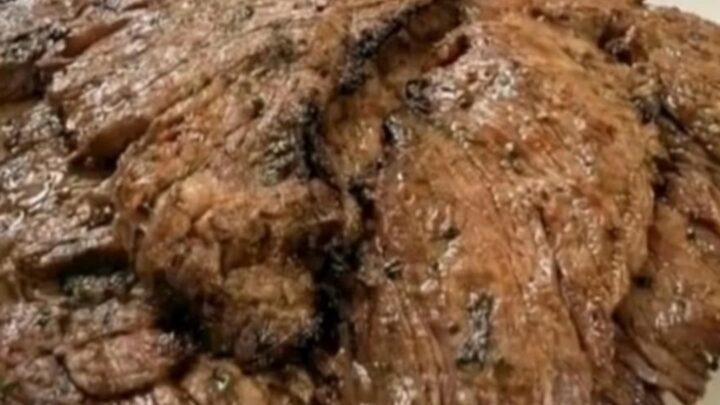
After resting, the steak will appear glossy as the juices redistribute throughout the meat. When sliced thinly across the grain, the interior should display a beautiful, even pinkness.
Juices should pool slightly on the cutting board but remain mostly within the tender slices of meat, indicating that the resting period was fully successful and the steak is ready to serve.
Common mistakes
One of the most common mistakes is slicing the flank steak along the grain instead of across it. Flank steak has long, fibrous muscle fibers; slicing parallel to these fibers results in a tough, chewy texture.
Always slice at a sharp angle across the grain to shorten the fibers, ensuring a tender bite. Another frequent error is skipping the resting period. Cutting into the steak immediately after searing causes all the precious juices to run out onto the board, leaving the meat dry.
How to tell it’s done
To guarantee the steak is perfectly cooked and safe to eat, always use an instant-read meat thermometer inserted into the thickest part of the cut. For a safe and delicious medium-rare finish, cook the whole cut meat until it reaches an internal temperature of 145°F (63°C).
Once this temperature is reached, immediately transfer the steak to a clean cutting board and let the meat rest for at least 3 minutes before slicing. This resting time is critical for food safety and juice retention.
- Steaks, chops and roasts: 145°F (63°C) in the thickest part, then a 3-minute rest
Up next · Part 3 of 3
2 variations · storage & make-ahead · 3 answers · printable card
Tips, FAQ & printable recipe (Part 3)← Back to the ingredients (Part 1)