Drinks · Part 3 of 3: Tips & recipe card
Honeydew Kiwi Mint Cream Smoothie Cooler with Whipped Cream Topping Tips, FAQ & printable recipe
- Prep
- Cook
- Total
- Serves
- 2
Tips for success
Chill the honeydew, kiwis and glasses ahead of time. Cold ingredients make a more refreshing drink and help the whipped cream hold its shape longer. Keep the blender jar in the refrigerator for a few minutes before you blend if the kitchen is warm, since this keeps the color bright and prevents the drink from warming during the blend.
Taste the smoothie before you pour it. Ripe honeydew and kiwi usually provide enough sweetness, but a melon that is less ripe may need a little extra sugar. Add it a teaspoon at a time and blend briefly again. Keep the mint light, because too much of it can make the drink taste sharp rather than fresh and cool.
Variations
- Lime Zest Lift: Add a small strip of lime zest to the blender with the mint for a brighter, sharper finish. The zest adds a fresh citrus aroma that lifts the sweetness of the honeydew and kiwi without changing the pale green color of the drink in any noticeable way.
- Extra Minty Version: Increase the mint to a generous handful and blend it a little longer for a stronger, cooler flavor. This version suits warm days and goes well with a sprinkle of fresh mint leaves on top of the whipped cream.
- Cantaloupe Swap: Replace the honeydew with cantaloupe cubes for a warmer, more golden drink. The smoothie will take on a soft orange tone while keeping the same creamy texture and fresh mint and kiwi flavors in every sip.
- Frozen Chunk Chill: Add a handful of frozen honeydew cubes to the blender in place of some fresh fruit to make the drink colder and thicker. Blend until smooth, then pour and top as usual for a more icy, slushy cooler.
Storage and make-ahead
- Fridge
- Store leftover smoothie covered in the refrigerator and use it within a few hours, then stir or briefly blend before serving.
The smoothie is best served as soon as it is blended, while the color is bright and the texture is smooth. If you need to keep it, pour it into a clean, covered container and store it in the refrigerator. Leftover smoothie should be used within a few hours, because the color dulls and the fruit separates over time.
Give it a quick stir or a brief blend before serving to restore the smooth texture. Do not leave the drink out at room temperature for long periods, and never leave it in the sun. Keep the whipped cream separate in its can and pipe it on fresh just before serving, since cream that sits on the smoothie will soften and sink.
You can prepare the components ahead to speed up assembly. Cut the honeydew into cubes and slice the kiwis a few hours before serving, then store them in separate covered containers in the refrigerator. Keep the mint sprigs wrapped in a damp paper towel in a sealed bag so they stay fresh and bright.
Grate the cheese just before blending, because pre-grated pieces can dry out and clump. Blend the smoothie shortly before the guests arrive, and keep the glasses in the refrigerator until you pipe the cream on top. This way the drink tastes fresh, the cream stays firm and the whole service takes only a few minutes.
Serving ideas
Serve the cooler immediately in tall glasses, with a few kiwi slices along the rim and a sprig of mint on top. The pale green color and the white cream cap look bright and inviting on a warm afternoon, and the drink pairs well with light snacks, fresh fruit or a simple breakfast.
Offer a wide straw so each guest can reach both the cream and the smoothie with the same sip, and keep an extra can of whipped cream nearby for a second swirl if the first one settles.
For a shared table, pour the smoothie into a pitcher or a glass jug, set out the glasses and the whipped cream can, and let guests add their own topping. This works well at a brunch or a garden gathering, because the drinks can be finished in front of each guest and stay cold and fresh.
Garnish each glass with a kiwi slice and a mint sprig just before serving, and serve the cooler while the cream is still firm and the smoothie is still cold.
Frequently asked questions
Can this smoothie be made ahead of time?
What kind of cheese should be used in the smoothie?
How can you tell when the honeydew is ripe enough?
Can you use homemade whipped cream instead of canned?
Why does the smoothie sometimes look thin or foamy?
Honeydew Kiwi Mint Cream Smoothie Cooler with Whipped Cream Topping
Ingredients
- 1 honeydew melon, halved, seeded and cut into small cubes
- 3 kiwis, peeled and sliced into rounds, a few slices reserved for garnish
- 1/4 cup fresh mint leaves
- 1 oz pale white cheese block, finely grated
- 1/2 cup canned whipped cream
Instructions
- Wear food-safe gloves if you like. Halve the honeydew with a long chef's knife, scoop out the seeds, then cut the flesh into small cubes on a wooden cutting board. Set the cubes aside.
- Peel the kiwis and slice them into rounds. Set aside a few slices for garnish and keep the rest for the blender. Lay the fresh mint sprigs beside the fruit so they are ready to add.
- Grate the pale white cheese on the fine side of a four-sided stainless steel box grater. Let the fine shreds and curls pile up on the board, then gather them for the blender.
- Add the honeydew cubes, kiwi, mint and grated cheese to a glass blender jar. Blend until the mixture is smooth, bright pale green and frothy on the surface, with no visible chunks.
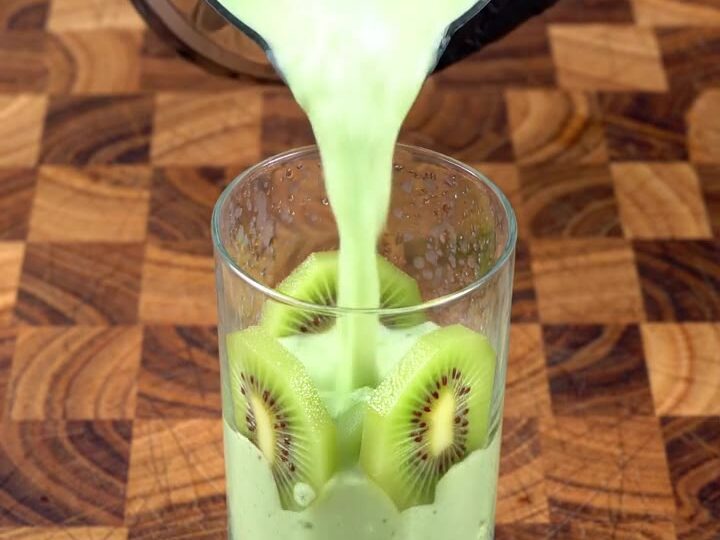
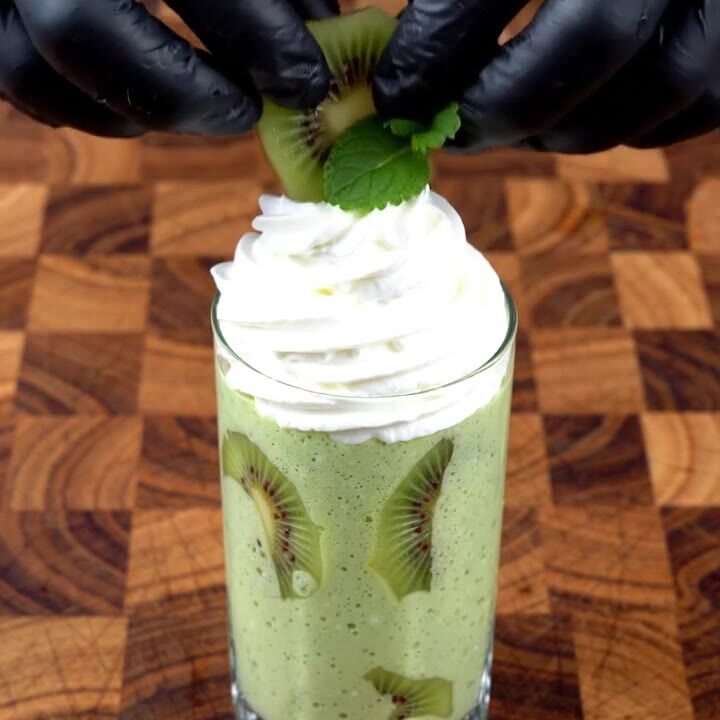
- Pour the green smoothie into a tall glass. Add a few kiwi slices against the side of the glass. Pipe a generous swirl of whipped cream from the can on top until it mounds over the rim.
- Finish the drink with a sprig of fresh mint and the reserved kiwi slices. Serve right away while the smoothie is cold and the cream is still tall and soft.
Estimated nutrition per serving
- Calories
- 190
- Protein
- 4 g
- Carbohydrates
- 38 g
- Fat
- 4 g
- Fiber
- 4 g
- Sugar
- 32 g
- Sodium
- 90 mg
Next recipe

Black Forest Chocolate Frappe with Cherries and Almonds
See the recipe → →This recipe is based on a short cooking video and is published under the pen name Clara Weller. It was checked before publication, but errors can slip through. Nutrition, when shown, is an estimate. Read more in our editorial policy and on our food safety page.
More recipes to try
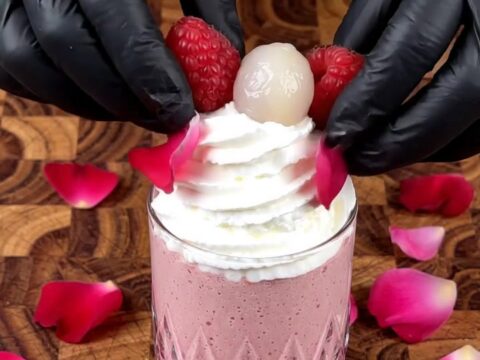
Lychee Raspberry Rose Coconut Snow Smoothie Cooler with White Chocolate Snow
Total time: 22 min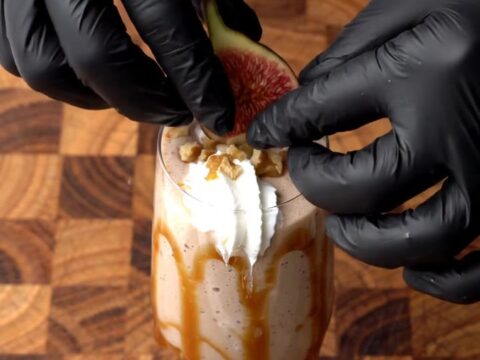
Honey Fig Walnut Banana Smoothie with Cinnamon Cream
Total time: 20 min
Pink Guava Strawberry Sweet Cream Yogurt Smoothie in Minutes
Total time: 15 min
Blackberry Acai Smoothie with Pomegranate and Almond Butter
Total time: 10 min
Blue Cloud Pineapple Coconut Spirulina Smoothie with Whipped Cream
Total time: 17 min