Dinner · Part 2 of 3: Instructions
Honey Glazed Roast Pork with Caramelized Onions Step-by-step instructions
- Prep
- Cook
- Total
- Serves
- 6
Before you start
Before you begin cooking, gather all your ingredients and equipment to ensure a smooth process. Remove the pork roast from the refrigerator about thirty minutes prior to cooking to take the chill off, which helps it cook more evenly.
Peel the baby onions, leaving them whole so they hold their shape during roasting. Wash and pat dry the fresh rosemary sprigs. Pre-heat your oven to 375°F (190°C) so it is ready when the searing is complete. Measure out your honey, and have your roasting pan ready.
Ingredients at a glance (4)
- 3 lb boneless pork loin roast
- 1/3 cup honey
- 1 lb baby onions, peeled
- 4 sprigs fresh rosemary
Instructions
Searing the Meat
- Sear the PorkPat the pork roast dry with paper towels. Heat a large ovenproof skillet or roasting pan over medium-high heat. Add the pork roast to the hot pan and sear on all sides until a golden-brown crust forms, about two to three minutes per side.Look for The meat should sizzle loudly and develop a rich brown crust.Tip Do not rush this step; searing builds essential savory depth.
By the end of this phase, the pork roast should have a beautiful, even golden-brown crust on all sides. The skillet will be filled with a rich, savory aroma, and there will be some browned bits stuck to the bottom of the pan. The meat is not cooked through yet, but the exterior is perfectly prepared to hold in the juices during the roasting process.
Glazing and Assembly
- Add Onions and Drizzle HoneyReduce the heat to medium. Scatter the peeled baby onions into the pan around the seared pork roast, letting them sizzle in the pan. Drizzle the warm honey evenly over the top of the roast, letting it cascade down the sides and mix with the juices and onions in the pan.Look for The honey will bubble gently as it hits the warm pan.Tip Use a spoon to coat the onions in the honey-infused juices.
At this stage, the baby onions are nestled around the roast, and the sweet aroma of warm honey fills the kitchen. The honey should be bubbling slightly and mixing with the pan drippings, coating the onions in a glossy, golden glaze. The rosemary sprigs are placed, ready to release their aromatic oils under the heat of the oven.
Roasting and Resting
- Roast with Rosemary and RestPlace the fresh rosemary sprigs on top of the roast and around the onions. Transfer the pan to the preheated oven. Roast for forty-five to fifty minutes, basting occasionally with the pan juices. Cook until the pork reaches an internal temperature of 145°F (63°C). Remove from the oven, cover loosely with foil, and let the meat rest for at least three minutes before carving.Look for The pork should be glossy and caramelized, and the onions tender.Safe temperature 145°F (63°C) internal temperature (steaks, chops and roasts)Tip Resting allows the juices to redistribute, keeping the pork juicy.
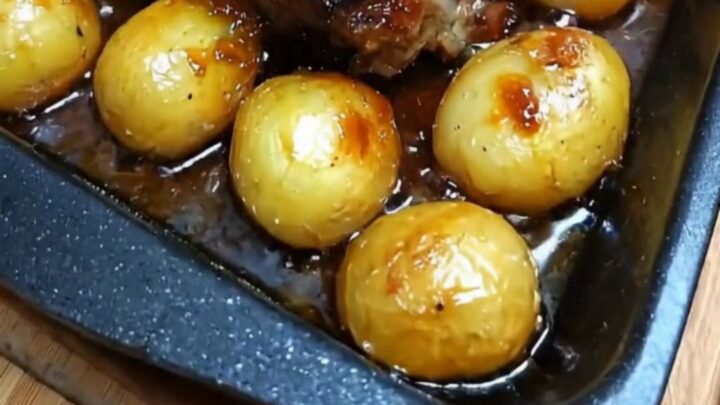
At the final checkpoint, the pork roast is deeply caramelized, glossy, and has reached a safe internal temperature of 145°F (63°C). The baby onions are completely tender, sweet, and coated in a rich, dark reduction.
After resting for ten minutes under loose foil, the meat is incredibly tender, juicy, and ready to be carved into perfect, succulent slices.
Common mistakes
One common mistake is skipping the searing step or rushing through it. Searing creates a barrier that helps lock in the natural moisture of the pork, preventing it from becoming dry and tough in the oven.
Another mistake is slicing the roast immediately after removing it from the oven. If you do not let the meat rest for at least ten minutes, all the delicious, savory juices will run out onto your cutting board, leaving you with dry meat.
How to tell it’s done
To ensure your pork roast is perfectly cooked and safe to eat, always use an instant-read meat thermometer inserted into the thickest part of the roast. The USDA recommends cooking whole cuts of pork to an internal temperature of 145°F (63°C).
Once it reaches this temperature, remove it from the heat and let it rest for at least three minutes. The resting period allows the temperature to stabilize and the juices to lock in.
- Steaks, chops and roasts: 145°F (63°C) in the thickest part, then a 3-minute rest
Up next · Part 3 of 3
2 variations · storage & make-ahead · 3 answers · printable card
Tips, FAQ & printable recipe (Part 3)← Back to the ingredients (Part 1)