Dinner · Part 2 of 3: Instructions
Honey Garlic Roasted Chicken with Veggies Step-by-step instructions
- Prep
- Cook
- Total
- Serves
- 4
Before you start
Before you begin cooking, gather all your ingredients and prep the vegetables to ensure a smooth cooking process. Scrub the potatoes thoroughly and cut them into uniform one-inch cubes so they cook at an even rate. Chop the broccoli into bite-sized florets and dice the red bell pepper.
Mince the fresh garlic cloves finely and chop the flat-leaf parsley for the final garnish. Pat the chicken thighs completely dry with paper towels; removing surface moisture is the absolute key to achieving maximum skin crispiness.
Ingredients at a glance (7)
- 4 skin-on, bone-in chicken thighs (about 1.5 pounds)
- 2 medium russet potatoes, scrubbed and cubed
- 2 cups broccoli florets, cut into bite-sized pieces
- 1 large red bell pepper, cored and chopped
- 1/3 cup honey
- 4 cloves garlic, minced
- 2 tbsp fresh flat-leaf parsley, finely chopped
Instructions
Searing the Chicken and Potatoes
- Preheat the Oven and Prepare the ChickenPreheat the oven to 400°F (200°C). Pat the chicken thighs completely dry with paper towels. Place the chicken thighs and cubed potatoes into a large, round glass casserole dish, arranging the chicken skin-side up.Look for The oven is fully preheated and the chicken and potatoes are arranged in the dish.Tip Drying the chicken skin thoroughly is essential for achieving a crispy texture.
- Initial RoastRoast the chicken thighs and cubed potatoes in the preheated oven for 20 minutes, allowing the chicken skin to begin rendering its natural juices.Look for The chicken skin starts to render and the potatoes begin to soften.Tip Roasting the chicken skin-side up allows the fat to render and baste the potatoes below.
At the end of this initial roasting phase, the kitchen will fill with the rich, savory aroma of rendering chicken fat. The chicken thighs should begin to show patches of light golden color, and their skin will start to tighten and render. The cubed potatoes will begin to soften and look slightly glossy, absorbing the delicious drippings from the roasting chicken. Ensure the chicken skin is dry and starting to crisp before proceeding.
Adding the Vibrant Vegetables
- Prepare the Honey Garlic GlazeWhile the chicken and potatoes are roasting, whisk together the honey and minced garlic in a small bowl until the mixture is smooth and completely combined.Look for The glaze is smooth and well blended.Tip Warm the honey slightly in the microwave for ten seconds if it is too thick to whisk easily.
- Add the Broccoli and Red PeppersCarefully remove the glass casserole dish from the oven. Toss the broccoli florets and chopped red bell peppers into the dish around the chicken and potatoes. Return the dish to the oven and roast for an additional 15 minutes.Look for The vegetables are tender-crisp and the edges of the broccoli start to brown.Tip Toss the vegetables quickly to avoid letting too much heat escape from the baking dish.
By the end of this second roasting stage, the broccoli florets will develop beautiful, slightly charred edges, and the red bell peppers will soften and caramelize. The potatoes should be tender when pierced with a fork and show golden-brown edges. The chicken skin will be beautifully golden and crisp. The combination of roasting vegetables and sizzling chicken creates a wonderful, deeply savory aroma throughout the kitchen.
Glazing and Final Caramelization
- Glaze the Chicken and Finish RoastingRemove the dish from the oven. Use a pastry brush to generously coat the crispy chicken skin with the honey garlic glaze, letting the excess glaze drip onto the surrounding vegetables. Return to the oven and roast for 10 minutes, or until the chicken reaches a safe internal temperature of 165°F (74°C) and the glaze is bubbling.Look for The glaze is thick, glossy, and caramelized, and the chicken registers 165°F (74°C).Safe temperature 165°F (74°C) internal temperature (poultry)Tip Ensure the thermometer probe does not touch the bone when checking the temperature.
- Garnish and RestRemove the casserole dish from the oven and let the chicken rest for 5 minutes to allow the juices to redistribute. Sprinkle the chopped fresh parsley over the entire dish before serving hot directly from the pan.Look for The chicken has rested and is beautifully garnished with bright green parsley.Tip Resting the chicken ensures the meat stays incredibly juicy when served.
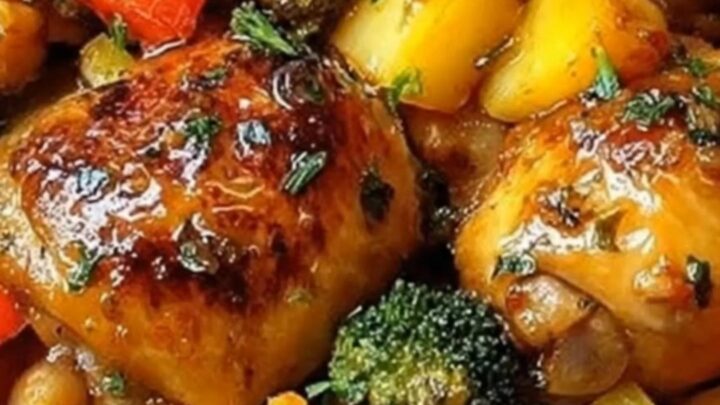
At the very end of the cooking process, the honey garlic glaze will bubble vigorously, transforming into a thick, glossy, mahogany-colored lacquer over the chicken skin.
The chicken must reach a safe internal temperature of 165°F (74°C) when measured with a meat thermometer in the thickest part of the thigh. The glaze should look incredibly shiny and caramelized, with a sweet, garlicky fragrance that signals your feast is ready to rest and serve.
Common mistakes
One of the most common mistakes is crowding the glass casserole dish. When chicken and vegetables are packed too tightly together, they trap moisture and steam instead of roasting, resulting in soggy chicken skin and limp vegetables.
Use a large baking dish, leaving ample space between the ingredients. Another mistake is applying the honey glaze too early in the roasting cycle, which causes the sugars to burn and turn bitter before the chicken is cooked through.
How to tell it’s done
To guarantee both safety and perfect texture, always use a digital meat thermometer to check the chicken thighs. Insert the probe into the thickest part of the thigh, making sure not to touch the bone.
The chicken is perfectly done and safe to eat when it registers an internal temperature of 165°F (74°C). At this point, the juices will run completely clear, the meat will be tender and juicy, and the glazed skin will be beautifully caramelized and sticky.
- Poultry: 165°F (74°C) in the thickest part
Up next · Part 3 of 3
3 variations · storage & make-ahead · 3 answers · printable card
Tips, FAQ & printable recipe (Part 3)← Back to the ingredients (Part 1)