Dinner · Part 2 of 3: Instructions
Honey Cranberry Chicken with Ricotta and Pecans Step-by-step instructions
- Prep
- Cook
- Total
- Serves
- 4
Before you start
Before beginning, ensure that the chicken is fully thawed if frozen. Bring the chicken out of the refrigerator about 20 minutes before cooking to allow it to reach room temperature, which helps ensure even cooking throughout the breast.
Prepare the glaze in advance so it has time to cool slightly, making it easier to handle. Have your chopping board and knife ready to mince the fresh rosemary and chop the pecans.
Ensure your oven is preheated to the correct temperature, as starting in a cold oven will lead to uneven results and potentially dry chicken.
Ingredients at a glance (6)
- 4 pieces chicken breasts
- 1 cup cranberries
- 1/2 cup honey
- 1/2 cup ricotta cheese
- 1/4 cup pecans, chopped
- 1 tbsp fresh rosemary, minced
Instructions
Glaze preparation
- Prepare the glazeIn a small saucepan, combine the honey and cranberries. Heat over medium heat, stirring occasionally, until the cranberries soften and the mixture thickens into a glossy, syrupy consistency. Remove from heat and set aside to cool slightly before using.Look for The sauce should look thick and glossy, coating the back of a spoon.Tip Do not overheat the honey, as it can burn quickly and become bitter.
The glaze is ready when it is thick, glossy, and coats the back of a spoon. It should have a vibrant, deep color from the cranberries and a sweet, slightly tart aroma that fills the kitchen. Check that the cranberries have softened completely before removing from the heat.
Roasting the chicken
- Roast the chickenPlace the chicken breasts in a dark roasting pan. Coat them evenly with the prepared honey cranberry glaze. Place in a preheated oven at 375°F (190°C) and bake until the chicken reaches an internal temperature of 165°F (74°C).Look for The chicken should be golden brown and the glaze should be bubbling.Safe temperature 165°F (74°C) internal temperature (poultry)Tip Using a dark roasting pan helps absorb heat, resulting in a deeper color on the chicken.
The chicken is done when the internal temperature reaches 165°F (74°C) and the glaze has caramelized into a sticky, dark coating. The meat should be firm to the touch and the edges of the pan should show bubbling, aromatic glaze. Ensure the chicken is not browning too quickly; if it is, tent it with foil.
Final plating
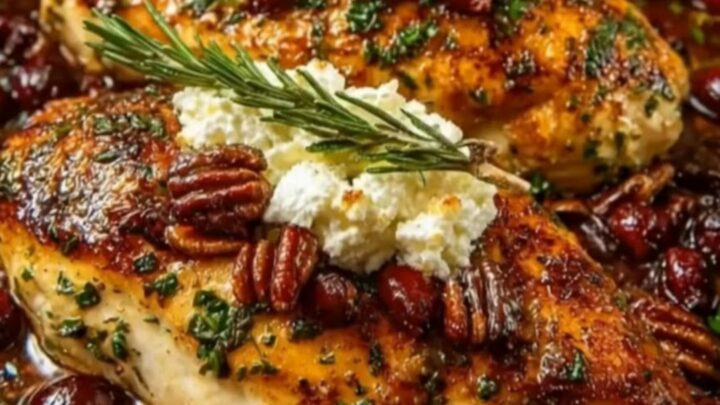
- Garnish and serveRemove the chicken from the oven and let it rest for at least 5 minutes. Before serving, top each piece with a dollop of fresh ricotta cheese, a sprinkle of chopped pecans, and a garnish of fresh minced rosemary. Serve immediately.Look for The ricotta should stay cool and creamy against the warm chicken.Tip Add the ricotta just before serving to maintain its fresh texture.
The dish is complete when the ricotta is neatly dolloped over the warm chicken, topped with a scattering of crunchy, golden pecans and a fresh, fragrant dusting of rosemary. The contrast between the warm, glazed chicken and the cool, creamy cheese should look inviting and balanced.
Common mistakes
A common mistake is failing to monitor the internal temperature, which often results in dry, stringy chicken. Another frequent error is overcrowding the roasting pan; ensure there is enough space between the breasts for the heat to circulate properly.
Avoid using a sugary glaze that is too thin, as it will run off the chicken rather than coating it; keep the glaze simmering until it reaches a syrupy consistency. Finally, do not add the ricotta too early, as it will melt and lose its distinct creamy texture if exposed to high heat for too long.
How to tell it’s done
The chicken is perfectly done when it reaches an internal temperature of 165°F (74°C) at the thickest part of the breast. The meat should be opaque throughout and juices should run clear.
Because chicken breasts can easily become overcooked, it is vital to use an accurate digital meat thermometer rather than relying on visual cues alone. Once cooked, the chicken must rest for at least 5 minutes to ensure the fibers relax and retain their moisture, resulting in a tender and juicy final product.
- Poultry: 165°F (74°C) in the thickest part
Up next · Part 3 of 3
2 variations · storage & make-ahead · 3 answers · printable card
Tips, FAQ & printable recipe (Part 3)← Back to the ingredients (Part 1)