Breakfast · Part 2 of 3: Instructions
Flaky Pain au Chocolat with Double Dark Chocolate Batons Step-by-step instructions
- Prep
- Cook
- Total
- Serves
- 8
Before you start
Before starting, ensure the laminated dough is well chilled but still pliable enough to roll. If it is too firm, let it sit at room temperature for 5 to 10 minutes. Prepare a lightly floured work surface and have a rolling pin, a sharp knife or pizza cutter, and a ruler ready.
Measure the chocolate batons or cut them from a bar into 15g pieces. Line a baking sheet with parchment paper. Have the egg wash ready, and clear a warm, draft-free spot for proofing. The total time includes 2 hours of proofing and 30 minutes of chilling the shaped pastries.
Ingredients at a glance (3)
- 1 batch chilled laminated dough (store-bought or made ahead)
- 16 15g dark chocolate batons (70% cocoa)
- 1 large egg, beaten with a splash of water
Instructions
Shape and Chill
- Cut the chilled dough into rectanglesOn a lightly floured surface, roll the chilled laminated dough into a large rectangle about 1/4 inch thick. Use a sharp knife or pizza cutter to trim the edges and cut the dough into 8 by 15 cm rectangles (about 3 by 6 inches). Work quickly to keep the dough cold; if it softens, return it to the refrigerator for 10 minutes.Look for The dough should be firm, not sticky, and the rectangles cleanly cut.Tip Chill the dough again if it starts to feel tacky or soft.
- Place the chocolate batonsPlace two 15g dark chocolate batons side by side on the bottom third of each dough rectangle, leaving a small border at the edges. The batons should be parallel to the short side of the rectangle.Look for The chocolate batons sit snugly on the dough without overlapping the edges.Tip Use high-quality 70% dark chocolate for a deep, molten center.
- Roll the dough tightlyStarting from the edge closest to the chocolate, roll the dough over the batons and continue rolling into a tight cylinder. Press the seam gently to seal. Place each pastry seam-side down on a parchment-lined baking sheet, spacing them about 2 inches apart.Look for The rolls are tight, with the seam sealed underneath and no gaps.Tip Roll gently but firmly so the layers stay intact and the chocolate stays centered.
- Chill the shaped pastriesCover the baking sheet loosely with plastic wrap and refrigerate the shaped pastries for 30 minutes. This firms the butter in the dough, making the final proof and bake more even.Look for The pastries are cold and hold their shape when touched.Tip Chilling prevents the butter from melting too quickly during proofing.
At the end of this phase, you have neat rectangles of chilled dough, each with two chocolate batons rolled tightly inside. The pastries are firm to the touch and hold their shape.
The dough is cold, with no sticky spots, and the seams are sealed underneath. This is the perfect state for proofing, as the cold butter will melt slowly and evenly during the rise.
Proof and Bake
- Proof until puffyRemove the pastries from the refrigerator and let them proof in a warm, draft-free spot for about 2 hours, or until they have nearly doubled in size and look puffy and slightly jiggly when gently shaken. The dough should feel airy and light.Look for The pastries have expanded noticeably and feel airy to the touch.Tip If the kitchen is cool, proof in a turned-off oven with a pan of hot water.
- Preheat the oven and apply egg washHeat the oven to 390°F (200°C). Gently brush the proofed pastries with the beaten egg wash, taking care not to deflate them. Use a light hand and cover the tops and sides evenly.Look for The pastries are glossy and evenly coated with egg wash.Tip Avoid letting egg wash pool at the base of the pastries.
- Bake until golden and flakyBake the pastries for 17 minutes, or until they are deep golden brown and the laminated edges have fanned out like book pages. The internal temperature of the dough should reach 200°F (93°C) to ensure the layers are fully cooked and crisp.Look for The pastries are deeply golden, with visible flaky layers at the ends.Safe temperature 160°F (71°C) internal temperature (egg dishes)Tip Rotate the baking sheet halfway through for even browning.
The pastries have puffed up beautifully, looking airy and light. The egg wash has given them a glossy, golden sheen. In the oven, they transform into deep golden, shattering layers with chocolate peeking out at the ends. The kitchen smells of butter and chocolate. The pastries should feel crisp when tapped, and the edges should look like fanned book pages.
Cool and Serve
- Cool slightly on the baking sheetRemove the baking sheet from the oven and let the pastries cool on the sheet for 5 minutes. This allows the chocolate to set slightly while the pastry remains crisp.Look for The pastries are warm to the touch but not too hot to handle.Tip Cooling briefly prevents the chocolate from spilling out when bitten.
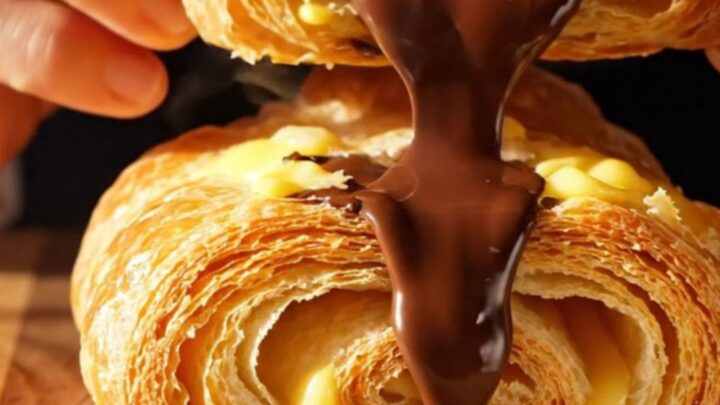
- Serve warm for the molten centerServe the pain au chocolat warm, while the dark chocolate is still glossy and liquid inside the crisp shell. Pull one apart to reveal the two molten chocolate batons stretching between the flaky layers.Look for The chocolate is glossy and liquid, the pastry shatters when pulled.Tip For the best texture, enjoy within 15 minutes of baking.
After a brief rest, the pastries are warm and fragrant. When pulled apart, the dark chocolate stretches in glossy ribbons between flaky layers. The pastry is crisp on the outside and tender within. The chocolate is still molten, creating a luxurious contrast. This is the moment to serve them, while they are at their peak.
Common mistakes
One common mistake is overworking the dough or letting it warm up, which can cause the butter to melt and make the pastry dense. Keep the dough cold and work quickly. Another mistake is underproofing: if the pastries are not proofed long enough, they will not rise properly in the oven.
They should look puffy and nearly doubled in size. Be gentle when brushing the egg wash, as pressing too hard can deflate the proofed dough. Also, make sure the chocolate batons are fully enclosed in the dough so they do not leak out during baking.
How to tell it’s done
The pain au chocolat is done when the pastries are deep golden brown all over and the laminated edges have fanned out like book pages. The internal temperature of the dough should reach 200°F (93°C) to ensure the layers are fully baked and crisp.
If you insert an instant-read thermometer into the center of a pastry, it should read at least 200°F (93°C). The chocolate should be glossy and liquid when you pull the pastry apart, but the pastry itself should feel firm and shatter when squeezed. Let them cool for 5 minutes before serving.
- Egg dishes: 160°F (71°C) in the thickest part
Up next · Part 3 of 3
4 variations · storage & make-ahead · 5 answers · printable card
Tips, FAQ & printable recipe (Part 3)← Back to the ingredients (Part 1)