Dinner · Part 2 of 3: Instructions
Herb Butter Lemon Capers Jumbo Shrimp Crockpot Step-by-step instructions
- Prep
- Cook
- Total
- Serves
- 4
Before you start
Before starting, ensure the shrimp are peeled and deveined. If using frozen shrimp, thaw them in the refrigerator overnight or under cold running water.
Slice the Meyer lemons thinly and measure out the capers, white wine, and scampi butter. Have the cooked jasmine rice ready for serving, and set out the slow cooker.
Ingredients at a glance (7)
- 2 lb jumbo shrimp, peeled and deveined
- 2 Meyer lemons, thinly sliced
- 3 tbsp capers, drained
- 1/2 cup dry white wine
- 6 tbsp parsley-garlic scampi butter
- 2 cups cooked jasmine rice, for serving
- Lemon wedges, for serving
Instructions
Layer the Seafood and Aromatics
- Layer the Seafood and AromaticsPlace the peeled and deveined jumbo shrimp in the bottom of the slow cooker in an even layer. Arrange the lemon slices over the shrimp, then scatter the capers over the top. Pour the white wine evenly over the seafood and aromatics.Look for The shrimp sit in a single layer with lemon slices and capers scattered over.Tip Keep the lemon slices thin so they release their oils gently during cooking.
- Add the Scampi ButterPlace the parsley-garlic scampi butter in small pats over the top of the shrimp, lemon, and caper mixture. Do not stir—the butter will melt and create a flavorful emulsion as it cooks.Look for The butter pats sit on top of the shrimp and aromatics, ready to melt.Tip If using homemade butter, ensure it is well-chilled so it melts slowly.
At the end of this phase, the shrimp are arranged in the slow cooker with lemon slices, capers, and white wine. The butter pats sit on top, waiting to melt.
The raw shrimp look pinkish-grey and the lemon slices are bright yellow. The wine pools at the bottom, ready to create the sauce.
Slow-Cook the Shrimp
- Slow-Cook the ShrimpCover the slow cooker and cook on LOW for 2 hours, or until the shrimp are opaque and cooked through. The internal temperature of the shrimp should reach at least 145°F (63°C). Do not lift the lid during cooking to maintain even heat.Look for The shrimp turn pink and opaque, and the sauce is bubbling gently.Safe temperature 145°F (63°C) internal temperature (shellfish)Tip Cooking on LOW prevents the shrimp from becoming tough.
After the cook time, the shrimp are opaque and plump, and the sauce is a golden, bubbling emulsion. The butter has melted and blended with the wine and lemon juices. The aroma is rich with garlic, parsley, and citrus. The shrimp are tender and the sauce is thick enough to coat a spoon.
Serve Over Rice
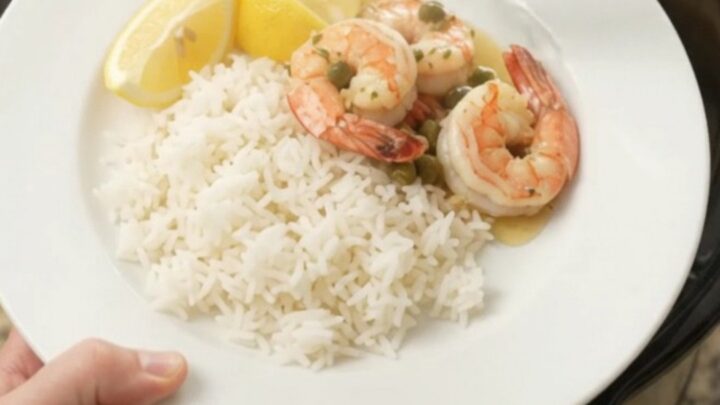
- Serve Over RiceSpoon the cooked jasmine rice onto serving plates. Using a slotted spoon, lift the shrimp and aromatics out of the butter sauce and arrange over the rice. Spoon some of the sauce over the top. Serve with lemon wedges on the side.Look for The shrimp glisten with the golden butter sauce over the rice.Tip Use a slotted spoon to avoid making the rice soggy with too much liquid.
The shrimp are lifted out with a slotted spoon and placed over steaming rice. The sauce is spooned over the top, and lemon wedges are on the side. The dish looks glossy and inviting, with the shrimp glistening in the buttery sauce and the capers adding little bursts of brine.
Common mistakes
A common mistake is overcooking the shrimp, which makes them tough. Stick to the 2-hour cook time on LOW and avoid peeking, as each time the lid is lifted heat escapes.
Another error is using extra-large shrimp that are not fully thawed, which can cook unevenly. Also, resist the urge to stir too much—the layers help the flavors develop.
How to tell it’s done
The shrimp are done when they are opaque and pink, and the internal temperature reaches at least 145°F (63°C). The sauce should be bubbling gently and the butter fully melted.
The shrimp should be firm but still tender. If they are still translucent in the center, cover and cook for another 15–20 minutes.
- Shellfish: 145°F (63°C) in the thickest part
Up next · Part 3 of 3
4 variations · storage & make-ahead · 5 answers · printable card
Tips, FAQ & printable recipe (Part 3)← Back to the ingredients (Part 1)