Dinner · Part 2 of 3: Instructions
Old-Fashioned Crockpot Shipwreck Beef Stew Step-by-step instructions
- Prep
- Cook
- Total
- Serves
- 8
Before you start
Before you start, gather all your ingredients. Cut the stew beef into 1-inch cubes if it isn't already. Scrub the Yukon potatoes and slice them into 1/4-inch rounds—no need to peel. Dice the celery and onion.
Drain and rinse the kidney beans in a colander. Measure out the condensed tomato soup. Have your slow cooker ready and plugged in. This recipe is all about layering, so having everything prepped makes the process quick and easy.
Ingredients at a glance (7)
- 2 1/2 lb cubed stew beef
- 500 g Yukon potatoes, sliced
- 2 stalks celery, diced
- 1 medium onion, diced
- 1 can (15 oz) kidney beans, drained and rinsed
- 600 ml condensed tomato soup
- 150 g sharp cheddar, shredded
Instructions
Layer and Pour
- Layer the Stew BasePlace the cubed stew beef in an even layer at the bottom of the slow cooker. Top with the sliced Yukon potatoes, then scatter the diced celery and onion over the potatoes. Spread the drained kidney beans over the vegetables.Look for The slow cooker should be about half full with distinct layers of beef, potatoes, celery, onion, and beans.Tip Cut the potatoes into even 1/4-inch slices so they cook at the same rate as the beef.
- Add the Tomato BrothPour the condensed tomato soup evenly over the layered ingredients. Use a spoon to gently press down on the mixture so the soup seeps between the layers. Do not stir; the layers will meld as they cook.Look for The tomato soup forms a glossy red coating over the top of the vegetables and beef.Tip If the soup is very thick, thin it with 1/4 cup water, but the stew should be thick, not soupy.
At this point, your slow cooker is filled with distinct layers: beef on the bottom, potatoes and vegetables on top, and a glossy coating of tomato soup covering everything. The colors are vibrant—red, gold, and green. The soup should be evenly distributed, but the layers should still be visible. This is exactly what you want before the long, slow cook.
Low and Slow
- Slow-Cook on LowCover the slow cooker and set it to LOW. Cook for 8 hours, or until the beef and potatoes are fork-tender. Avoid lifting the lid during cooking to keep the heat and moisture inside. Let it rest for 3 minutes before slicing.Look for After 8 hours, the stew is bubbling gently around the edges and the kitchen smells richly of tomato and beef.Safe temperature 145°F (63°C) internal temperature (steaks, chops and roasts)Tip If you must check, do it quickly and replace the lid immediately to minimize heat loss.
- Check for TendernessTest the beef and potatoes with a fork. The beef should be tender enough to pull apart easily, and the potatoes should yield without resistance. If not yet done, cover and cook for another 30 to 60 minutes. Let it rest for 3 minutes before slicing.Look for A fork slides into the beef and potato with little effort, and the meat shreds easily.Safe temperature 145°F (63°C) internal temperature (steaks, chops and roasts)Tip Taste a piece of potato and beef to confirm they are cooked through and seasoned well.
After 8 hours, the stew is bubbling gently around the edges. The aroma is rich and savory, with a hint of tomato. The beef is fork-tender and the potatoes are soft.
The gravy has thickened and turned a deep brick red. The layers have melded together, but you can still see bits of potato and bean throughout. The kitchen smells like a cozy farmhouse dinner.
Cheese and Serve
- Melt the CheddarSprinkle the shredded sharp cheddar evenly over the top of the stew. Cover the slow cooker and let it sit for 5 to 10 minutes, until the cheese is melted and bubbly.Look for The cheddar melts into a gooey, golden layer across the surface of the stew.Tip For a browner top, you can broil the stew briefly in an oven-safe dish, but the slow cooker method keeps it simple.
- Serve and EnjoyLadle the hot stew into warm bowls, making sure to get a good mix of beef, potatoes, beans, and melted cheese in each serving. Serve immediately.Look for Each bowl is filled with a hearty, cheese-draped helping of stew.Tip Pair with crusty bread or a simple green salad for a complete meal.
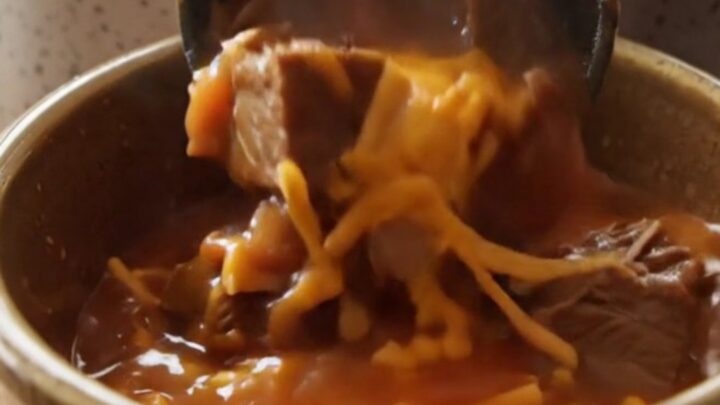
The cheddar has melted into a gooey, golden layer across the top of the stew. When you scoop it out, the cheese stretches slightly and mixes with the thick gravy. Each bowl is a hearty, satisfying mix of beef, potatoes, beans, and cheese. The stew is piping hot, so let it cool for a minute before serving.
Common mistakes
One common mistake is lifting the lid to peek during cooking. Every time you do, you release heat and extend the cooking time. Trust the process and keep the lid on. Another mistake is using waxy potatoes like new potatoes, which won't soften as nicely.
Also, don't skip draining and rinsing the kidney beans—this removes excess sodium and prevents the stew from becoming too salty. Finally, resist the urge to stir; layering is what makes this stew special.
How to tell it’s done
The stew is done when the beef is fork-tender and easily shreds apart, and the potatoes are soft and creamy. The internal temperature of the beef should reach at least 145°F (63°C) for safety, but it will likely be much higher after 8 hours on low.
Let the beef rest for at least 3 minutes before serving to allow the juices to redistribute. The gravy should be thick and rich, coating the back of a spoon, and the cheddar should be fully melted and bubbling.
- Steaks, chops and roasts: 145°F (63°C) in the thickest part, then a 3-minute rest
Up next · Part 3 of 3
4 variations · storage & make-ahead · 5 answers · printable card
Tips, FAQ & printable recipe (Part 3)← Back to the ingredients (Part 1)