Desserts · Part 2 of 3: Instructions
Hazelnut Chocolate Cheesecake with Ganache and Praline Balls Step-by-step instructions
- Prep
- Cook
- Total
- Serves
- 12
Before you start
Gather everything before you start, because the ganache and toppings must be ready while the surface is still soft. Set the cream cheese, eggs and sour cream out for about an hour so they blend without lumps. Toast the hazelnuts and let them cool, then rub off the skins and chop them with a long knife on a wooden board.
Chop the milk chocolate for the ganache finely and set it in a heatproof bowl, and cut the remaining chocolate bar into small chunks for scattering. Grate a little chocolate with a box grater for the shavings and keep it cool on a plate. Check that the springform pan is clean, the base is sealed, and the crust is ready on the counter. Heat the oven to 325°F (163°C) before you begin mixing.
Ingredients at a glance (11)
- 1/2 cup whole hazelnuts, toasted and chopped
- 2 oz milk chocolate bar, chopped into chunks and grated for shavings
- Cheesecake crust, store-bought or made ahead, to taste
- 32 oz cream cheese, softened to room temperature
- 1 cup granulated sugar
- 3 large eggs, at room temperature
- 1/2 cup sour cream
- 1 tsp vanilla extract
- 1/2 cup heavy cream
- 6 oz milk chocolate, finely chopped
- 12 hazelnut praline candies, Ferrero-style, for pressing into the top
Instructions
Bake the base until set
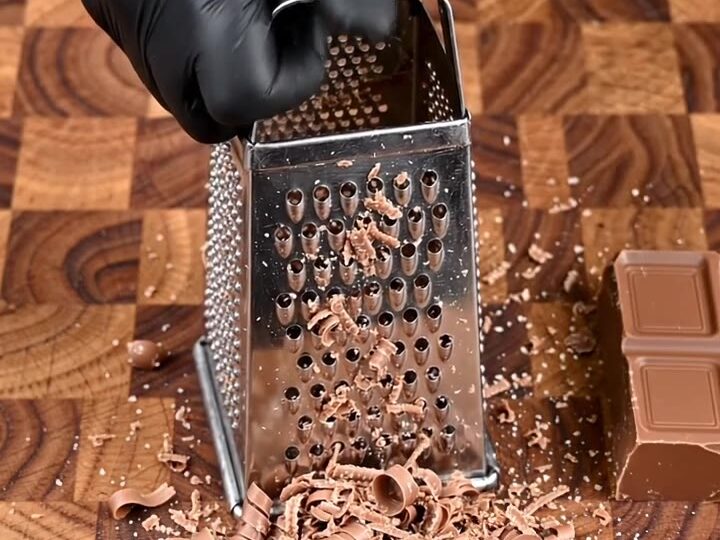
- Prepare the nuts and chocolateToast the hazelnuts until fragrant, then rub off the skins and chop them coarsely on a wooden board. Chop the milk chocolate bar into small chunks, then grate a portion of it on a box grater to make fine curled shavings.Look for Hazelnuts smell nutty and the skins flake off when rubbed in a towel.Tip Keep the grated chocolate cool on a plate so it holds its curls when you sprinkle it.
- Bake the cheesecake baseHeat the oven to 325°F (163°C). Beat the softened cream cheese and sugar until smooth, then add the eggs one at a time, followed by the sour cream and vanilla. Pour into the crust in the springform pan and bake until the edges are set and the center barely trembles.Look for Edges look set and the center moves only slightly when the pan is nudged.Safe temperature 160°F (71°C) internal temperature (egg dishes)Tip Beat on low speed so the filling does not puff and crack.
At the end of this phase, the cheesecake should look set around the edges with a center that moves only slightly when the pan is nudged. The surface is pale and even, with no deep cracks, and the filling smells mildly sweet and creamy.
Before going on, check that the cheesecake has cooled in the turned-off oven for about an hour and that it has no liquid pooling at the top. Then move it to the counter to cool to room temperature. A clean, firm edge at this point means the base will slice neatly after it chills, and a steady, gentle bake is the best guarantee against cracks.
Coat with glossy ganache
- Cool the cheesecake completelyTurn off the oven, crack the door, and let the cheesecake cool inside for one hour. Then cool it at room temperature for another hour and chill it in the refrigerator until fully firm.Look for The surface is firm and no longer shiny when touched gently.Tip Cooling slowly prevents cracks across the top.
- Make the chocolate ganacheHeat the heavy cream in a small saucepan until it just simmers. Pour it over the finely chopped milk chocolate in a heatproof bowl, wait one minute, then stir until smooth and glossy.Look for The mixture turns smooth, dark and glossy with no streaks.Tip Let the ganache cool for a few minutes so it spreads without running off the sides.
- Coat the top with ganachePour the ganache over the chilled cheesecake and spread it evenly with your gloved hands or an offset spatula, letting a little drip down the sides. Work while the ganache is still soft.Look for The surface is smooth, even and glossy, with a soft sheen.Tip Keep the chocolate chips and nuts ready so the ganache has not set before you top it.
At the end of this phase, the ganache should be smooth, dark and glossy across the entire top, with a few drips softly running down the sides of the springform pan. The chocolate should have no grainy streaks, and the surface should look even when you tilt the pan slightly. Check that the cheesecake is fully chilled and firm, because a warm base will let the ganache soak in. The ganache should still feel soft to the touch, so you can add the toppings before it firms. If it starts to set, warm it gently over a bowl of hot water and spread it again.
Finish with nuts and praline
- Add the nuts and chocolateWhile the ganache is still soft, sprinkle the chopped hazelnuts and the chocolate pieces over the top, then scatter the grated chocolate shavings around the edges.Look for Nuts and chocolate pieces stick to the ganache without sinking.Tip Scatter rather than pile, so each slice gets some nuts and shavings.
- Press in the praline candiesPress the whole hazelnut praline candies into the surface at even intervals, spacing them around the top. Chill the cheesecake until the ganache is firm before you release the springform ring.Look for Candies sit firmly in the ganache and the top is set to the touch.Tip Chill at least 4 hours so the slices hold clean edges.
- Slice and serveRun a thin knife under hot water, dry it, and cut the cheesecake into even slices. Wipe the knife between cuts so the creamy pale interior and the topping stay neat.Look for Slices show a pale, creamy interior under the dark glossy top.Tip Warm the knife briefly between cuts for crisp, clean slices.
At the end of this phase, the chopped hazelnuts and chocolate pieces should be scattered evenly across the surface, and the grated shavings should line the edges. The praline candies should be pressed firmly into the ganache at regular intervals, so they hold without sliding. Check that the top looks balanced and that no nuts have sunk into the ganache. Then chill the whole cheesecake until the ganache is firm and the candies do not move. Only after this chill should you release the springform ring and slice, so the topping stays in place and the slices hold clean edges.
Common mistakes
The most common mistake is baking the cheesecake too hot, which causes cracks and a grainy texture. Keep the oven at 325°F (163°C) and stop baking when the center still trembles slightly, because it finishes setting as it cools. Another frequent problem is adding the ganache to a warm cheesecake, which makes it run off and soak into the filling.
Chill the base until it is firm before coating. Pouring ganache that is too hot can also make it oily, so let it cool a few minutes and stir until glossy. Finally, do not add the nuts and praline after the ganache has firmed, since they will not stick. Work quickly in the final phase and keep a spatula handy to fix any uneven spots.
How to tell it’s done
The cheesecake is done when the edges are set and the center shows only a slight wobble when the pan is gently moved. The filling should look smooth and creamy, not dry. For this dessert, eggs are part of the filling, so the baked cheesecake should reach an internal temperature of 160°F (71°C) in the center to be cooked through.
Use an instant-read thermometer in the middle without touching the crust. Once cooled and chilled, the ganache should be firm and glossy with no soft spots, and the praline candies should stay put when you touch the surface. A clean slice with a crisp knife edge confirms the texture is set and ready to serve.
- Egg dishes: 160°F (71°C) in the thickest part
Up next · Part 3 of 3
4 variations · storage & make-ahead · 5 answers · printable card
Tips, FAQ & printable recipe (Part 3)← Back to the ingredients (Part 1)