Dinner · Part 2 of 3: Instructions
Guinness Onion Butter Bottom Round Roast: 5-Ingredient Slow Cooker Dinner Step-by-step instructions
- Prep
- Cook
- Total
- Serves
- 6
Before you start
Before you start, make sure you have a 6-quart slow cooker and a cutting board. If using fresh pearl onions, peel them by blanching in boiling water for 30 seconds, then shocking in ice water—the skins will slide off easily.
Pat the beef roast dry with paper towels to help it brown later (though browning is optional here). Set out the Guinness and butter so they are at room temperature. There's no need to sear the beef; the slow cooker does the work. Just layer everything in the insert and turn it on.
Ingredients at a glance (4)
- 3 1/2 lb beef bottom round roast
- 1 lb pearl onions, peeled
- 1 bottle (11.2 oz) Guinness draught stout
- 1/2 cup (1 stick) salted butter
Instructions
Layer and Go
- Layer the Roast and OnionsPlace the beef bottom round roast in the center of a 6-quart slow cooker. Scatter the peeled pearl onions around the roast, tucking some underneath for even cooking.Look for The roast should sit snugly in the insert with onions filling the gaps.Tip If the roast is larger than the insert, trim it to fit or cut it in half.
- Add the Stout and ButterPour the Guinness stout over the roast and onions. Place the whole stick of salted butter on top of the roast, right in the center.Look for The butter will melt and blend with the stout as it cooks.Tip There's no need to stir—the slow cooker does the work.
At the start, you'll see the raw roast, onions, beer, and butter sitting in the slow cooker. The scene is simple—no browning, no sautéing. The beer will look dark and foamy, and the butter will sit pale and firm on top. This is the 'dump it in' moment. Before moving on, make sure the roast is centered and the onions are scattered around it, and that the butter is placed on top so it melts down over the meat as it cooks.
Slow Cook to Tender
- Slow Cook Until Fork-TenderCover the slow cooker and cook on LOW for 8 hours, or until the beef is fork-tender and easily pulls apart. The internal temperature should reach at least 145°F (63°C) for medium-rare, but for this braise, cook until the meat shreds easily. Let it rest for 3 minutes before slicing.Look for The meat should be deeply browned and the onions translucent.Safe temperature 145°F (63°C) internal temperature (steaks, chops and roasts)Tip Cooking on low yields the most tender results; high heat can toughen the meat.
- Rest the RoastTurn off the slow cooker and let the roast rest in the liquid for 10 minutes. This allows the juices to redistribute and the meat to become even more tender.Look for The meat will be very tender and may begin to fall apart.Tip For easier slicing, let it rest a few minutes longer before removing.
After 8 hours on low, the kitchen will fill with a rich, malty aroma. The beef will be deeply browned and shrunken slightly, and the liquid will be a deep mahogany with pools of golden butter. The onions will look soft and glossy.
The meat should be so tender that a fork slides in with no resistance. Check that the internal temperature has reached at least 145°F (63°C) and that the meat easily shreds. If not, continue cooking in 30-minute increments.
Rest and Serve
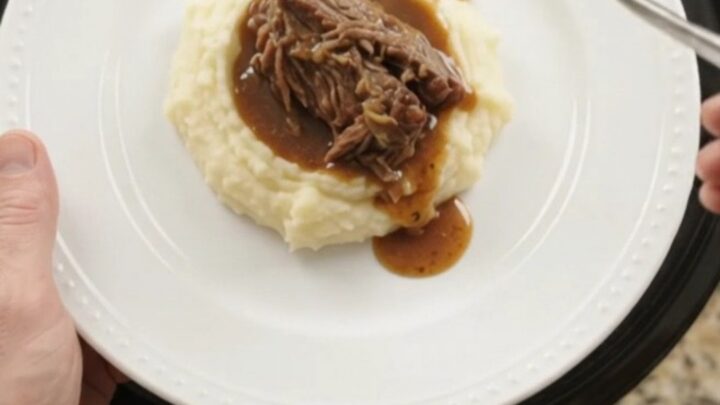
- Shred and ServeUsing two forks, shred the roast into large chunks, mixing it with the onions and pan juices. Serve over mashed potatoes or with crusty bread, spooning the buttery jus over the top.Look for The beef should pull apart easily and glisten with the rich sauce.Tip For a thicker sauce, simmer the juices in a skillet for a few minutes before serving.
After resting, the roast will be incredibly tender and may start to fall apart on its own. The sauce will be glossy and emulsified, with small bits of onion and beef fat. The pearl onions will be sweet and almost jammy. When you shred the beef, it should pull into thick, moist strands. The final dish should look like a rustic, hearty pot roast, with the buttery jus coating everything. Serve it immediately over mashed potatoes or with crusty bread.
Common mistakes
One common mistake is lifting the lid too often to check on the roast. Every time you lift the lid, heat escapes, and the cooking time increases. Trust the process—keep the lid on for the full 8 hours.
Another mistake is using a lean cut that isn't suited for braising, like sirloin; stick with bottom round or chuck. Finally, don't skip the rest time after cooking, as it allows the juices to redistribute and makes the meat even more tender.
How to tell it’s done
The roast is done when it is fork-tender and easily pulls apart with little resistance. The internal temperature should read at least 145°F (63°C) for medium-rare, but for this braise, you'll likely cook it to 190°F (88°C) or higher, which allows the collagen to break down fully and results in fall-apart texture.
The onions should be very soft and translucent, and the liquid should be rich and slightly thickened. If the meat isn't shredding easily, continue cooking on low for another hour.
- Steaks, chops and roasts: 145°F (63°C) in the thickest part, then a 3-minute rest
Up next · Part 3 of 3
4 variations · storage & make-ahead · 5 answers · printable card
Tips, FAQ & printable recipe (Part 3)← Back to the ingredients (Part 1)