Dinner · Part 2 of 3: Instructions
Grilled Lemon Herb Salmon with Rich Butter Sauce Step-by-step instructions
- Prep
- Cook
- Total
- Serves
- 4
Before you start
Before starting the grill, gather all necessary ingredients and equipment. Pat the salmon fillets completely dry with paper towels to ensure a good sear. Measure out the butter, fresh herbs, and lemon juice.
Ensure the grill grates are thoroughly cleaned with a wire brush and lightly oiled using a paper towel dipped in vegetable oil. Preheating the grill to a high temperature is essential before placing the fish on the grates.
Ingredients at a glance (4)
- 4 salmon fillets (about 6 ounces each)
- 1/2 cup unsalted butter
- 2 tbsp mixed fresh herbs, finely chopped
- 2 tbsp fresh lemon juice
Instructions
Preparation and Searing
- Prep the SalmonPat the salmon fillets dry with paper towels. Let the fillets sit at room temperature for fifteen minutes before grilling to ensure even cooking.Look for Fillets should feel dry to the touch.Tip Dry skin prevents sticking.
- Sear the SalmonPlace the salmon fillets on the preheated grill grates. Grill undisturbed for four to five minutes until grill marks form and the fish releases easily from the grates.Look for Sizzling sound and visible grill marks.Tip Do not move the fish too early.
At the end of the first phase, the salmon fillets are searing beautifully on the hot grill grates. A distinct sizzling sound fills the air, accompanied by the rich aroma of charred fish.
The edges of the fillets will start to turn opaque, indicating that the heat is penetrating upwards. The fish should release easily from the grates when gently lifted with a spatula, showing defined grill marks.
Flipping and Checking Temp
- Flip and FinishCarefully flip the salmon fillets using a thin spatula. Grill the second side for another three to four minutes until the internal temperature of the fish reaches 145°F (63°C) when measured with an instant-read thermometer.Look for The flesh flakes easily with a fork.Safe temperature 145°F (63°C) internal temperature (fish)Tip Measure at the thickest part.
By the end of the second phase, the salmon has been flipped and cooked through to its safe internal temperature. The exterior is beautifully charred, while the interior remains moist and tender pink.
The flesh should flake easily when tested with a fork. Checking the temperature ensures the fish is perfectly cooked without becoming dry or overdone.
Buttering and Serving
- Make the ButterMelt the unsalted butter in a small saucepan over low heat. Stir in the fresh mixed herbs and fresh lemon juice, then remove from the heat immediately to keep the herbs vibrant.Look for Butter is melted and fragrant.Tip Do not let the butter brown.
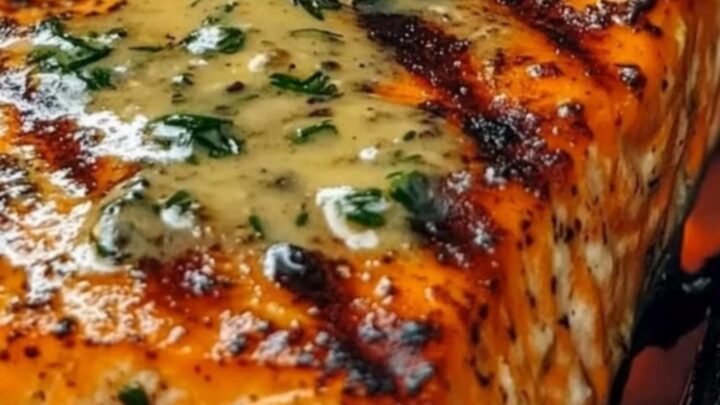
- Dress and ServeTransfer the grilled salmon fillets to a warm serving platter. Pour the warm lemon-herb butter generously over the sizzling fillets, allowing it to cascade down the sides before serving.Look for Salmon is glistening and coated in butter.Tip Serve immediately while hot.
At the final checkpoint, the warm, fragrant lemon-herb butter is poured over the freshly grilled salmon. The hot butter sizzles as it hits the charred surface, releasing a wonderful aroma of citrus and fresh herbs. The fillets glisten beautifully on the serving platter, ready to be enjoyed immediately while warm and juicy.
Common mistakes
One common mistake is placing the salmon on a cold or ungreased grill, which causes the delicate flesh to stick and tear.
Another error is moving the fish too early; it needs undisturbed contact with the hot grate to form a crust and release naturally. Overcooking is also frequent; salmon cooks quickly, so always use a thermometer to avoid dry, chalky fish.
How to tell it’s done
Salmon is perfectly done when the internal temperature reaches 145°F (63°C) at the thickest part. Visually, the flesh will change from translucent red to an opaque pink. When pressed gently with a finger or fork, the fish should feel firm but yield slightly, flaking along the natural muscle lines without turning mushy.
- Fish: 145°F (63°C) in the thickest part
Up next · Part 3 of 3
2 variations · storage & make-ahead · 4 answers · printable card
Tips, FAQ & printable recipe (Part 3)← Back to the ingredients (Part 1)