Dinner · Part 2 of 3: Instructions
Grilled Lemon Herb Salmon for a Quick and Flaky Dinner Step-by-step instructions
- Prep
- Cook
- Total
- Serves
- 4
Before you start
Before starting, ensure all ingredients are measured and ready to use. Pat the salmon fillets completely dry with paper towels to ensure a good sear. Soften the butter for the compound butter mixture so it incorporates easily with the lemon and herbs.
Clear a space on the counter for the cutting board and have the spatula and serving plates ready, as the cooking process moves quickly once the grill pan is hot and the fish begins to sizzle.
Ingredients at a glance (4)
- 4 fillets salmon fillets, about 6 ounces each
- 4 tbsp unsalted butter, softened
- 1 tbsp fresh lemon juice
- 1 tbsp fresh herbs, chopped
Instructions
Mixing the herb butter
- Prepare the herb butterIn a small bowl, combine the softened butter with the fresh lemon juice and chopped fresh herbs. Stir until the mixture is uniform and smooth. Set this compound butter aside at room temperature so it is ready to melt over the hot fish once it leaves the grill.Look for The butter should be soft enough to stir easily with a spoon and the herbs should be evenly distributed throughout the mixture.Tip Use high-quality unsalted butter for the best flavor profile, as it allows the brightness of the lemon and the earthiness of the fresh herbs to shine.
The compound butter should be smooth, creamy, and fragrant. The herbs should be finely minced and evenly dispersed throughout the butter, and the lemon juice should be fully incorporated with no visible separation. This mixture is the secret to the final dish, so ensure it is well-combined and ready to be spooned over the hot fish immediately after it comes off the grill.
Grilling the salmon
- Grill the salmonHeat a grill pan over medium-high heat. Place the salmon fillets in the hot pan. Cook for about 5 to 6 minutes per side without moving them, until the flesh is opaque and flakes easily with a fork. Ensure the internal temperature reaches 145°F (63°C).Look for The salmon should develop a nice sear with distinct grill marks and the flesh should turn from translucent pink to an opaque, light pink color.Safe temperature 145°F (63°C) internal temperature (fish)Tip Avoid flipping the fish too early. Allowing the crust to form naturally ensures the fillets release easily from the grill surface without tearing the delicate meat.
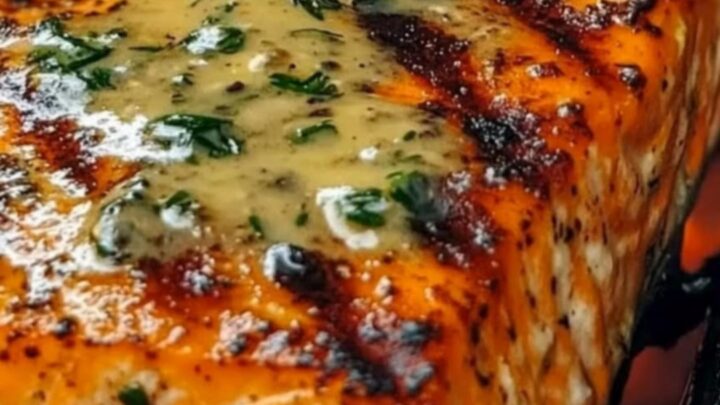
The salmon should have deep, dark sear marks from the grill pan, and the sides of the fillet should turn opaque, indicating the heat is penetrating to the center.
The fish should release naturally from the pan surface when ready to flip. The aroma should be savory and slightly smoky, signaling that the proteins are developing the desired texture and flavor profiles required for a perfect sear.
Plating and serving
- Plate and serveTransfer the cooked salmon fillets to a wooden cutting board. Immediately top each fillet with a generous dollop of the prepared lemon herb butter, allowing it to melt into the hot, flaky crevices of the fish. Serve immediately while the salmon is steaming and tender, ensuring the butter creates a rich, flavorful sauce on the plate.Look for The butter should melt quickly upon contact with the hot salmon, creating a glossy, fragrant coating that runs down the sides of the fish.Tip Let the fillets rest for 3 to 5 minutes on the board before serving to ensure the juices redistribute throughout the meat, keeping each bite perfectly succulent.
The finished salmon should be steaming, with the compound butter melting into a glossy, fragrant sauce that pools slightly around the edges of the plate. The fish should flake easily with a fork, revealing a tender, moist interior. Check that the presentation is clean and that the butter has sufficiently coated the top of each fillet, providing a luxurious finish to the meal.
Common mistakes
A common mistake is overcrowding the pan, which lowers the surface temperature and causes the salmon to steam rather than sear. Always leave enough space between fillets for proper air circulation.
Another error is moving the fish too early; let it develop a crust undisturbed to prevent it from sticking or breaking apart. Finally, do not forget to let the fish rest for a few minutes; this small step is crucial for maintaining moisture and ensuring the best possible texture.
How to tell it’s done
The salmon is perfectly cooked when the flesh is opaque throughout and flakes easily when gently pressed with a fork. It should reach an internal temperature of 145°F (63°C) at the thickest part.
If the fish still appears translucent or resists flaking, continue cooking for an additional minute. Proper doneness ensures the fish is tender and succulent, rather than dry and tough, maintaining the integrity of the delicate protein structure.
- Fish: 145°F (63°C) in the thickest part
Up next · Part 3 of 3
2 variations · storage & make-ahead · 3 answers · printable card
Tips, FAQ & printable recipe (Part 3)← Back to the ingredients (Part 1)