Breakfast · Part 2 of 3: Instructions
Grandma’s Cinnamon Raisin French Toast Bake Step-by-step instructions
- Prep
- Cook
- Total
- Serves
- 6
Before you start
Before you begin, ensure your oven is preheated to 350°F (175°C) to ensure an even bake. Have all your ingredients measured and ready to go.
If you are cutting your own bread, try to keep the cubes consistent in size, about one inch, so they absorb the custard at the same rate. Prepare your baking dish by lightly greasing it if you prefer easier cleanup, though the butter in the recipe helps prevent sticking.
Ingredients at a glance (4)
- 1 loaf cinnamon raisin bread, cut into 1-inch cubes
- 2 cups vanilla egg custard, prepared
- 1/4 cup brown sugar
- 3 tbsp butter, sliced
Instructions
Bread Preparation
- Assemble the BreadArrange the 1-inch cubes of cinnamon raisin bread in an even layer within a 9x13-inch ceramic baking dish. Ensure the bread fills the dish comfortably without being overly compacted, allowing enough space for the custard to soak through evenly.Look for The dish is filled with bread cubes in a single layer.Tip Use slightly stale bread if available, as it absorbs the custard better without becoming mushy.
The bread cubes are uniformly distributed in the baking dish, creating a level foundation. You should see a loose arrangement that allows the custard to flow between the pieces, ensuring no dry spots remain once the liquid is poured over the top.
Adding Custard and Topping
- Add Custard and ToppingsPour the vanilla egg custard evenly over the bread cubes, ensuring every piece is coated. Sprinkle the brown sugar over the top of the bread, then distribute the butter slices across the surface to create a rich, caramelized crust during the baking process.Look for The bread is thoroughly moistened and topped with sugar and butter.Tip Pour the custard slowly to allow it to seep into the bottom layers of the bread.
The custard has been poured evenly, and the brown sugar and butter are distributed across the surface.
The dish should look moist and ready for the oven, with the butter slices spaced out to melt and create those desirable, buttery, caramelized pockets during the baking process.
Baking to Perfection
- Bake the French ToastPlace the baking dish into a preheated 350°F (175°C) oven. Bake until the custard is set and the top is puffed and golden, reaching an internal temperature of 160°F (71°C) for the eggs. Remove from the oven and let it rest for 5 minutes before serving.Look for The bake is puffed, golden brown, and the edges are bubbling.Safe temperature 160°F (71°C) internal temperature (egg dishes)Tip Check the center of the bake with a knife to ensure the custard has set properly.
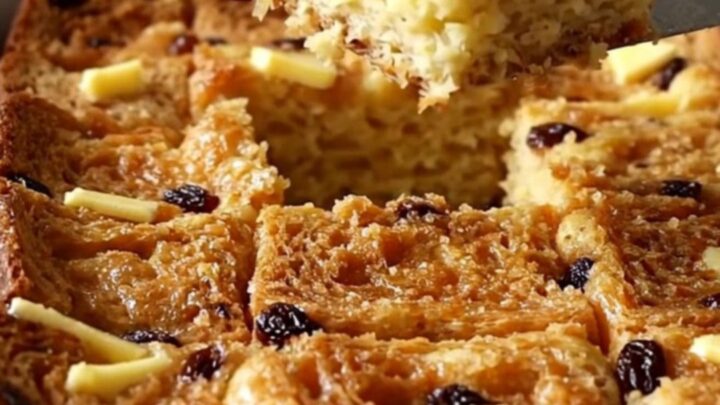
The French toast has transformed into a golden, puffed masterpiece. The kitchen should smell like cinnamon and toasted sugar, and the bubbling edges confirm that the butter and sugar have properly caramelized. It is now ready to be removed from the oven and rested.
Common mistakes
Avoid over-crowding the baking dish, as this can lead to uneven cooking and dense, soggy sections. Another common mistake is failing to let the bread soak sufficiently; if the bread is very dry, allow it to sit in the custard for a few extra minutes before baking.
Finally, do not skip the resting period after removing it from the oven, as this allows the custard to firm up and makes serving much easier.
How to tell it’s done
The French toast bake is done when the top is puffed, golden brown, and the edges are bubbling with caramelized sugar. When inserted into the center, a knife should come out clean, indicating the custard has set.
The internal temperature of the egg-based custard should reach at least 160°F (71°C) to ensure it is fully cooked and safe to eat.
- Egg dishes: 160°F (71°C) in the thickest part
Up next · Part 3 of 3
2 variations · storage & make-ahead · 3 answers · printable card
Tips, FAQ & printable recipe (Part 3)← Back to the ingredients (Part 1)