Appetizers · Part 2 of 3: Instructions
Gourmet Fig and Prosciutto Flatbread with Balsamic Glaze Step-by-step instructions
- Prep
- Cook
- Total
- Serves
- 4
Before you start
Before beginning, ensure all ingredients are prepped and ready for assembly. Slice the fresh mission figs into thin, uniform rounds to ensure they cook at the same rate. Crumble the gorgonzola into small, bite-sized pieces to ensure even melting across the flatbread.
Prepare the prosciutto by separating the slices, making them easy to drape quickly once the flatbread leaves the oven. Having the arugula washed and thoroughly dried is critical, as excess water will cause the flatbread to become soggy once it is removed from the oven.
Ingredients at a glance (6)
- 1 sheet artisan lavash
- 4 whole fresh black mission figs, sliced
- 1/2 cup gorgonzola cheese, crumbled
- 3 oz prosciutto di Parma, thinly sliced
- 1 cup baby arugula
- 1 tbsp aged balsamic glaze
Instructions
Base Preparation
- Prepare the BasePreheat your oven to 425 degrees Fahrenheit (218 degrees Celsius). Lay the artisan lavash flat on a clean baking sheet or a preheated pizza stone. This ensures the base achieves maximum crispiness during the short baking window.Look for The oven should be fully preheated to ensure the crust puffs and browns evenly without becoming soggy.Tip If using a pizza stone, place it in the oven while it preheats to capture intense heat.
The oven is reaching the target temperature of 425 degrees Fahrenheit. The baking sheet is clean and ready, and the lavash is positioned for immediate topping. The kitchen smells clean and the work surface is organized for the quick assembly process that follows.
Baking Assembly
- Assemble and BakeScatter the sliced black mission figs and crumbled gorgonzola evenly across the surface of the lavash. Place the flatbread in the oven and bake for eight minutes. Watch for the cheese to blister and the edges of the bread to turn a deep golden brown.Look for The cheese should be bubbling and slightly browned, while the lavash edges appear crisp and toasted.Tip Avoid overloading the center with too many figs, as the moisture can prevent the middle from crisping.
The figs and gorgonzola are distributed evenly across the lavash. The cheese is beginning to soften, and the figs are releasing their aroma. The flatbread is placed in the center of the oven where the heat is most consistent for an even, golden bake.
Final Garnish
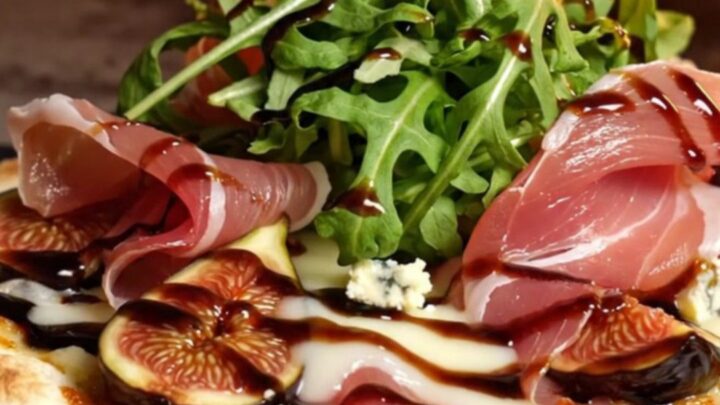
- Final TouchesRemove the flatbread from the oven carefully. Immediately drape the thin ribbons of prosciutto over the hot cheese. Scatter the fresh baby arugula over the top and finish by drizzling the aged balsamic glaze in a decorative pattern across the entire flatbread.Look for The prosciutto will slightly soften from the residual heat of the flatbread, releasing its savory aroma.Tip Drizzle the balsamic glaze in a zigzag motion for a professional, restaurant-style presentation.
The flatbread emerges from the oven with a crisp, toasted appearance. The cheese is bubbling and fragrant. The addition of the cool, salty prosciutto and the fresh, peppery arugula provides a beautiful visual contrast, finished with the dark, glossy swirl of balsamic glaze.
Common mistakes
A common mistake is overcrowding the flatbread with too many toppings, which traps steam and prevents the lavash from becoming crispy. Another error is adding the prosciutto and arugula too early; these items should only be added after the baking process is complete to maintain their delicate texture.
Failing to preheat the oven sufficiently will also lead to a tough, chewy crust instead of a light, crispy one. Finally, avoid using a thin, watery balsamic vinegar; ensure the glaze is reduced to a syrupy consistency, or the flavor will be too acidic and thin.
How to tell it’s done
The flatbread is ready when the edges of the lavash are golden brown and crisp to the touch. The gorgonzola should be fully melted, bubbling, and showing slight golden-brown blisters on the surface.
The figs will appear slightly softened and shriveled around the edges, indicating their sugars have caramelized.
Since this dish relies on room-temperature finishing ingredients, there are no internal temperature requirements for proteins, but the flatbread itself should be piping hot when served to ensure the best contrast between the warm cheese and fresh toppings.
Up next · Part 3 of 3
2 variations · storage & make-ahead · 3 answers · printable card
Tips, FAQ & printable recipe (Part 3)← Back to the ingredients (Part 1)