Breakfast · Part 2 of 3: Instructions
Golden Turkish Breakfast Cake with Feta and Herbs Step-by-step instructions
- Prep
- Cook
- Total
- Serves
- 9
Before you start
Preheat the oven to 360°F (182°C). Gather all ingredients. Let the eggs and yogurt come to room temperature for about 20 minutes if you have time, as this helps the batter emulsify more easily.
Lightly oil a rectangular glass baking dish. Have all measuring cups and spoons ready. Chop the fresh herbs and crumble the feta if not already crumbled. Measure the sesame and nigella seeds into a small bowl.
Ingredients at a glance (10)
- 3 large eggs
- 1 cup thick Turkish yogurt
- 1/2 cup extra virgin olive oil
- 1 tsp sea salt
- 1 1/2 cups all-purpose flour
- 2 tsp baking powder
- 1 cup crumbled feta cheese
- 1/4 cup chopped fresh dill and parsley
- 2 tbsp toasted white sesame seeds
- 2 tbsp black nigella seeds
Instructions
Mixing the Batter
- Whisk the Wet BaseIn a large ceramic bowl, crack the 3 eggs and whisk them until the yolks and whites are fully combined. Add the thick Turkish yogurt, extra virgin olive oil, and sea salt. Whisk continuously until the mixture is smooth, silky, and a pale yellow color, about 1 to 2 minutes.Look for The mixture should be completely uniform with no streaks of egg yolk.Tip Whisking thoroughly at this stage creates an emulsion that helps the cake rise evenly.
- Incorporate the Dry IngredientsAdd the all-purpose flour and baking powder to the wet mixture. Whisk gently until just combined; the batter should be thick and lump-free. Fold in the crumbled feta and chopped fresh dill and parsley with a spatula, being careful not to overmix.Look for The batter will be thick and slightly sticky, with bits of feta and herbs evenly distributed.Tip Overmixing can develop gluten and make the cake dense; stop as soon as the flour disappears.
After whisking, the wet mixture should be smooth, silky, and pale yellow with no streaks of egg. Once the flour is added, the batter becomes thick and slightly sticky. Fold in the feta and herbs gently; the batter should be lump-free but not overmixed. The feta and herbs should be evenly distributed throughout.
Baking to Golden Brown
- Prepare the Baking DishPreheat the oven to 360°F (182°C). Lightly oil a rectangular glass baking dish, using a paper towel to coat the bottom and sides evenly. Pour the batter into the dish and smooth the top with a spatula, making sure the batter reaches all corners.Look for The batter should be level and evenly spread across the dish.Tip Oiling the dish well ensures the cake releases cleanly after baking.
- Top with Seeds and BakeEvenly shower the surface with toasted white sesame seeds and black nigella seeds, pressing them gently into the batter with your fingers. Place the dish in the preheated oven and bake at 360°F (182°C) until the cake is risen and golden brown, about 30 to 35 minutes.Look for The top should be deep golden, and a toothpick inserted in the center should come out clean.Tip Rotate the dish halfway through baking for even browning.
- Check for DonenessInsert a toothpick or a thin knife into the center of the cake. If it comes out clean or with just a few moist crumbs, the cake is done. The internal temperature of the cake should reach 160°F (71°C) to ensure the eggs are fully set.Look for The edges will pull slightly away from the dish, and the top will spring back when pressed gently.Safe temperature 160°F (71°C) internal temperature (egg dishes)Tip If the top browns too quickly, tent loosely with foil for the last 10 minutes.
As the cake bakes, the kitchen fills with the aroma of toasted sesame and olive oil. The top turns a deep golden brown, and the seeds become fragrant and slightly crisp.
The cake rises evenly and the edges pull away from the dish. A toothpick inserted in the center comes out clean, and the internal temperature reaches 160°F (71°C).
Slicing and Serving
- Cool Slightly and SliceRemove the baking dish from the oven and let the cake cool in the dish for about 10 minutes. Then transfer to a cutting board. Use a santoku knife to cut neat squares, wiping the blade between cuts for clean edges.Look for The cake should be firm enough to hold its shape but still warm and tender inside.Tip Letting it rest briefly makes slicing easier and prevents crumbling.
- Serve Warm with TeaPlate the squares next to a glass of traditional red Turkish tea with fresh mint leaves, if desired. Serve warm for the best texture and flavor.Look for The cake should be moist and fluffy, with a golden crust and visible specks of feta and herbs.Tip If serving later, reheat squares in a 300°F (150°C) oven for 5 minutes to refresh the crust.
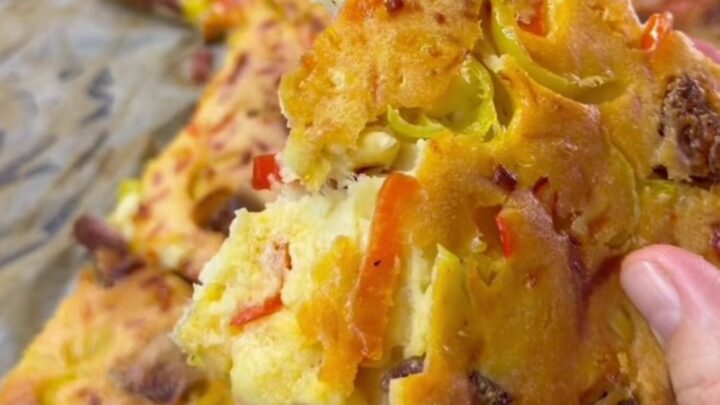
After a brief rest, the cake is firm enough to slice into neat squares. The crust is golden and crunchy, while the interior is moist and tender with visible flecks of feta and herbs. Each square holds its shape but is soft and fluffy inside. Serve warm, with the steam still rising, alongside a glass of red tea.
Common mistakes
Overmixing the batter after adding the flour can develop gluten and result in a tough, dense cake. Mix just until the flour disappears. Another common mistake is underbaking: the center may look set but still be raw.
Always test with a toothpick and check the internal temperature. If the top browns too quickly, cover loosely with foil to prevent burning while the center finishes cooking.
How to tell it’s done
The cake is done when the top is deep golden brown and a toothpick inserted into the center comes out clean or with just a few moist crumbs. The edges will pull slightly away from the dish, and the top will spring back when pressed gently.
To be certain, check the internal temperature with an instant-read thermometer: it should read at least 160°F (71°C) in the center, ensuring the eggs are fully set.
- Egg dishes: 160°F (71°C) in the thickest part
Up next · Part 3 of 3
4 variations · storage & make-ahead · 5 answers · printable card
Tips, FAQ & printable recipe (Part 3)← Back to the ingredients (Part 1)