Dinner · Part 2 of 3: Instructions
Golden Potato Bazlama Flatbreads with Spiced Filling Step-by-step instructions
- Prep
- Cook
- Total
- Serves
- 6
Before you start
Before starting, gather all ingredients and equipment. Boil the potatoes until tender, then mash and set aside to cool. Proof the yeast in warm water with sugar until foamy. Measure out the flour and salt.
Have a clean, floured surface ready for kneading and rolling. Prepare a skillet and a pastry brush for the butter. The dough needs about an hour to rise, so plan accordingly.
Ingredients at a glance (11)
- 3 1/2 cups all-purpose flour
- 2 1/4 tsp active dry yeast
- 1 tsp sugar
- 1 1/2 tsp salt
- 1 1/4 cups warm water
- 1 lb potatoes, peeled and boiled
- 1/2 cup finely chopped onion
- 1/4 cup chopped fresh dill
- 1 tsp paprika
- 1/2 tsp salt
- 1 tbsp butter, melted
Instructions
Rise and Fill
- Make the DoughIn a small bowl, dissolve the yeast and sugar in 1/4 cup of the warm water and let sit until foamy, about 5 minutes. In a large bowl, combine the flour and salt. Add the yeast mixture and the remaining 1 cup warm water. Mix until a soft dough forms. Knead on a floured surface for 8–10 minutes, until smooth and elastic. Place in a lightly oiled bowl, cover, and let rise until doubled, about 1 hour.Look for The dough is smooth, elastic, and springs back when pressed.Tip If the dough is too sticky, add a little more flour, one tablespoon at a time.
- Prepare the FillingWhile the dough rises, boil the potatoes until fork-tender, about 15 minutes. Drain and mash them in a bowl. Stir in the chopped onion, dill, paprika, and salt. Mix until well combined. Set aside to cool completely.Look for The filling is smooth, well seasoned, and cool enough to handle.Tip Make sure the potatoes are fully drained before mashing to avoid a watery filling.
The dough should be doubled in size, airy, and soft. The potato filling should be cool, well seasoned, and easy to handle. When you divide the dough, each piece should be smooth and elastic. The filled rounds should be sealed tightly and rolled evenly.
Skillet Sizzle
- Divide and FillPunch down the risen dough and divide it into 6 equal portions. On a floured counter, roll each portion into a 6-inch circle. Place a generous spoonful of the potato filling in the center of each circle. Gather the edges over the filling and pinch to seal. Gently roll each filled ball into a flat round about 1/2-inch thick.Look for The dough rounds are evenly filled and sealed without any filling showing.Tip Keep the dough covered with a towel while working to prevent drying.
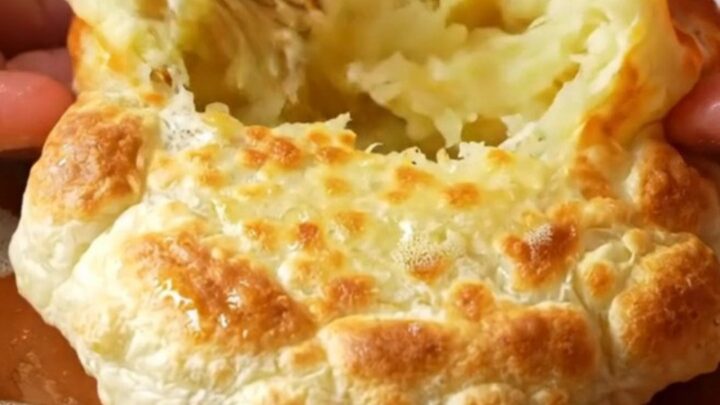
- Cook the FlatbreadsHeat a dry skillet over medium heat. Place one flatbread in the skillet and cook until it puffs up and the bottom is golden with brown spots, about 2 minutes. Flip and cook the other side until golden and cooked through, another 2 minutes. Remove from the skillet and immediately brush with melted butter. Repeat with the remaining flatbreads.Look for The flatbread puffs dramatically and develops a golden, speckled crust.Tip Do not overcrowd the skillet; cook one at a time for even browning.
As the flatbread cooks, it will puff up dramatically. The bottom should develop golden spots and a crisp texture. When flipped, the other side will brown similarly.
The smell of toasting bread and butter fills the kitchen. Each flatbread should be cooked through and soft to the touch.
Butter and Serve
- Serve WarmStack the cooked flatbreads on a plate and cover with a clean towel to keep them warm. Serve immediately, tearing open to reveal the steamy, spiced potato filling.Look for The flatbreads are soft, buttery, and release steam when torn.Tip For the best texture, serve within 30 minutes of cooking.
Right after cooking, brush each flatbread with melted butter. The butter sizzles on the hot surface, soaking into the bread. Serve them warm, stacked and covered with a towel. When torn open, steam escapes, revealing the creamy potato filling.
Common mistakes
One common mistake is overfilling the flatbreads, which can cause them to burst during cooking. Use a generous but manageable amount of filling. Another is rolling the dough too thin, which can make the bread dry and prone to tearing.
Aim for a 1/2-inch thickness. Cooking over too high heat can burn the outside before the inside is done; medium heat is ideal. If the bread doesn't puff, the dough may not have risen enough—ensure it doubles in volume.
How to tell it’s done
The flatbreads are done when they are puffed and golden brown on both sides, with darker spots from the skillet. The interior should be cooked through—when you tap the surface, it should sound hollow.
If you pull one open, the layers should be soft and steamy, with the potato filling hot and creamy. There should be no raw dough in the center.
Up next · Part 3 of 3
4 variations · storage & make-ahead · 5 answers · printable card
Tips, FAQ & printable recipe (Part 3)← Back to the ingredients (Part 1)