Dinner · Part 2 of 3: Instructions
Golden Mozzarella Sweet Corn Chicken Tenders Step-by-step instructions
- Prep
- Cook
- Total
- Serves
- 6
Before you start
Before starting, gather all your ingredients. If your chicken tenderloins are large, you can leave them whole; they will shred later. There's no need to thaw the frozen corn. Make sure your slow cooker is clean and ready.
You'll also want to have your serving dish ready—cooked pasta, rice, or even crusty bread works well. This recipe is truly dump-and-go, so there's minimal prep involved.
Ingredients at a glance (5)
- 2 lb chicken breast tenderloins
- 2 cups frozen sweet corn kernels
- 1 can condensed cream of potato soup (10.5 oz)
- 2 cups shredded whole-milk mozzarella cheese
- 2 tbsp garlic herb butter (or regular butter plus 1 tsp garlic powder and 1 tsp dried herbs)
Instructions
Layer the Ingredients
- Layer the ChickenPlace the chicken breast tenderloins in an even layer in the bottom of a 6-quart slow cooker. If the tenderloins are very large, you can leave them whole; they will shred easily after cooking.Look for The chicken should cover the bottom of the slow cooker in a single layer.Tip For even cooking, try to place the thicker ends toward the outside of the slow cooker.
- Add Corn and SoupScatter the frozen sweet corn kernels evenly over the chicken. Then pour the condensed cream of potato soup over the top, spreading it gently with a spoon to cover most of the chicken and corn.Look for The soup should form a thick layer over the corn, but it doesn't need to be perfectly smooth.Tip Frozen corn works perfectly here—no need to thaw it first.
- Top with Cheese and ButterSprinkle the shredded mozzarella cheese evenly over the soup layer. Dot the top with the garlic herb butter, placing small pieces here and there so it melts into the sauce as it cooks.Look for The cheese should cover the surface, with small butter pats visible on top.Tip If using plain butter, mix it with garlic powder and herbs before adding.
At the end of this phase, the slow cooker contains a neat layer of chicken tenders, topped with a scattering of golden corn kernels and a thick spread of cream of potato soup. The mozzarella and butter are dotted on top.
The raw ingredients look vibrant and fresh, with the white soup contrasting against the yellow corn and pale chicken. Everything is ready for the slow cooker to work its magic.
Slow Cook Until Tender
- Cook on LowCover the slow cooker and cook on low for 4 to 5 hours, or until the chicken is fork-tender and easily shreds. The internal temperature of the chicken should read 165°F (74°C) on an instant-read thermometer.Look for The sauce will be bubbling gently around the edges, and the chicken will be opaque and tender.Safe temperature 165°F (74°C) internal temperature (poultry)Tip Avoid lifting the lid during cooking—each peek lets out heat and adds time.
- Stir and ShredOnce the chicken is cooked through, use two forks to shred the tenderloins directly in the slow cooker. Stir everything together so the sauce coats the chicken and corn evenly.Look for The chicken should pull apart easily, and the sauce should be creamy and well combined.Tip If the sauce seems thin, leave the lid off for 10-15 minutes to let it thicken slightly.
After 4-5 hours on low, the slow cooker is filled with a gently bubbling sauce. The chicken is fork-tender and easily shreds, the corn is plump and tender, and the mozzarella has melted into a creamy, golden sauce. The aroma is rich and savory, with hints of garlic and herbs. The sauce has thickened slightly and coats the back of a spoon.
Finish and Serve
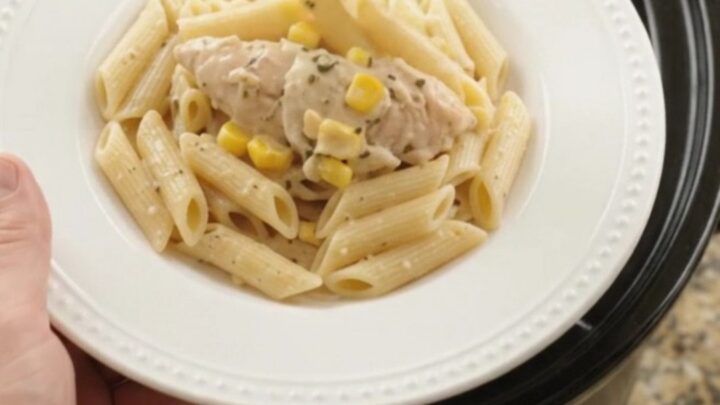
- Serve Over PastaSpoon the hot chicken and corn mixture over cooked al dente pasta, such as penne or your favorite shape. Serve immediately, with extra mozzarella on top if desired.Look for The sauce should be thick enough to cling to the pasta, and the chicken should be in tender shreds.Tip For a lower-carb option, serve over steamed rice or cauliflower rice.
The shredded chicken and corn are coated in a luscious, creamy sauce. When spooned over hot pasta, the sauce clings to every bite, and the dish looks golden and inviting. The texture is creamy, with tender chicken and sweet corn in every mouthful. It smells like a comforting, homey dinner that's ready to be enjoyed.
Common mistakes
One common mistake is lifting the lid too often to check on the chicken. This releases heat and extends the cooking time. Another is using pre-shredded mozzarella from a bag, which often contains anti-caking agents that prevent smooth melting.
For the best texture, shred your own cheese from a block. Also, be careful not to overcook the chicken—while slow cookers are forgiving, leaving it for too long can make the chicken dry and stringy. Stick to the recommended time and check for doneness early.
How to tell it’s done
The chicken is done when it reaches an internal temperature of 165°F (74°C) and shreds easily with a fork. The sauce should be bubbly and thickened, with the cheese fully melted and incorporated.
If the sauce seems too thin, remove the lid and let it cook on high for an additional 15-20 minutes to reduce. The corn will be tender but still slightly firm to the bite, and the overall dish will have a rich, savory aroma.
- Poultry: 165°F (74°C) in the thickest part
Up next · Part 3 of 3
4 variations · storage & make-ahead · 5 answers · printable card
Tips, FAQ & printable recipe (Part 3)← Back to the ingredients (Part 1)