Desserts · Part 2 of 3: Instructions
Golden Caramel Trileçe: A Rich, Creamy Milk Cake Step-by-step instructions
- Prep
- Cook
- Total
- Serves
- 12
Before you start
Before starting, bring the eggs to room temperature and measure all ingredients. Preheat the oven to 325°F (160°C) and grease a 9x13-inch baking pan. Have the milk mixture ready before the cake comes out of the oven, and chill the bowl and beaters for the whipped cream.
For the caramel, warm the heavy cream so it doesn’t seize when added. Prepare a clean surface for pouring the caramel, and have a toothpick ready for decorating.
Ingredients at a glance (15)
- 6 large eggs, separated
- 3/4 cup granulated sugar, divided
- 1 tsp fresh lemon juice
- 1 cup all-purpose flour
- 1 tsp baking powder
- 1/4 tsp salt
- 1 cup whole milk
- 1 cup evaporated milk
- 1 cup sweetened condensed milk
- 2 cups heavy cream, cold
- 1/4 cup confectioners' sugar
- 1 tsp vanilla extract
- 1 cup granulated sugar
- 3 tbsp unsalted butter, cut into pieces
- 1/2 cup heavy cream, warm
Instructions
Bake the Sponge
- Whip the Egg WhitesSeparate the eggs, placing the whites in a large mixing bowl and the yolks in a separate bowl. Add the lemon juice to the whites. Beat the egg whites with an electric mixer on medium speed until foamy, then gradually add 1/2 cup of the sugar. Continue beating until stiff, glossy peaks form.Look for The meringue should hold a firm peak when the whisk is lifted.Safe temperature 160°F (71°C) internal temperature (egg dishes)Tip Make sure the bowl and beaters are clean and free of any grease for the best volume.
- Fold the BatterIn another bowl, beat the egg yolks with the remaining 1/4 cup sugar until pale and thick. Sift the flour, baking powder, and salt over the yolks and fold gently. Then fold in the whipped egg whites in three additions, using a spatula, until no streaks remain.Look for The batter should be airy and light, with no large pockets of flour.Tip Fold gently to keep the air in the meringue; overmixing will deflate the sponge.
- Bake the SpongePour the batter into a greased and floured 9x13-inch baking pan and spread it evenly. Bake in an oven preheated to 325°F (160°C) for 25 to 30 minutes, until the top is golden and a toothpick inserted in the center comes out clean. Let the cake cool in the pan for 10 minutes, then pierce it all over with a fork.Look for The cake should be springy to the touch and lightly browned.Tip Do not overbake; a dry sponge won't soak up the milk as well.
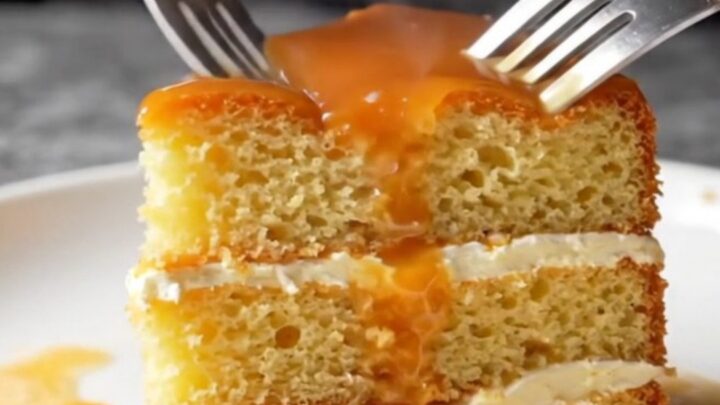
The sponge should be tall, golden, and springy to the touch. When pierced with a fork, the holes will allow the milk soak to penetrate. The aroma of baked eggs and vanilla fills the kitchen.
The cake should have pulled away slightly from the pan edges and a toothpick inserted in the center comes out clean. Let it cool for 10 minutes before soaking.
Soak and Top
- Make the Milk SoakIn a measuring cup or bowl, whisk together the whole milk, evaporated milk, and sweetened condensed milk until well combined. Slowly pour the milk mixture over the warm cake, making sure it is evenly absorbed, especially at the edges. Let the cake cool completely, then refrigerate for at least 2 hours.Look for The cake should look moist and slightly puffed from the liquid.Tip Pour the milk slowly so it has time to soak in; you can use a spoon to help distribute.
- Whip the Cream ToppingIn a chilled bowl, beat the heavy cream with the confectioners' sugar and vanilla extract until soft peaks form. The cream should be spreadable but still hold its shape. Spread the whipped cream evenly over the chilled cake using an offset spatula.Look for The cream should be smooth and satiny, with soft peaks.Tip Chill the bowl and beaters for a fluffier, more stable cream.
- Chill the CakeRefrigerate the assembled cake for at least 4 hours, or overnight, to allow the flavors to meld and the cake to set. This step is essential for clean slicing.Look for The cake should feel firm and the cream should be set.Tip Overnight chilling gives the best texture and flavor.
The cake should look visibly moist and darker after the milk soak, with the liquid fully absorbed. The whipped cream should be smooth and spreadable, holding soft peaks. The assembled cake should be level and the cream evenly distributed. After chilling, the cream should be set and the cake firm to the touch, ready for the caramel.
Caramel Finish
- Make the CaramelIn a heavy saucepan, spread the sugar in an even layer. Cook over medium heat, swirling the pan occasionally, until the sugar melts and turns a deep amber color. Remove from heat and carefully whisk in the butter and warm heavy cream. The mixture will bubble vigorously; stir until smooth.Look for The caramel should be glossy and smooth, with no lumps.Tip Be careful when adding the cream; the mixture is very hot and will splatter.
- Pour and DecorateLet the caramel cool slightly until it thickens but is still pourable. Pour it over the chilled cake, tilting the pan to cover the entire surface. Use a toothpick to feather decorative lines in the caramel, if desired. Refrigerate for at least 30 minutes to set the caramel.Look for The caramel should be smooth and shiny, with a deep amber color.Tip If the caramel becomes too thick, warm it gently with a bit of cream.
The caramel should be a deep amber color, glossy, and smooth. When poured over the cake, it should flow slowly and coat the cream evenly, creating a mirror-like sheen. The toothpick feathered lines should create elegant swirls. After chilling, the caramel should be set but still slightly tacky, and the cake ready to slice and serve.
Common mistakes
Overmixing the batter can deflate the egg whites, resulting in a dense cake. Pouring the milk soak too quickly may cause it to pool on top instead of absorbing. Skipping the chilling time will make the cake fall apart when sliced.
For the caramel, avoid stirring once the sugar begins to melt—swirl the pan instead—to prevent crystallization. If the cream is too cold when added, the caramel may harden; warm it gently.
How to tell it’s done
The sponge is done when it is golden brown and springs back when lightly pressed, and a toothpick inserted in the center comes out clean. The internal temperature of the cake should read 200°F (93°C) in the center.
The caramel is ready when it reaches a deep amber color and registers 350°F (177°C) on a candy thermometer. The assembled cake should be chilled until firm for clean slicing.
- Egg dishes: 160°F (71°C) in the thickest part
Up next · Part 3 of 3
4 variations · storage & make-ahead · 5 answers · printable card
Tips, FAQ & printable recipe (Part 3)← Back to the ingredients (Part 1)