Dinner · Part 2 of 3: Instructions
Glazed Brown Sugar Garlic Pork Tenderloin Step-by-step instructions
- Prep
- Cook
- Total
- Serves
- 4
Before you start
Before you begin, ensure your oven is fully preheated to 400°F (200°C) to ensure the pork starts cooking immediately upon entering the oven. Prepare your workspace by laying out all ingredients.
Remove the pork tenderloin from the refrigerator about 20 minutes before cooking to help it come closer to room temperature, which promotes more even roasting.
Ensure your roasting pan is clean and dry. Have your whisk and mixing bowl ready for the glaze, and double-check that your meat thermometer is calibrated and accessible so you can monitor the internal temperature accurately throughout the process.
Ingredients at a glance (5)
- 1 1/2 lb pork tenderloin, trimmed
- 1/2 cup brown sugar, packed
- 3 cloves garlic, minced
- 2 tbsp soy sauce
- fresh thyme, for serving
Instructions
Mixing the glaze
- Prepare the glazeIn a small mixing bowl, combine the brown sugar, minced garlic, and soy sauce. Whisk the ingredients together until the sugar is dissolved and the mixture is well incorporated into a smooth, thick glaze.Look for The mixture should look uniform and smell fragrant from the garlic.Tip Ensure the brown sugar is fully dissolved to create a consistent glaze that coats the pork evenly.
The glaze should be smooth, thick, and well-blended. Ensure the brown sugar has completely dissolved into the soy sauce, creating a uniform, dark, and aromatic liquid that is ready to be applied generously to the surface of the meat.
Roasting the tenderloin
- Roast the porkPreheat your oven to 400°F (200°C). Place the pork tenderloin into a roasting pan. Brush the pork generously with the prepared glaze, ensuring all sides are coated. Roast in the oven until the internal temperature reaches 145°F (63°C) when measured with a meat thermometer. Once finished, remove from the oven and let the meat rest at least 3 minutes before slicing.Look for The pork should be golden brown and the glaze should be bubbling and slightly caramelized.Safe temperature 145°F (63°C) internal temperature (steaks, chops and roasts)Tip Baste the pork halfway through the cooking process with the pan juices for extra flavor.
The pork should be roasting evenly, with the glaze darkening and bubbling. Check the internal temperature periodically. The meat should look golden-brown and feel firm but tender when pressed gently with tongs, indicating it is nearing the perfect finish.
Final rest and service
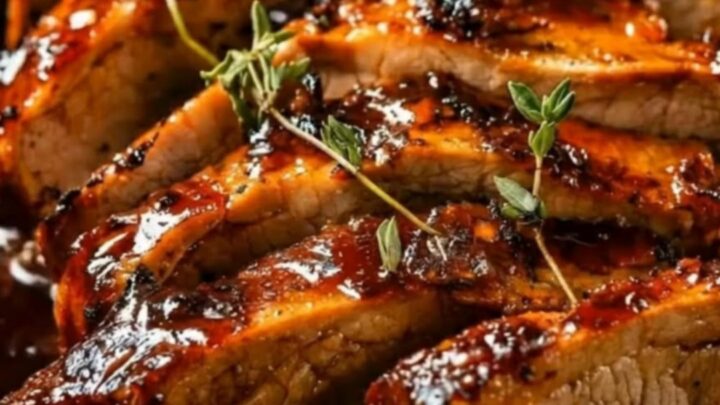
- Rest and serveOnce rested, slice the pork into medallions. Garnish with fresh thyme and serve warm with the remaining glaze from the pan drizzled on top.Look for The meat should be firm but juicy, and the juices should run clear upon slicing.Tip Letting the meat rest is essential to keep the juices locked inside for maximum tenderness.
The pork should be resting on a cutting board, allowing the juices to redistribute. The glaze should have thickened into a glossy, sticky coating that clings to the meat. Once rested, the slices should show a beautiful, tender texture.
Common mistakes
Avoid overcooking the pork, as tenderloin is a very lean cut and can become tough and dry if left in the oven for too long. Always use a meat thermometer to track the temperature rather than relying on time alone. Another common mistake is not letting the meat rest after roasting.
Slicing immediately causes the precious juices to run out onto the cutting board, resulting in dry meat. Finally, ensure the oven is fully preheated; putting the meat into a cold oven will lead to uneven cooking and poor caramelization of the glaze.
How to tell it’s done
The pork is perfectly done when it reaches an internal temperature of 145°F (63°C) at the thickest part. Use a meat thermometer to check this, as visual cues can be deceptive. Once the pork reaches this temperature, it will be firm to the touch yet still springy.
It is essential to let the meat rest for at least 3 minutes after removing it from the oven, as this allows the muscle fibers to relax and reabsorb the juices, ensuring every slice is as succulent and tender as possible.
- Steaks, chops and roasts: 145°F (63°C) in the thickest part, then a 3-minute rest
Up next · Part 3 of 3
2 variations · storage & make-ahead · 3 answers · printable card
Tips, FAQ & printable recipe (Part 3)← Back to the ingredients (Part 1)