Dinner · Part 2 of 3: Instructions
Garlic Herb Roasted Chicken with Potatoes and Green Beans Step-by-step instructions
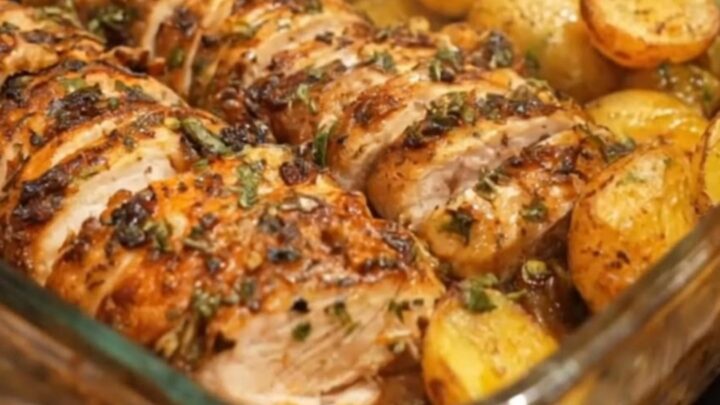
- Prep
- Cook
- Total
- Serves
- 4
Before you start
Before beginning, ensure the oven is fully preheated to 400°F (200°C) to guarantee consistent roasting from the start. Prepare all ingredients by slicing the chicken into even, manageable strips and ensuring the potatoes are halved to a uniform size.
Having all components measured and ready in the workspace will make the assembly process seamless, allowing for a quick transition from the prep area to the oven without any unnecessary delays.
Ingredients at a glance (5)
- 1 1/2 lb chicken breasts, sliced
- 1 lb baby potatoes, halved
- 1/2 lb green beans, trimmed
- 4 cloves garlic, minced
- 1 tbsp dried herbs (thyme and rosemary blend)
Instructions
Ingredient Preparation
- Prepare the ingredientsPreheat the oven to 400°F (200°C). Slice the chicken breasts into uniform strips. Halve the baby potatoes and trim the green beans to ensure even cooking throughout the dish.Look for Vegetables are prepped and chicken is slicedTip Keep potato pieces consistent in size so they finish at the same time as the chicken.
At the end of this phase, the chicken is sliced into uniform pieces, the potatoes are halved, and the green beans are trimmed.
The oven has reached the target temperature, and the workspace is organized, ensuring that the assembly process will be efficient and that all ingredients are ready for the seasoning step.
Seasoning and Assembly
- Season and assemblePlace the chicken, potatoes, and green beans into the glass baking dish. Add the minced garlic and dried herbs. Toss thoroughly with tongs until everything is evenly coated.Look for Ingredients are evenly coated in the garlic and herb mixtureTip Ensure the chicken is not overly crowded to allow the heat to circulate properly.
The herb and garlic mixture is fully incorporated, and every piece of chicken and vegetable is glistening. The ingredients are distributed in a single layer in the baking dish, ensuring no large gaps or excessive piling, which is the final check before the dish goes into the oven for the roasting process.
Roasting
- Roast to perfectionPlace the dish in the oven and roast for 40 to 45 minutes. Ensure the chicken reaches an internal temperature of 165°F (74°C) using a meat thermometer. Remove from the oven and let the chicken rest for 5 minutes before serving to ensure maximum juiciness.Look for Chicken is golden brown and vegetables are tenderSafe temperature 165°F (74°C) internal temperature (poultry)Tip Checking the temperature at the thickest part of the chicken prevents overcooking.
The chicken has reached an internal temperature of 165°F (74°C), and the potatoes are soft to the touch. The kitchen is filled with the aroma of roasted garlic and herbs. The vegetables are tender, and the chicken has achieved a light, appetizing color before being removed for the final rest.
Common mistakes
A common mistake is overcrowding the baking dish, which can lead to steaming rather than roasting, resulting in soggy vegetables and rubbery chicken. Ensure there is enough space between the pieces for hot air to circulate.
Another error is failing to cut the potatoes into uniform sizes, which leads to some pieces being overcooked while others remain raw. Finally, neglecting to let the chicken rest after cooking will cause the juices to escape, leading to dry meat.
How to tell it’s done
The chicken is perfectly done when it reaches an internal temperature of 165°F (74°C) at its thickest point. The meat should be opaque throughout and the juices should run clear when pierced with a fork.
The potatoes should be fork-tender, easily yielding to light pressure, and the green beans should have a bright color with soft but distinct texture. Allowing the dish to rest for 5 minutes after removing it from the oven is critical for redistributing the juices.
- Poultry: 165°F (74°C) in the thickest part
Up next · Part 3 of 3
2 variations · storage & make-ahead · 3 answers · printable card
Tips, FAQ & printable recipe (Part 3)← Back to the ingredients (Part 1)