Dinner · Part 2 of 3: Instructions
Garlic Herb Roast Lamb with Golden Potatoes Step-by-step instructions
- Prep
- Cook
- Total
- Serves
- 4
Before you start
Before beginning the cooking process, ensure all ingredients are properly measured and prepared. Remove the lamb shanks from the refrigerator approximately thirty minutes prior to cooking to take the chill off, which promotes even cooking.
Wash the yellow potatoes thoroughly and cut them into uniform wedges so they cook at the same rate. Peel and finely mince the garlic cloves, and rinse the fresh rosemary and cherry tomatoes, patting them dry with paper towels. Preheat the oven to 400 degrees Fahrenheit (200 degrees Celsius) and position the oven rack in the center.
Ingredients at a glance (5)
- 4 bone-in lamb shanks (about 3 pounds total)
- 6 cloves garlic, minced
- 4 sprigs fresh rosemary, divided
- 1 1/2 lbs yellow potatoes, cut into wedges
- 2 cups cherry tomatoes
Instructions
Prep and Sear the Lamb
- Prep and Season the Lamb and PotatoesPreheat the oven to 400°F (200°C). Toss the cut yellow potatoes in a bowl with half of the minced garlic and half of the rosemary. Rub the remaining garlic and rosemary all over the lamb shanks, ensuring they are evenly coated with the herbs.Look for The potatoes should be evenly coated with herbs.Tip Dry the lamb shanks thoroughly with paper towels before seasoning to help the herbs adhere to the skin.
- Sear the Lamb ShanksHeat a large roasting pan or heavy skillet over medium-high heat. Add the seasoned lamb shanks directly to the dry pan and sear them for about 2 to 3 minutes per side. This process browns the skin, locks in the natural juices, and renders the initial layer of lamb fat, creating a deeply flavorful foundation for roasting.Look for Look for a rich, golden-brown crust on all sides of the shanks.Tip Avoid overcrowding the pan during searing to ensure a proper crust rather than steaming the meat.
At the end of this initial preparation and searing phase, the lamb shanks should exhibit a beautifully browned, caramelized crust on all sides. The kitchen will begin to fill with the savory aroma of browning meat and melting lamb fat. The potatoes should be thoroughly coated in the garlic and rosemary mixture, ready to absorb the rich flavors during roasting. Ensure no garlic is burning in the pan, as this can introduce a bitter taste to the final dish.
Roast with Potatoes
- Roast the Lamb and PotatoesArrange the seared lamb shanks in the center of the roasting pan and surround them with the seasoned yellow potatoes. Transfer the pan to the preheated oven and roast at 400°F (200°C) for 45 minutes, allowing the potatoes to absorb the rich, rendering lamb fat as they cook.Look for The potatoes should begin to turn golden and the lamb skin should look crispy.Tip Toss the potatoes halfway through the roasting time to ensure they brown evenly on all sides.
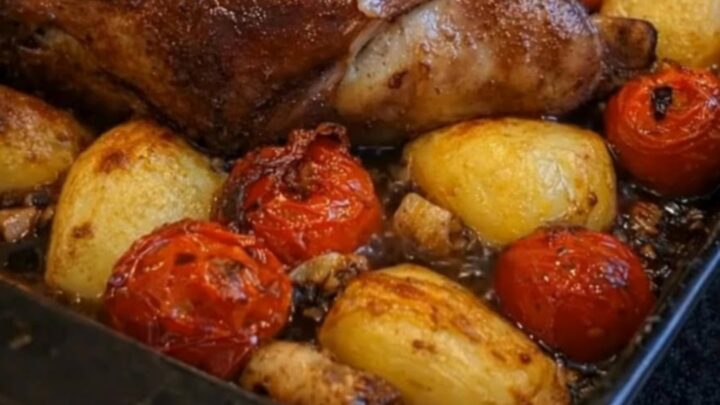
By the end of the main roasting phase, the lamb shanks will have shrunk slightly on the bone, revealing a deeply roasted, dark golden-brown exterior. The potatoes surrounding the meat should appear golden and feel tender when pierced with a fork, having absorbed a significant amount of the rendered lamb fat and garlic.
The rosemary sprigs in the pan will be dark and fragrant, and the pan juices should be bubbling actively, filling the kitchen with an incredibly rich, comforting aroma.
Blister Tomatoes and Rest
- Add Tomatoes, Roast, and RestScatter the cherry tomatoes around the roasting pan. Continue to roast for another 15 to 20 minutes until the tomatoes blister and burst. Ensure the lamb reaches an internal temperature of 145°F (63°C). Remove the pan from the oven and let the lamb rest for at least 3 minutes before carving.Look for The tomatoes should be blistered and the lamb juices should run clear.Safe temperature 145°F (63°C) internal temperature (steaks, chops and roasts)Tip Letting the lamb rest is crucial for retaining its juices and ensuring tender meat.
At the final checkpoint, the cherry tomatoes should be blistered, slightly wrinkled, and bursting with sweet juices that mingle with the savory pan drippings. The lamb shanks must have a crisp, beautifully rendered skin and reach an internal temperature of 145 degrees Fahrenheit (63 degrees Celsius).
After a crucial three-minute rest, the juices within the meat will have redistributed, ensuring every slice is incredibly tender, moist, and ready to be carved and served alongside the roasted vegetables.
Common mistakes
One common mistake is overcrowding the roasting pan, which traps steam and prevents the potatoes from becoming crispy, resulting in a soggy texture instead. Another frequent error is adding the cherry tomatoes too early in the roasting process, causing them to break down completely into a watery mush rather than blister beautifully.
Additionally, skipping the searing step or failing to let the roasted lamb rest after cooking will result in a loss of flavorful juices and a less tender texture when carving.
How to tell it’s done
To determine perfect doneness, always rely on a digital meat thermometer inserted into the thickest part of the lamb shank without touching the bone. The lamb is safely cooked and perfectly juicy when it reaches an internal temperature of 145°F (63°C). Once this temperature is reached, it is absolutely essential to remove the lamb from the oven and let it rest for at least 3 minutes, allowing the muscle fibers to relax and lock in the steaming juices before serving.
- Steaks, chops and roasts: 145°F (63°C) in the thickest part, then a 3-minute rest
Up next · Part 3 of 3
2 variations · storage & make-ahead · 3 answers · printable card
Tips, FAQ & printable recipe (Part 3)← Back to the ingredients (Part 1)