Dinner · Part 2 of 3: Instructions
Garlic Herb Roast Beef with Savory Au Jus Step-by-step instructions
- Prep
- Cook
- Total
- Serves
- 6
Before you start
Before beginning, ensure all your ingredients are prepared and ready. Mince the garlic finely and chop the fresh herbs to ensure they distribute evenly over the beef. Slice the yellow onions into consistent rounds or half-moons so they cook uniformly.
Having your roasting pan and aluminum foil within reach will make the assembly process seamless. Take the beef out of the refrigerator 30 minutes before you plan to start so it loses its chill, allowing for a more consistent cook from edge to center.
Ingredients at a glance (4)
- 3 lb beef chuck roast
- 6 cloves garlic, minced
- 2 tbsp fresh herbs (rosemary and thyme), chopped
- 2 large yellow onions, sliced
Instructions
Seasoning and Preparation
- Season and PreparePreheat the oven to 325°F (163°C). Pat the beef dry with paper towels. Rub the minced garlic and chopped fresh herbs all over the exterior of the roast to create a flavorful crust. Ensure the seasonings are evenly distributed for maximum impact during the slow roasting process.Look for The meat should be coated evenly with the garlic and herb mixture.Tip Bring the meat to room temperature for 30 minutes before seasoning for a more even cook.
At the end of this phase, the beef should be completely coated in the garlic and herb mixture. The seasoning should be pressed firmly into the meat to ensure it stays in place. The onions should be arranged in an even layer in the roasting pan, creating a stable base for the roast. Everything should be ready for the oven, with the pan tightly sealed to prevent steam from escaping during the roasting process.
The Roasting Process
- Slow RoastPlace the sliced onions into the bottom of the roasting pan to create a bed for the beef. Set the roast on top of the onions. Cover the pan tightly with aluminum foil to trap moisture. Roast in the center of the oven until the internal temperature reaches 145°F (63°C). Once reached, remove from the oven and let the meat rest at least 3 minutes.Look for The aroma of roasted garlic and onions should fill the kitchen.Safe temperature 145°F (63°C) internal temperature (steaks, chops and roasts)Tip Check the temperature at the thickest part of the roast to ensure accuracy.
During this phase, the oven should remain closed to maintain a consistent temperature. You will smell the garlic and onions softening as the beef cooks. By the end, the meat should be tender and the onions beneath should have softened significantly, releasing their liquid.
Use your thermometer to check the internal temperature; the meat should be firm to the touch but still yield slightly under pressure, indicating it has reached the target temperature.
Resting and Slicing
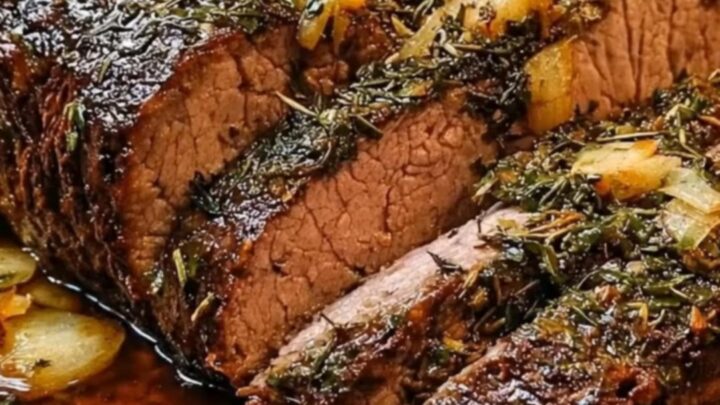
- Rest and ServeRemove the pan from the oven and let the roast rest, covered, for at least 20 minutes before carving. This resting period allows the juices to redistribute throughout the meat, resulting in a juicier texture. Once rested, slice the beef against the grain and serve immediately with the pan juices and softened onions from the bottom of the roasting pan.Look for The juices should be clear and the meat should be easy to slice.Safe temperature 145°F (63°C) internal temperature (steaks, chops and roasts)Tip Use a sharp carving knife to get thin, clean slices that hold their shape.
The roast must rest for at least 20 minutes. During this time, the pan juices will settle and the meat will become easier to slice without falling apart. The exterior should have a fragrant herb crust, and the interior should be uniform in color. When you slice against the grain, the meat should be succulent and tender. Ensure the carving knife is sharp to create neat slices that are ready for immediate service.
Common mistakes
A common mistake is failing to let the meat rest after it comes out of the oven. Resting is non-negotiable, as it allows the internal juices to stabilize; slicing too early will cause those juices to run out, leaving the meat dry.
Another error is neglecting to season the beef generously; because the roast is a large piece of meat, it requires more seasoning than you might expect to ensure the flavor penetrates beyond the surface. Finally, do not skip the onions, as they provide the essential moisture and flavor for the au jus.
How to tell it’s done
The roast is done when the internal temperature reaches 145°F (63°C) at the thickest part of the meat. This will provide a medium-rare result. If you prefer your beef more well-done, you can continue to cook it until it reaches 160°F (71°C), though the texture will be firmer.
Always use a meat thermometer inserted into the center to avoid guesswork. Remember that the temperature will rise slightly while the meat rests, so pull it from the oven just before it reaches your target.
- Steaks, chops and roasts: 145°F (63°C) in the thickest part, then a 3-minute rest
Up next · Part 3 of 3
2 variations · storage & make-ahead · 3 answers · printable card
Tips, FAQ & printable recipe (Part 3)← Back to the ingredients (Part 1)