Dinner · Part 2 of 3: Instructions
Garlic Herb Roast Beef with Roasted Potatoes and Carrots Step-by-step instructions
- Prep
- Cook
- Total
- Serves
- 6
Before you start
Before beginning, ensure that your beef roast has been removed from the refrigerator about 20 to 30 minutes before cooking to help it come closer to room temperature. This promotes more even cooking.
Peel and slice your carrots into uniform pieces to ensure they finish cooking at the same time as the potatoes.
Prepare your herb-garlic rub in a small bowl, and ensure your baking dish is clean and ready to go. Having all your ingredients prepped and within reach makes the entire process seamless.
Ingredients at a glance (5)
- 3 lb beef roast, trimmed
- 1.5 lb baby potatoes, halved
- 1 lb carrots, peeled and sliced
- 4 cloves garlic, minced
- 2 tbsp mixed fresh herbs, chopped
Instructions
Preparation
- Prepare the Roast and VegetablesPreheat the oven to 375°F (190°C). In a small bowl, combine the minced garlic and fresh herbs. Place the beef roast in the center of the baking dish and rub the herb mixture evenly over the entire surface of the meat.Look for The herb rub should be evenly distributed and fragrant.Tip Ensure the beef is patted dry with paper towels before applying the herbs to help them adhere better.
The beef should be thoroughly coated in the herb and garlic mixture, and the vegetables should be prepped and ready for the dish. The oven must be fully preheated to the correct temperature to ensure consistent roasting from the moment the dish enters the oven.
Roasting
- Arrange and RoastArrange the halved baby potatoes and sliced carrots around the beef roast in the baking dish. Place the dish in the oven and roast for approximately 75 to 90 minutes.Look for The vegetables should be tender and the beef should be cooked through.Tip If the vegetables seem to be browning too quickly, cover the dish loosely with foil for the first half of cooking.
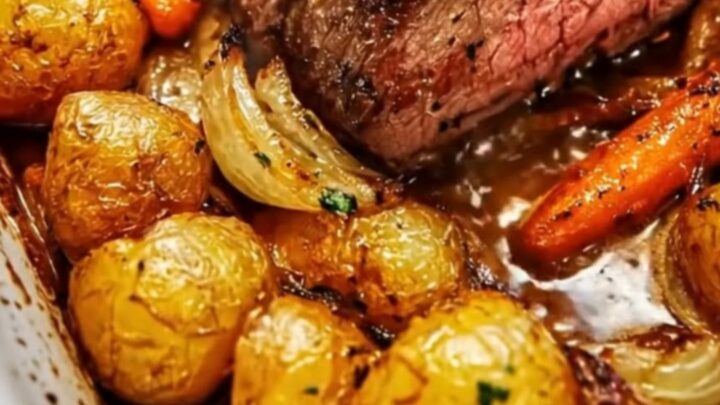
The kitchen should be filled with the rich, savory aroma of roasting beef and garlic. The vegetables should look golden and glazed with the pan juices, and the beef should be developing a deep, browned crust on the exterior while remaining succulent.
Resting
- Final Temperature and RestingCheck the internal temperature of the beef using a meat thermometer. The roast is ready when it reaches 145°F (63°C). Remove the dish from the oven and transfer the beef to a cutting board. Let the meat rest for at least 3 minutes before carving to ensure maximum juiciness.Look for The meat should be firm to the touch and the juices should run clear.Safe temperature 145°F (63°C) internal temperature (steaks, chops and roasts)Tip Do not skip the resting phase, as this allows the muscle fibers to relax and reabsorb the flavorful juices.
The beef should be resting on a board, allowing the juices to redistribute throughout the meat. It should look firm and moist. Once the resting time is complete, the meat will be ready to slice into tender portions that are perfect for serving.
Common mistakes
A common mistake is overcrowding the baking dish, which prevents the vegetables from browning properly and can lead to uneven cooking. Ensure there is enough space between the meat and the vegetables for heat to circulate.
Another error is neglecting to rest the meat; carving too early causes the juices to escape, leading to dry beef. Finally, avoid using high heat, as this can result in the exterior of the roast becoming tough before the interior reaches the desired level of doneness.
How to tell it’s done
The beef is perfectly done when it reaches an internal temperature of 145°F (63°C) for a medium-rare to medium finish. Use an instant-read meat thermometer inserted into the thickest part of the roast to verify this.
The meat should be tender when pierced with a fork. Remember that the temperature will rise slightly during the resting phase, so removing it from the oven at the target temperature is ideal for maintaining the best texture and juiciness throughout the meat.
- Steaks, chops and roasts: 145°F (63°C) in the thickest part, then a 3-minute rest
Up next · Part 3 of 3
2 variations · storage & make-ahead · 3 answers · printable card
Tips, FAQ & printable recipe (Part 3)← Back to the ingredients (Part 1)