Dinner · Part 2 of 3: Instructions
Garlic Herb Roast Beef with Potatoes & Carrots Step-by-step instructions
- Prep
- Cook
- Total
- Serves
- 6
Before you start
Before you start, take the beef roast out of the refrigerator and let it sit at room temperature for about 30 minutes – this helps it cook more evenly. Preheat your oven to 350°F (175°C).
Prepare the garlic herb rub by mincing the garlic and chopping the fresh herbs. Wash the baby potatoes and baby carrots, and pat them dry. Have your large oven-safe skillet or roasting pan ready, along with a meat thermometer to check for doneness.
Ingredients at a glance (10)
- 3 lb beef chuck roast
- 6 cloves garlic, minced
- 2 tbsp fresh rosemary, chopped
- 1 tbsp fresh thyme leaves
- 2 tbsp olive oil
- 1 tbsp kosher salt
- 1 tsp black pepper
- 1 cup beef broth
- 1 1/2 lb baby potatoes
- 1 lb baby carrots
Instructions
Prepare and Sear
- Prepare the Garlic Herb RubIn a small bowl, combine the minced garlic, chopped rosemary, thyme leaves, olive oil, kosher salt, and black pepper. Stir to form a thick paste. Pat the beef chuck roast dry with paper towels and rub the herb mixture all over the meat, pressing gently to adhere.Look for The rub should coat the entire surface of the roast evenly.Tip For deeper flavor, let the rubbed roast sit in the refrigerator for up to 24 hours before cooking.
- Sear the RoastHeat a large oven-safe skillet or roasting pan over medium-high heat. Add a splash of olive oil (or use the oil from the rub). Sear the roast on all sides until deeply browned, about 3-4 minutes per side. This builds a flavorful crust.Look for The roast should be browned on all sides with a rich crust.Tip Do not overcrowd the pan; sear in batches if necessary.
- Add Broth and VegetablesPour the beef broth into the pan around the roast. Add the baby potatoes and baby carrots, arranging them around the meat. Bring the liquid to a simmer.Look for The broth should be bubbling gently around the vegetables.Tip Tuck the vegetables under the roast for extra flavor.
At the end of this phase, the roast should be evenly coated with the garlic herb rub and seared to a deep brown on all sides. The vegetables are arranged around the roast, and the broth is simmering. The kitchen smells of garlic and herbs, and the sizzle of the searing meat sets the stage for a delicious meal.
Roast and Rest
- Roast the BeefTransfer the pan to an oven preheated to 350°F (175°C). Roast uncovered, basting the meat with the pan juices every 20 minutes, until the internal temperature of the roast reaches 145°F (63°C) for medium-rare, or 160°F (71°C) for medium. This will take about 1 to 1 1/2 hours, depending on the size of the roast. Let it rest for 3 minutes before slicing.Look for The meat thermometer should read the desired temperature.Safe temperature 145°F (63°C) internal temperature (steaks, chops and roasts)Tip Start checking the temperature 30 minutes before the expected finish time.
- Rest the RoastOnce the roast reaches the desired temperature, remove it from the oven and transfer it to a cutting board. Tent loosely with aluminum foil and let it rest for at least 3 minutes. This allows the juices to redistribute throughout the meat.Look for The roast should rest for at least 3 minutes before slicing.Tip Resist the urge to slice immediately – resting is key to juicy meat.
After roasting, the meat should be beautifully browned and the internal temperature should read 145°F (63°C) for medium-rare.
The vegetables are tender and have absorbed the savory pan juices. The aroma is rich and beefy, with a hint of herbs. The roast rests under foil, allowing the juices to settle before carving.
Slice and Serve
- Slice and ServeAfter resting, slice the roast against the grain into thin slices. Arrange the slices on a platter with the roasted potatoes and carrots. Spoon some of the pan juices over the meat and vegetables before serving.Look for The meat should be tender and slice easily, with juices running clear.Tip For extra flavor, drizzle a little more pan juice over each serving.
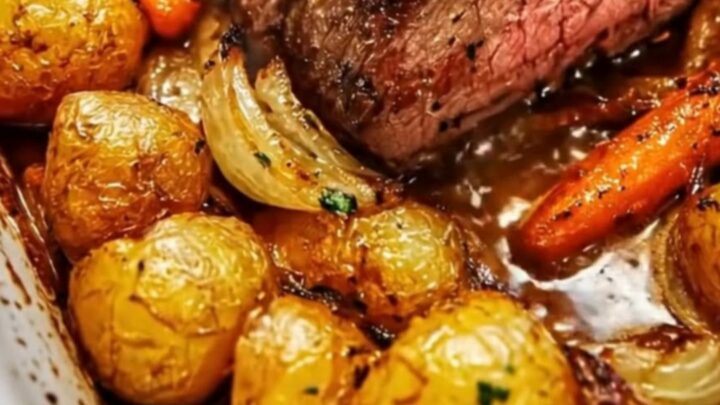
The roast is sliced against the grain into tender, juicy pieces. The vegetables are caramelized and glossy, and the pan juices are spooned over everything. The platter looks inviting, with the rosy center of the meat contrasting with the golden vegetables. It's ready to be served and enjoyed.
Common mistakes
One common mistake is skipping the searing step – this is crucial for developing a rich crust and adding flavor. Another is opening the oven door too frequently, which causes temperature fluctuations and can dry out the meat. Be patient and let the roast cook undisturbed, only basting every 20 minutes.
Also, avoid overcrowding the pan with vegetables; if they're piled too high, they'll steam instead of roast. Finally, don't slice the roast immediately after removing it from the oven – resting is essential for a juicy result.
How to tell it’s done
The roast is done when an instant-read thermometer inserted into the thickest part reads 145°F (63°C) for medium-rare, or 160°F (71°C) for medium. Remember that the temperature will rise a few degrees during resting.
The vegetables should be fork-tender and lightly browned. Let the meat rest for at least 3 minutes before slicing to allow the juices to redistribute, ensuring every slice is juicy and flavorful.
- Steaks, chops and roasts: 145°F (63°C) in the thickest part, then a 3-minute rest
Up next · Part 3 of 3
4 variations · storage & make-ahead · 5 answers · printable card
Tips, FAQ & printable recipe (Part 3)← Back to the ingredients (Part 1)