Dinner · Part 1 of 3: Ingredients
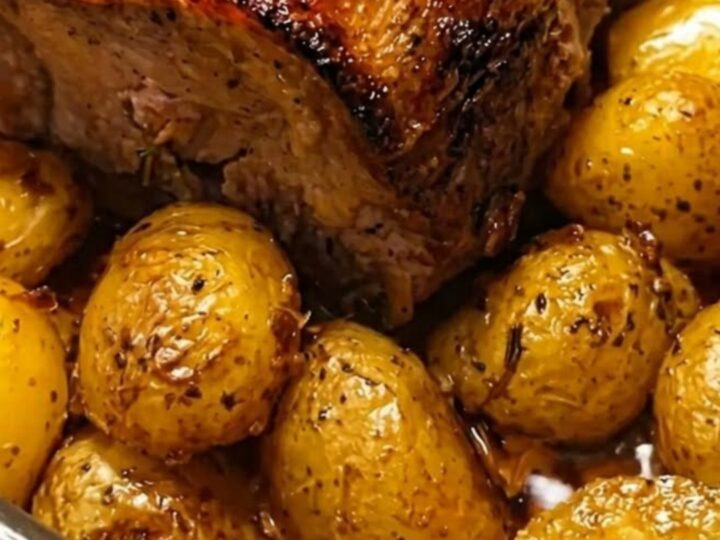
Garlic Herb Pork Loin with Roasted Baby Potatoes
- Prep
- Cook
- Total
- Serves
- 6
Imagine slicing into a perfectly tender, herb-crusted pork loin, hearing the slight crackle of the savory exterior, and watching glistening juices run onto your carving board.
Surrounded by golden, crispy baby potatoes bathed in rich garlic herb butter, this roast is the ultimate comforting centerpiece. It brings restaurant-quality elegance to your table with minimal effort, making it ideal for both busy weeknights and special weekend gatherings.
Roasting a pork loin can sometimes feel intimidating, as this lean cut of meat easily dries out if cooked incorrectly. However, this recipe guarantees a succulent, juicy result by combining a robust herb seasoning with a high-heat start followed by a gentle roast.
The baby potatoes cook right alongside the meat in the same dark baking dish, soaking up the flavorful drippings and sizzling garlic herb butter. Every bite offers a perfect contrast of textures: tender, savory pork and crispy, buttery potatoes infused with aromatic herbs.
Ingredients
- 3 lb pork loin roast, fat cap intact
- 1 1/2 lbs baby potatoes, washed and halved
- 3 tbsp herb seasoning, divided
- 4 tbsp garlic herb butter, melted
Why this recipe works
The high roasting temperature initially sears the exterior of the pork loin, locking in its natural juices and creating a beautifully browned, aromatic herb crust. This crust acts as a protective barrier, preventing the lean meat from losing moisture during the cooking process.
Cooking the potatoes in the same pan allows them to absorb the rendered fat and savory juices directly from the roast, which enhances their flavor profile far more than boiling or roasting them separately.
Spoon the rich garlic herb butter over the potatoes and pork during the final stages of roasting to ensure the potatoes achieve a crispy, golden exterior while the pork remains incredibly moist. The butter also helps conduct heat evenly across the surface of the potatoes, ensuring a uniform crunch in every bite. This simple basting technique elevates the entire dish, creating a glossy finish and a depth of savory flavor.
Notes and substitutions
When choosing your pork loin, look for a roast with a nice fat cap on top, as this fat melts during roasting to naturally baste the meat and keep it tender.
Do not confuse pork loin with pork tenderloin, which is a much smaller, thinner cut that cooks far quicker and would overcook using this method. For the potatoes, baby Yukon Gold or red potatoes work best because their thin skins crisp up beautifully without needing to be peeled.
Using a high-quality herb seasoning blend ensures a balanced flavor without needing to measure multiple individual spices. Look for a blend that contains classic roasting herbs like rosemary, thyme, and garlic. A heavy-duty, dark metal baking dish or cast-iron skillet is ideal for this recipe, as dark pans absorb and distribute heat more efficiently, promoting superior browning and crispier potatoes.
- garlic herb butter: regular unsalted butter mixed with minced garlic and chopped fresh parsley
- pork loin roast: boneless turkey breast roast can be used, adjusting cook time until it reaches 165°F (74°C)
Equipment
- sharp carving knife
- dark baking dish
- meat thermometer
- small mixing bowl
- measuring spoons
Up next · Part 2 of 3
6 steps · 50 min of cooking · what to look for at each stage
Step-by-step instructions (Part 2)