Dinner · Part 2 of 3: Instructions
Garlic Herb Pork Loin Roast with Potatoes Step-by-step instructions
- Prep
- Cook
- Total
- Serves
- 6
Before you start
Take the pork loin out of the refrigerator 30 minutes before starting to let it come to room temperature. This helps it cook more evenly. Preheat the oven to 400°F (200°C).
Prepare the garlic and herbs, and wash and halve the baby potatoes. Cut the red onions into wedges. Have your roasting pan and all ingredients ready so the process goes smoothly.
Ingredients at a glance (9)
- 3 lb boneless pork loin roast
- 6 cloves garlic, minced
- 2 tbsp fresh rosemary, chopped
- 1 tbsp fresh thyme leaves
- 3 tbsp olive oil, divided
- 1 1/2 tsp kosher salt
- 1 tsp black pepper
- 2 lb baby potatoes, halved
- 2 medium red onions, cut into wedges
Instructions
Seasoning and Roasting
- Prepare the RoastHeat the oven to 400°F (200°C). Pat the pork loin dry with paper towels. In a small bowl, combine the minced garlic, chopped rosemary, thyme, 2 tablespoons of olive oil, salt, and pepper. Rub the mixture all over the pork loin, coating every side evenly.Look for The pork is evenly coated with the herb mixture.Tip Let the pork sit at room temperature for 30 minutes before roasting for more even cooking.
- Arrange VegetablesPlace the halved baby potatoes and red onion wedges in the roasting pan. Drizzle with the remaining 1 tablespoon of olive oil and toss to coat. Season lightly with salt and pepper. Push the vegetables to the edges of the pan, leaving a space in the center for the pork.Look for The vegetables are coated and the pan is ready for the pork.Tip Cut any larger potatoes so they cook at the same rate as the smaller ones.
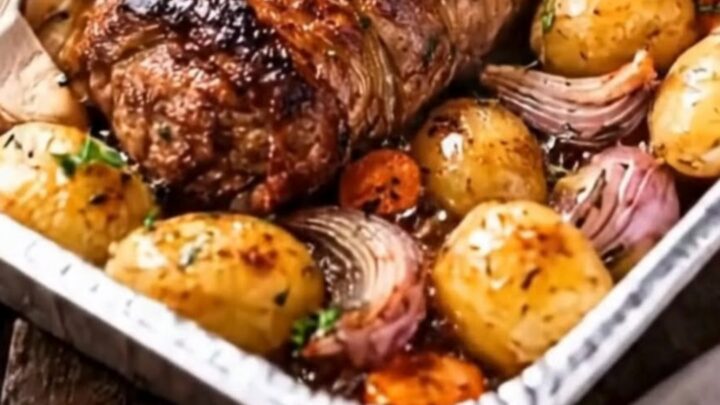
- Roast the PorkPlace the pork loin in the center of the pan, nestled among the vegetables. Roast for 50 to 60 minutes, or until the internal temperature reaches 145°F (63°C) at the thickest part of the meat. If the vegetables are browning too quickly, cover the pan loosely with foil. Let it rest for 3 minutes before slicing.Look for The pork is golden brown and the vegetables are tender and caramelized.Safe temperature 145°F (63°C) internal temperature (steaks, chops and roasts)Tip Use an instant-read thermometer to check the temperature without cutting into the meat.
At the end of this phase, the pork is covered in a fragrant herb-garlic paste, and the vegetables are coated in oil and seasoned.
The pan is ready for the oven, and the kitchen smells of garlic and herbs even before the roast starts cooking. Check that the pork is centered in the pan and the vegetables are spread around it in a single layer.
Resting and Carving
- Rest the RoastRemove the pan from the oven and transfer the pork loin to a cutting board. Tent loosely with foil and let rest for at least 3 minutes before carving. The temperature will rise a few degrees during resting.Look for The pork rests under foil, and the juices redistribute.Safe temperature 145°F (63°C) internal temperature (steaks, chops and roasts)Tip Resting is essential for a juicy roast—don't skip it.
- Carve the PorkUsing a sharp carving knife, slice the pork loin into 1/2-inch thick slices. The meat should be juicy and slightly pink in the center, with a fragrant herb crust on the outside.Look for The slices are even and show a rosy, juicy interior.Tip Slice against the grain for the most tender pieces.
After roasting, the pork is resting under a foil tent, and the kitchen is filled with the rich aroma of roasted meat and caramelized onions. The vegetables are golden and tender, and the pan juices are bubbling. The pork should rest for at least 3 minutes before carving to ensure the juices stay in the meat.
Plating and Serving
- Serve with VegetablesArrange the sliced pork on a platter or individual plates. Spoon the roasted potatoes and caramelized red onions around the meat. Drizzle any pan juices over the top for extra flavor.Look for The plate is full of golden potatoes, sweet onions, and juicy pork.Tip Serve immediately while hot, with extra pan juices on the side.
The sliced pork is arranged on a platter, with the roasted potatoes and onions piled alongside. The meat is juicy, with a rosy center and a crisp herb crust. The vegetables are caramelized and sweet, and the pan juices are drizzled over everything. The dish looks rustic and inviting, ready to be served.
Common mistakes
One common mistake is overcooking the pork, which makes it dry and tough. Use a thermometer and pull the roast at 145°F (63°C) to ensure it stays juicy.
Another mistake is overcrowding the pan, which can cause the vegetables to steam instead of roast. Give them space in a single layer. Also, avoid cutting into the pork right out of the oven—resting is essential for the juices to redistribute.
How to tell it’s done
The pork is done when an instant-read thermometer inserted into the thickest part of the meat registers 145°F (63°C). The meat should be juicy and slightly pink in the center, with a crust that is golden brown and fragrant.
After resting, the temperature will rise another 5 to 10 degrees. The potatoes should be fork-tender and browned in spots, and the onions should be soft and caramelized.
- Steaks, chops and roasts: 145°F (63°C) in the thickest part, then a 3-minute rest
Up next · Part 3 of 3
4 variations · storage & make-ahead · 5 answers · printable card
Tips, FAQ & printable recipe (Part 3)← Back to the ingredients (Part 1)