Dinner · Part 2 of 3: Instructions
Garlic Herb Butter Tomahawk Steak for a Perfectly Juicy Finish Step-by-step instructions
- Prep
- Cook
- Total
- Serves
- 2
Before you start
Before beginning, remove the steak from the refrigerator at least 30 minutes before cooking to allow it to come closer to room temperature, which helps ensure more even cooking. Prepare the herb sprigs by washing and patting them dry.
Smash the garlic cloves with the flat side of a knife to release their essential oils. Have the cast iron skillet, tongs, and a meat thermometer ready on the counter. Ensure the cutting board is stable and clean, ready for the resting and carving stages once the cooking is complete.
Ingredients at a glance (5)
- 1 lb tomahawk steak, bone-in
- 1 tsp kosher salt and black pepper
- 4 tbsp unsalted butter
- 3 cloves garlic, smashed
- 2 sprigs fresh herbs
Instructions
Searing and Crust Formation
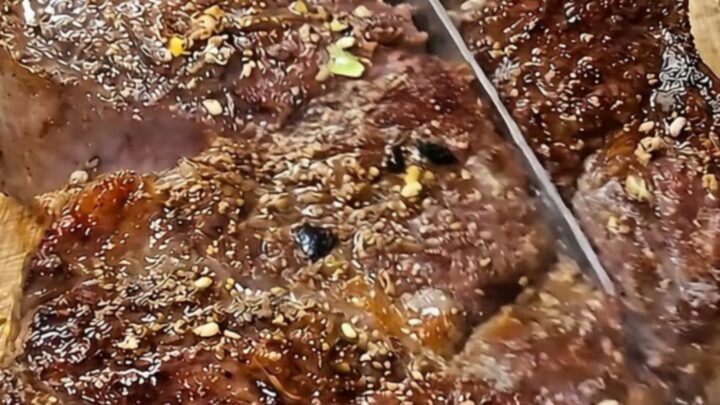
- Season and SearGenerously season the tomahawk steak on all sides with kosher salt and black pepper. Heat a heavy cast iron skillet over high heat until smoking hot. Carefully place the steak in the pan to develop a deep, dark crust on both sides, ensuring the fat cap is rendered properly.Look for The steak develops a deep brown, crunchy crust on the exterior.Tip Pat the steak completely dry with paper towels before seasoning to ensure the best possible sear.
The steak should have a uniform, dark brown crust across the entire surface, including the edges. The meat will be sizzling loudly as it hits the hot pan, and the fat cap should have begun to render and soften. Ensure the steak is not sticking to the skillet before attempting to flip it, as this indicates the crust is properly formed and ready for the transition to the basting phase.
Aromatic Butter Basting
- Baste with AromaticsReduce the heat to medium. Add the unsalted butter, smashed garlic, and herb sprigs to the skillet. Once the butter is melted and foaming, tilt the pan slightly and continuously spoon the hot, aromatic butter over the steak until it reaches 145°F (63°C). Remove from heat and let it rest for at least 3 minutes.Look for The butter becomes golden brown and smells nutty and fragrant.Safe temperature 145°F (63°C) internal temperature (steaks, chops and roasts)Tip Use a spoon to repeatedly bathe the steak in the foaming butter to enhance the moisture and flavor profile.
The butter should be foaming, golden, and smelling intensely of toasted garlic and herbs. The steak will have taken on a beautiful, glossy sheen from the butter basting. Use the thermometer to check the internal progress, ensuring the heat is managed so the butter does not turn dark brown or black. The aroma should be rich and savory, signaling that the flavors are successfully being incorporated into the meat.
Resting and Final Carving
- Rest and ServeTransfer the steak to a wooden cutting board. Let the meat rest for at least 10 minutes to allow the juices to redistribute throughout the muscle fibers. Slice the steak against the grain into thick pieces and serve immediately while hot.Look for The juices remain within the meat rather than running out onto the board when sliced.Safe temperature 145°F (63°C) internal temperature (steaks, chops and roasts)Tip Cover the steak loosely with aluminum foil while resting if the environment is cool, but avoid wrapping tightly to prevent steaming.
The steak will look relaxed and slightly darker as the residual heat settles. When sliced, the interior should be a consistent pink color from edge to edge, with minimal juice running onto the cutting board.
The crust should remain distinct and crunchy. If the meat appears grey throughout or the juices run clear immediately, it may have been overcooked, so monitor the resting time carefully to ensure peak quality.
Common mistakes
A common mistake is overcrowding the pan or using a pan that is not hot enough, which results in a grey, steamed exterior instead of a deep, brown crust. Another frequent error is failing to rest the meat; slicing a steak immediately after it leaves the heat causes the juices to escape, leading to a dry result.
Additionally, using too much salt or burning the garlic and herbs during the basting phase can lead to bitter, unpleasant flavors that detract from the high quality of the beef.
How to tell it’s done
The steak is finished when a meat thermometer inserted into the thickest part of the meat reads 145°F (63°C). At this temperature, the steak is medium-rare to medium, offering the best balance of tenderness and flavor.
Always let the meat rest for at least 10 minutes before slicing to ensure the juices remain inside the meat. If you prefer a more well-done steak, increase the cooking time slightly, but be aware that the texture will become firmer and less juicy as the internal temperature rises.
- Steaks, chops and roasts: 145°F (63°C) in the thickest part, then a 3-minute rest
Up next · Part 3 of 3
2 variations · storage & make-ahead · 3 answers · printable card
Tips, FAQ & printable recipe (Part 3)← Back to the ingredients (Part 1)