Dinner · Part 2 of 3: Instructions
Garlic Herb Butter Salmon Step-by-step instructions
- Prep
- Cook
- Total
- Serves
- 4
Before you start
Before beginning, ensure all ingredients are measured and ready. If the butter is too cold, leave it at room temperature for about 20 minutes until it is soft enough to mix easily. Mince the garlic finely to ensure it distributes evenly throughout the herb butter.
Prep your baking sheet by cutting a piece of parchment paper to size, ensuring it covers the base of the pan completely. Pat the salmon fillets dry with paper towels; removing surface moisture helps the herb butter stick better and allows the fish to cook more effectively without excessive steaming.
Ingredients at a glance (4)
- 4 fillets salmon fillets
- 1/2 cup unsalted butter, softened
- 4 cloves garlic, minced
- 2 tbsp fresh herbs, finely chopped
Instructions
Preparing the Compound Butter
- Prepare the butter mixtureIn a small mixing bowl, combine the softened butter, minced garlic, and finely chopped fresh herbs. Mix thoroughly until the ingredients are well incorporated into a smooth compound butter. This step ensures that every bite of the salmon will be evenly seasoned with the aromatic herbs and garlic.Look for The mixture becomes uniform and creamy in texture.Tip Using softened butter makes it much easier to incorporate the minced garlic and herbs evenly.
The mixture should be thoroughly combined, with the garlic and herbs evenly distributed throughout the softened butter. The consistency should be spreadable, like a soft paste, ensuring that it can be applied smoothly across the surface of the salmon without clumping or sliding off during the initial stages of baking.
Seasoning and Baking
- Season and bakePreheat the oven to 400°F (200°C). Line a baking sheet with parchment paper. Place the salmon fillets on the prepared sheet. Spread a generous layer of the garlic herb butter mixture over the top of each fillet, ensuring the entire surface is well coated. Bake for 12 to 15 minutes until the fish reaches an internal temperature of 145°F (63°C).Look for The salmon should look opaque and the butter should be bubbling around the fillets.Safe temperature 145°F (63°C) internal temperature (fish)Tip Ensure the fillets are of similar thickness so they cook at the same rate.
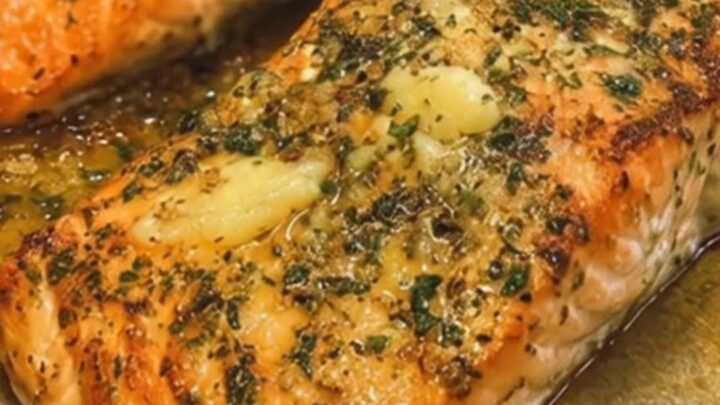
The salmon fillets should be arranged evenly on the parchment-lined sheet, with the garlic herb butter applied in a thick, consistent layer. As the fish bakes, the butter will begin to melt and pool around the fillets, creating an aromatic steam that smells of roasting garlic and fresh herbs, signaling that the flavor is being absorbed.
Resting and Serving
- Rest and serveOnce the salmon reaches an internal temperature of 145°F (63°C), remove the baking sheet from the oven. Let the fish rest for at least 3 minutes before serving. This short resting period allows the juices to redistribute throughout the fillet, ensuring a moist and tender texture that flakes easily with a fork.Look for The flesh flakes easily when gently pressed with a fork.Safe temperature 145°F (63°C) internal temperature (fish)Tip Use a fork to test the flakiness of the center of the thickest fillet.
After resting for three minutes, the salmon should be firm yet tender. When lifted with a fork, the flesh should flake naturally into moist, distinct layers. The butter crust should appear glossy and settled on top of the fillets, indicating that the fish is perfectly cooked and ready to be served immediately.
Common mistakes
A common mistake is overcooking the salmon, which can quickly turn the texture dry and chalky. Always monitor the internal temperature closely as the fish nears the end of the recommended cooking time.
Another frequent error is using cold butter, which makes it difficult to incorporate the herbs and garlic evenly, potentially leading to uneven seasoning on the fillets.
Finally, failing to let the fish rest for at least 3 minutes after removing it from the oven can cause the flavorful juices to escape immediately upon cutting, resulting in a less moist and tender dining experience.
How to tell it’s done
The salmon is done when it is opaque throughout and the flesh flakes easily when tested with a fork. Using a meat thermometer is the most accurate way to check for doneness; insert the probe into the thickest part of the fillet.
The internal temperature must reach 145°F (63°C). The fish should appear slightly translucent in the very center if undercooked, so ensure it has turned a consistent pink color throughout before removing it from the oven.
- Fish: 145°F (63°C) in the thickest part
Up next · Part 3 of 3
2 variations · storage & make-ahead · 3 answers · printable card
Tips, FAQ & printable recipe (Part 3)← Back to the ingredients (Part 1)