Dinner · Part 2 of 3: Instructions
Garlic Confit Bavette Steak Tagliata Step-by-step instructions
- Prep
- Cook
- Total
- Serves
- 2
Before you start
Before beginning, ensure your steak is taken out of the refrigerator about 20 minutes before cooking to lose the chill. Peel the garlic cloves and have all your ingredients measured and set in small bowls near the stove. Prepare your cutting board and have a sharp chef knife ready for slicing. If you are using a cast-iron skillet, ensure it is clean and dry. Have your serving platter nearby so you can assemble the dish as soon as the steak is ready to be sliced and served.
Ingredients at a glance (9)
- 12 cloves garlic cloves, peeled
- 1/2 cup extra-virgin olive oil
- 1 sprig fresh thyme
- 1.5 lb bavette steak
- 1 tsp sea salt
- 1 sprig fresh rosemary
- 1 cup cherry tomatoes
- 1 cup fresh arugula
- 2 tbsp aged parmesan shards
Instructions
Poaching the Garlic
- Poach the GarlicCombine the garlic cloves, extra-virgin olive oil, and the thyme sprig in a small saucepan over low heat. Simmer gently until the garlic cloves are golden and tender enough to be spread easily with a fork, then set aside.Look for Garlic should be soft, golden, and fragrant.Tip Keep the heat very low to ensure the garlic poaches evenly without burning.
The garlic cloves should be soft, creamy, and golden in color. The olive oil will be infused with the aroma of garlic and thyme. The cloves should be tender enough to mash easily with a fork. Check that the heat remained low throughout the process; if the garlic has turned dark brown or crispy, the heat was likely too high. Once the cloves are soft, they are ready to be used as a luscious topping for your steak.
Searing and Blistering
- Sear the SteakSeason the bavette steak generously with sea salt and fresh rosemary. Heat a cast-iron skillet over high heat until it reaches 480°F (249°C). Add 2 tablespoons of the prepared garlic confit oil to the skillet. Place the steak in the pan and sear for 3.5 minutes per side until a deep crust forms and the internal temperature reaches 145°F (63°C). Remove from the heat and let the meat rest at least 3 minutes before slicing.Look for Steak should have a dark brown, crispy crust.Safe temperature 145°F (63°C) internal temperature (steaks, chops and roasts)Tip Pat the steak dry with paper towels before seasoning for a better sear.
- Blister the TomatoesAdd the cherry tomatoes to the skillet alongside the steak during the final minutes of cooking. Allow them to blister and soften in the hot garlic oil until their skins begin to burst.Look for Tomatoes should be slightly charred and beginning to pop.Tip Do not overcrowd the pan so the tomatoes can blister properly.
The steak should have a deep, mahogany-colored crust on both sides. The cherry tomatoes should be blistered and slightly charred, with their skins beginning to split and their juices released into the garlic oil.
The kitchen should smell intensely of searing beef, rosemary, and roasted garlic. If the steak isn't browning, the skillet may not be hot enough. Ensure the steak reaches the internal temperature of 145°F (63°C) for the best texture and safety before removing it from the heat.
Slicing and Assembly
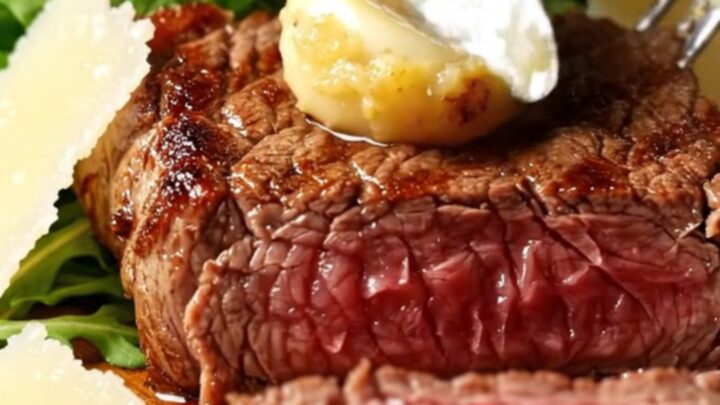
- Slice and ServeSlice the steak against the grain into thin strips. Arrange on a platter with the blistered tomatoes, fresh arugula, and parmesan shards. Top with the softened garlic confit cloves.Look for Steak should be juicy with a pink center.Tip Slicing against the grain ensures the tenderest possible bite.
The steak must be rested for at least 3 minutes on a clean cutting board. This allows the internal juices to stabilize. When you slice against the grain, the meat should reveal a uniform, pink center.
The final presentation should feature the vibrant green of the arugula, the bright red of the tomatoes, and the golden, soft garlic cloves spread over the sliced beef. The dish should look cohesive, rustic, and appetizing, with all components arranged to highlight the different textures and colors.
Common mistakes
A common mistake is overcrowding the skillet, which causes the steak to steam rather than sear. Ensure there is enough space around the meat for the heat to circulate properly. Another error is using heat that is too high for the garlic confit; the garlic should be gently poached, not fried, to maintain its spreadable consistency.
Finally, failing to slice against the grain will result in a tougher texture. Always identify the direction of the muscle fibers and cut perpendicular to them to ensure the most tender results.
How to tell it’s done
The bavette steak is done when a meat thermometer inserted into the thickest part reads 145°F (63°C), which corresponds to a perfect medium-rare. The exterior will be dark, crusted, and fragrant from the garlic oil, while the interior should remain tender and juicy.
If you prefer your steak more well-done, you can increase the cooking time by a minute per side, but be mindful that bavette can become chewy if overcooked. Let the steak rest for at least 3 minutes to allow the juices to settle before slicing.
- Steaks, chops and roasts: 145°F (63°C) in the thickest part, then a 3-minute rest
Up next · Part 3 of 3
2 variations · storage & make-ahead · 3 answers · printable card
Tips, FAQ & printable recipe (Part 3)← Back to the ingredients (Part 1)