Dinner · Part 2 of 3: Instructions
Garlic Butter Steak Bites with Cheesy Mashed Potatoes Step-by-step instructions
- Prep
- Cook
- Total
- Serves
- 4
Before you start
Before starting, take the steak out of the refrigerator and let it sit at room temperature for about 30 minutes. Cut the steak into 1-inch cubes and season as directed. Peel and quarter the potatoes, and place them in a pot of cold water.
Grate the cheeses and set them aside. Have all your ingredients and equipment ready: a large cast iron skillet, a large pot, a potato masher, and a wooden board for grating. This recipe moves quickly once you start cooking, so being prepared is key.
Ingredients at a glance (10)
- 1 1/2 lb New York strip steak, cut into 1-inch cubes
- 1 tsp black pepper
- 1 tsp smoked paprika
- 4 oz aged white cheddar, grated
- 4 oz Gruyere cheese, grated
- 2 lb Yukon Gold potatoes, peeled and quartered
- 4 tbsp unsalted butter
- 4 cloves garlic, minced
- 2 tbsp fresh parsley, chopped
- 1 tsp kosher salt
Instructions
Prep and Sear
- Prepare the steak and potatoesCut the New York strip steak into 1-inch cubes. Season the cubes with black pepper, smoked paprika, and kosher salt, tossing to coat evenly. Peel and quarter the potatoes, then place them in a large pot and cover with cold water. Bring to a boil and cook until fork-tender, about 15 minutes.Look for The steak cubes are evenly coated with seasoning; the potatoes are easily pierced with a fork.Tip Cut the steak into uniform cubes so they sear evenly. Keep the potatoes in cold water until ready to boil to prevent discoloration.
- Grate the cheesesGrate the aged white cheddar and Gruyere cheese into a fluffy pile on a wooden board. Set aside until the potatoes are ready.Look for The cheeses are finely grated and piled loosely.Tip Grate the cheeses on the large holes of a box grater for a light, fluffy texture that folds easily into the potatoes.
At the end of this phase, the steak cubes are seasoned and seared with a deep brown crust. The potatoes are boiling, and the cheeses are grated and waiting. The kitchen smells of smoked paprika and searing beef.
The steak should be browned on all sides but still slightly pink in the center for medium-rare. If using a thermometer, it should read around 135°F (57°C) before resting, as it will continue to cook.
Garlic Butter and Mash
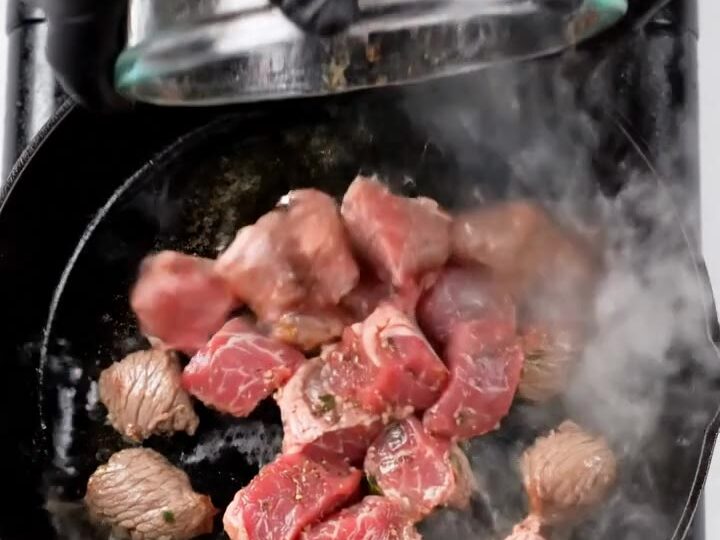
- Sear the steak bitesHeat a cast iron skillet over high heat until smoking. Add the seasoned steak cubes in a single layer. Sear without moving for 2-3 minutes until a deep brown crust forms, then flip and sear the other sides for another 2-3 minutes for medium-rare, or until the internal temperature reaches 145°F (63°C). Let it rest for 3 minutes before slicing.Look for The steak bites are browned on all sides with a crisp crust.Safe temperature 145°F (63°C) internal temperature (steaks, chops and roasts)Tip Do not overcrowd the skillet; work in batches if needed to ensure a proper sear.
- Make the garlic herb butterReduce the heat to medium and add the butter to the skillet. Once it melts and starts to foam, add the minced garlic and fresh parsley. Stir constantly for 1 minute until fragrant, then toss the steak bites in the foaming butter to coat them evenly.Look for The butter is foaming and golden, and the garlic is fragrant but not browned.Tip Keep the heat moderate so the garlic infuses the butter without burning.
The garlic herb butter is foaming and fragrant, coating the steak bites with a glossy, golden sheen. The potatoes are drained and mashed, then folded with the grated cheeses until they are creamy and fully melted. The mash should be smooth and rich, with no visible cheese clumps. The steak is resting while you finish the potatoes, allowing the juices to settle.
Assemble and Serve
- Mash the potatoesDrain the cooked potatoes and return them to the pot. Mash them until smooth. Fold in the grated cheddar and Gruyere until melted and fully incorporated. Season with salt to taste.Look for The potatoes are creamy and the cheese is completely melted through.Tip For extra smooth potatoes, pass them through a ricer before adding the cheese.
- Assemble and servePile the garlic butter steak bites on top of the cheesy mashed potatoes. Let the steak rest for at least 3 minutes before serving. Scoop a cheesy bite with some steak and enjoy.Look for The dish is assembled with a generous layer of steak over the creamy mash.Safe temperature 145°F (63°C) internal temperature (steaks, chops and roasts)Tip Resting the steak allows the juices to redistribute, keeping the bites tender.
The cheesy mashed potatoes are spooned onto plates or a serving board, and the garlic butter steak bites are piled on top. The steak should still be warm, and the potatoes creamy. A final scoop should include both steak and potatoes for the perfect bite. The dish is ready to serve immediately, with the steak resting at least 3 minutes to ensure juiciness.
Common mistakes
A common mistake is overcrowding the skillet, which lowers the temperature and causes the steak to steam instead of sear. Work in batches if necessary. Another mistake is adding the butter too early; it can burn before the steak is seared.
Add the butter only after the steak has developed a crust. For the potatoes, over-mashing can make them gluey; mash just until smooth. Also, add the cheese while the potatoes are hot so it melts fully, but don't return to the heat, which can make the cheese stringy.
How to tell it’s done
The steak bites are done when they reach an internal temperature of 145°F (63°C) for medium-rare, which should take about 4-6 minutes of total cooking time. The crust should be deeply browned and crisp.
After removing from heat, let the steak rest for at least 3 minutes to allow the juices to redistribute. The mashed potatoes are done when they are fork-tender and the cheese is fully melted, creating a smooth, creamy texture. Taste and adjust seasoning with salt before serving.
- Steaks, chops and roasts: 145°F (63°C) in the thickest part, then a 3-minute rest
Up next · Part 3 of 3
4 variations · storage & make-ahead · 5 answers · printable card
Tips, FAQ & printable recipe (Part 3)← Back to the ingredients (Part 1)