Dinner · Part 2 of 3: Instructions
Garlic Butter Steak and Potatoes Foil Packets Step-by-step instructions
- Prep
- Cook
- Total
- Serves
- 4
Before you start
Before starting, gather all the ingredients and equipment to ensure a smooth cooking process. Preheating the oven to 400°F (204°C) is essential for achieving the right cooking temperature. Wash the baby potatoes thoroughly and pat them completely dry with a paper towel.
Cut the steak into even one-inch cubes, trimming any excess gristle. Melt the butter in a small bowl and stir in the finely minced garlic. Tear off four large sheets of heavy-duty aluminum foil, approximately twelve inches each, and place them on a clean work surface.
Ingredients at a glance (5)
- 1 1/2 lb sirloin steak, cut into 1-inch cubes
- 1 lb baby gold potatoes, washed and dried
- 1/2 cup butter, melted
- 4 cloves garlic, finely minced
- 4 fresh rosemary sprigs
Instructions
Preparing and Combining the Ingredients
- Combine the Steak and PotatoesIn a large mixing bowl, combine the steak cubes and baby gold potatoes. Toss the mixture thoroughly to ensure the ingredients are evenly distributed before transferring them to the foil. This helps ensure that every packet gets an equal portion of steak and potatoes for even cooking.Look for The steak and potatoes should be evenly mixed and ready to be divided among the foil sheets.Tip Ensure the baby potatoes are uniform in size so they cook at the same rate as the steak cubes.
At the end of this phase, the steak cubes and baby potatoes should be evenly combined in the mixing bowl. The ingredients will look clean and ready for the foil. There should be an even distribution of steak and potatoes, ensuring that every packet gets a balanced portion before the garlic butter is added.
Assembling the Foil Packets
- Assemble the Foil PacketsTear off four sheets of heavy-duty aluminum foil, each about twelve inches long. Divide the steak and potatoes evenly among the center of the sheets. In a small bowl, stir the melted butter and minced garlic together, then drizzle this garlic butter evenly over each portion. Top each pile with a fresh rosemary sprig to infuse the ingredients with an earthy aroma.Look for The garlic butter should coat the ingredients, with a rosemary sprig resting on top of each pile.Tip Use heavy-duty foil to prevent tearing and keep the delicious juices from leaking onto your baking sheet.
The foil packets should be securely sealed with a double fold at the top and sides to prevent steam and butter from escaping.
Inside, the steak cubes and baby potatoes are neatly arranged with garlic butter drizzled over them and a fresh rosemary sprig nestled on top. No liquid should be leaking from any of the packets.
Baking and Resting the Steak
- Seal and Bake the PacketsFold the sides of the foil over the steak and potatoes, then fold the top and bottom edges to create a tightly sealed packet, leaving a little space inside for steam. Place the packets on a baking sheet. Bake in the preheated oven at 400°F (204°C) for twenty to twenty-five minutes until the potatoes are completely tender.Look for The packets will puff up slightly from the steam building up inside during the baking process.Tip Leave a small pocket of air inside each packet to allow the steam to circulate and cook the potatoes.
- Check Temperature and RestCarefully open one packet, avoiding the hot steam. Insert a digital meat thermometer into the thickest part of a steak cube to ensure it has reached a safe internal temperature of 145°F (63°C). Remove the packets from the oven and let them rest sealed for at least 3 minutes before serving to allow the juices to redistribute.Look for The steak should be cooked through to 145°F (63°C) and the potatoes tender when pierced with a fork.Safe temperature 145°F (63°C) internal temperature (steaks, chops and roasts)Tip Letting the meat rest inside the foil keeps the steak cubes incredibly juicy and tender.
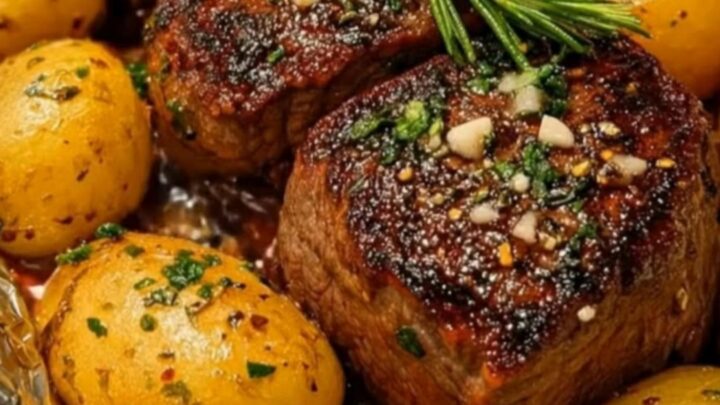
When you carefully open a packet, a cloud of aromatic, garlic-scented steam will escape. The steak cubes will have a beautifully seared, brown exterior, and the baby potatoes will be tender when pierced with a fork. The garlic butter will be bubbling at the bottom of the packet, ready to be spooned over the meat.
Common mistakes
One common mistake is wrapping the foil packets too tightly around the food. There needs to be a small amount of space inside the packet for steam to circulate, which helps cook the potatoes evenly.
Another error is cutting the steak cubes too small or the potatoes too large; this leads to overcooked, dry steak and undercooked, hard potatoes. Lastly, failing to seal the edges of the foil properly will allow the butter and steam to leak out, resulting in dry meat and a messy baking sheet.
How to tell it’s done
To ensure the steak is perfectly cooked and safe to eat, use a digital meat thermometer inserted into the center of a steak cube. The internal temperature must reach at least 145°F (63°C) for whole cut meat.
Once this temperature is verified, remove the foil packets from the heat source and let the meat rest inside the sealed packets for at least 3 minutes. This resting period allows the juices to redistribute throughout the steak, ensuring every bite remains incredibly juicy and tender.
- Steaks, chops and roasts: 145°F (63°C) in the thickest part, then a 3-minute rest
Up next · Part 3 of 3
2 variations · storage & make-ahead · 3 answers · printable card
Tips, FAQ & printable recipe (Part 3)← Back to the ingredients (Part 1)