Dinner · Part 2 of 3: Instructions
Garlic Butter Shrimp Stuffed Salmon for Elegant Dinners Step-by-step instructions
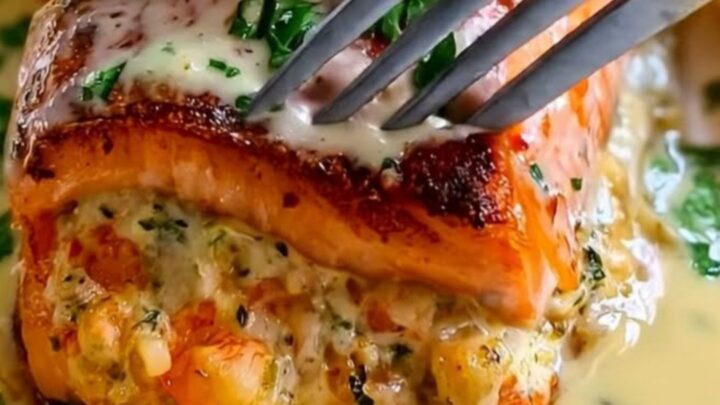
- Prep
- Cook
- Total
- Serves
- 4
Before you start
Before beginning, ensure that all ingredients are measured and ready, as the cooking process moves quickly. Keep the shrimp in the refrigerator until the moment you are ready to prepare the filling.
Pat the salmon fillets completely dry with paper towels to ensure a perfect sear, and prepare the shrimp by removing any shells or tails.
Have your skillet, basting spoon, and meat thermometer within arm's reach to maintain control over the cooking environment throughout each phase of the preparation.
Ingredients at a glance (5)
- 4 fillets salmon fillets, skin-on or removed as desired
- 1 lb shrimp, peeled, deveined, and chopped
- 4 cloves garlic, minced
- 3 tbsp butter
- fresh parsley, chopped, for serving
Instructions
Filling Preparation
- Prepare the Shrimp FillingIn a medium bowl, combine the chopped shrimp and half of the minced garlic. Keep the mixture chilled in the refrigerator until ready to use, as raw shellfish must be handled safely. Mix thoroughly until the filling is uniform, ensuring the shrimp pieces are well-distributed.Look for The mixture should be thick and hold its shape easily when scooped.Tip Keep the shrimp chilled until the exact moment you are ready to stuff the salmon.
The filling should be a consistent, thick mixture that holds together. Ensure the garlic is finely minced so it distributes evenly throughout the shrimp, providing a balanced flavor in every single bite of the stuffed salmon. Keep the mixture cold until you are ready to stuff the fish.
Searing the Salmon
- Stuff and Sear the SalmonUsing a sharp knife, carefully cut a pocket into the side of each salmon fillet without cutting all the way through. Spoon the shrimp filling into each pocket. Heat a large skillet over medium-high heat and sear the salmon fillets until golden brown on the outside.Look for The salmon should develop a crisp, golden-brown crust on the exterior while remaining juicy.Tip Use a toothpick to secure the pockets if necessary to prevent the filling from leaking during the initial sear.
The salmon fillets should have a deep, golden-brown crust on the seared side. The pockets should remain closed, with the shrimp filling safely tucked inside. The fish should be firm to the touch, indicating that the searing process has begun properly.
Basting and Finishing
- Baste and Finish CookingAdd the butter and remaining garlic to the skillet. As the butter melts and foams, spoon the bubbling garlic butter repeatedly over the salmon fillets. Continue cooking until the salmon reaches an internal temperature of 145°F (63°C). Remove from heat, garnish with fresh parsley, and let rest for 5 minutes before serving.Look for The salmon should be opaque and flake easily with a fork, with the internal temperature reading 145°F (63°C).Safe temperature 145°F (63°C) internal temperature (fish)Tip Basting adds significant moisture and depth of flavor to the fish, so do not skip this step.
The butter should be bubbling and golden, smelling fragrant with cooked garlic and herbs. The salmon should be completely opaque and reach an internal temperature of 145°F (63°C), with the filling hot and cooked through the entire center of the fillet.
Common mistakes
A common mistake is overstuffing the salmon, which can cause the filling to spill out during the searing process. Use only enough filling to fill the pocket snugly.
Another error is failing to dry the salmon fillets thoroughly; moisture on the surface creates steam and prevents the development of a golden-brown crust. Finally, avoid using too high a heat when basting with the garlic butter, as the garlic can burn quickly, turning bitter and ruining the sauce.
How to tell it’s done
The salmon is fully cooked when the flesh is opaque and flakes easily when tested with a fork. Using a meat thermometer is the most reliable method for ensuring quality; insert it into the thickest part of the salmon, avoiding the filling.
The internal temperature must reach at least 145°F (63°C). The shrimp inside should also be opaque and firm, indicating that they have reached their safe internal temperature. Allow the fish to rest for 5 minutes to let the juices redistribute.
- Fish: 145°F (63°C) in the thickest part
- Shellfish: 145°F (63°C) in the thickest part
Up next · Part 3 of 3
2 variations · storage & make-ahead · 3 answers · printable card
Tips, FAQ & printable recipe (Part 3)← Back to the ingredients (Part 1)