Dinner · Part 2 of 3: Instructions
Garlic Butter Ribeye Steaks for a Quick Restaurant-Quality Dinner Step-by-step instructions
- Prep
- Cook
- Total
- Serves
- 3
Before you start
Before you begin, ensure your steaks are removed from the refrigerator at least 20 minutes before cooking to take the chill off the center. This helps the meat cook more evenly. Prepare your garlic butter by mixing the softened butter with the minced garlic and rosemary, keeping it nearby for the final step.
Ensure your cast-iron skillet is clean, dry, and ready to be placed over a high burner. Have your tongs and a meat thermometer within reach, as the cooking process moves quickly once the pan is hot.
Ingredients at a glance (4)
- 3 ribeye steaks, about 1-inch thick
- 3 tbsp unsalted butter, softened
- 2 cloves garlic, minced
- 1 tsp fresh rosemary, chopped
Instructions
Aromatic Butter Preparation
- Prepare the Garlic Herb ButterIn a small mixing bowl, combine the softened butter, minced garlic, and finely chopped fresh rosemary. Mix thoroughly until the herbs and garlic are evenly distributed throughout the butter. Set the mixture aside at room temperature while you prepare the steaks for the pan.Look for The butter should be soft enough to easily blend with the aromatics.Tip Use high-quality unsalted butter to better control the final salt balance of your steak.
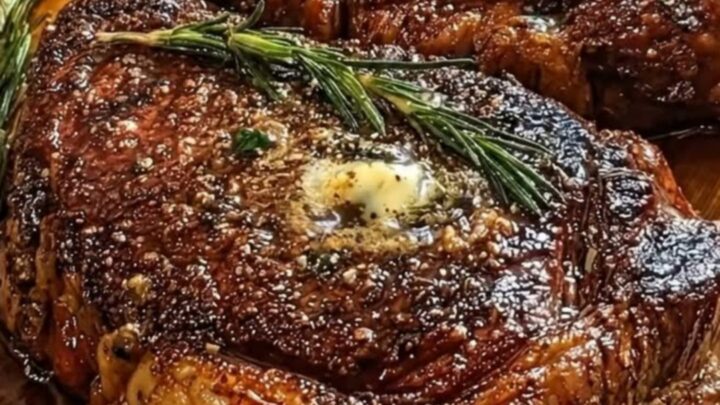
The butter should be thoroughly combined with the garlic and rosemary, forming a smooth, spreadable paste. Ensure the herbs are evenly distributed so that every portion of the butter carries the same level of flavor. This mixture should look vibrant and smell intensely fragrant, ready to melt instantly when it hits the hot skillet in the final phase of cooking.
High-Heat Searing
- Sear the Ribeye SteaksPlace a heavy-duty cast iron skillet over high heat until it is smoking slightly. Carefully add the ribeye steaks to the hot pan without overcrowding. Sear each side for approximately 3 to 4 minutes to develop a deep, dark brown crust. Use tongs to turn the steaks, ensuring even contact with the hot surface for a consistent sear across the entire exterior of the meat.Look for A dark, caramelized crust forms on the surface of the meat.Tip Pat the steaks completely dry with paper towels before searing to ensure the best possible crust.
The steaks should exhibit a deep, rich brown crust on both sides. The sound of the sear should be a consistent, loud sizzle. Avoid the temptation to turn the heat down too early; the goal here is to build color and flavor. Once the exterior is uniformly browned and crispy, the meat is ready to be finished with the butter infusion.
Basting and Finishing
- Finish with Garlic Butter and RestReduce the heat to medium and add the prepared garlic herb butter to the skillet. As the butter melts and foams, use a spoon to baste the steaks repeatedly. Continue cooking until the internal temperature of the steaks reaches 145°F (63°C) for a perfect medium-rare finish. Remove the steaks from the skillet immediately and let them rest on a wooden board for at least 3 minutes before slicing to ensure the juices redistribute throughout the meat.Look for The butter is bubbling and aromatic, and the steaks are tender and juicy.Safe temperature 145°F (63°C) internal temperature (steaks, chops and roasts)Tip Do not skip the resting period, as it is essential for achieving the most tender texture in the final slice.
The butter will foam and turn slightly golden as it cooks with the steak. The aromatics from the rosemary and garlic should fill the kitchen.
Once the internal temperature reaches the target, the meat will feel firm but yielding to the touch. Ensure the steaks are removed from the heat immediately to prevent overcooking during the final resting period on the cutting board.
Common mistakes
A common mistake is overcrowding the pan, which lowers the surface temperature and causes the steaks to steam rather than sear. Work in batches if your skillet is not large enough to hold all the steaks with space between them.
Another frequent error is moving the steaks too often; let them develop a solid crust before attempting to flip them. Finally, forgetting to rest the meat is a major oversight. Resting allows the internal juices to stabilize, ensuring that they do not run out onto the plate the moment you make the first cut.
How to tell it’s done
To determine the doneness, use a meat thermometer inserted into the thickest part of the steak. For a medium-rare finish, look for an internal temperature of 145°F (63°C). The crust should be dark brown and caramelized, while the interior will be pink and tender.
If you prefer a more well-done steak, you can continue cooking for an additional minute per side, but be aware that the texture will become firmer. Always verify the temperature before removing the steaks from the pan to ensure they meet your preferred level of doneness.
- Steaks, chops and roasts: 145°F (63°C) in the thickest part, then a 3-minute rest
Up next · Part 3 of 3
2 variations · storage & make-ahead · 3 answers · printable card
Tips, FAQ & printable recipe (Part 3)← Back to the ingredients (Part 1)