Dinner · Part 3 of 3: Tips & recipe card
Garlic Butter Red Curry Beef Brisket: Slow-Cooker Dump Dinner Tips, FAQ & printable recipe
- Prep
- Cook
- Total
- Serves
- 6
Tips for success
For the most flavorful curry, use a good-quality Thai red curry paste. If you like extra heat, add a sliced Thai bird’s eye chili along with the peppers. The yogurt helps mellow the spice, so don’t be afraid to use the full amount.
To make garlic herb butter from scratch, mix 4 tablespoons softened butter with 1 minced garlic clove and 1 tablespoon chopped fresh cilantro or parsley.
This dish is forgiving—you can cook it on HIGH for 3-4 hours if you’re short on time, though LOW yields a more tender result. If the sauce seems thin at the end, remove the beef and simmer the sauce on the stovetop for a few minutes to thicken.
Conversely, if it’s too thick, stir in a splash of beef broth or water. Always taste before serving and adjust salt and spice to your preference.
Variations
- Spicy Thai Beef Curry: Add 1-2 sliced Thai bird’s eye chilies along with the bell peppers for extra heat. You can also increase the curry paste to 4 tablespoons. Serve with extra lime wedges to balance the spice.
- Coconut Red Curry: Replace the Greek yogurt with 1 cup full-fat coconut milk for a dairy-free version. The coconut milk adds sweetness and richness, complementing the curry paste beautifully. Omit the garlic herb butter or use a dairy-free alternative.
- Vegetable-Packed Curry: Add 1 cup of diced carrots and 1 cup of green beans along with the bell peppers. These vegetables hold up well during the long cook and add color and nutrition. Increase the curry paste to 4 tablespoons if you want a stronger flavor.
- Herbed Yogurt Swirl: Before serving, stir a mixture of 1/2 cup Greek yogurt, 1 tablespoon chopped mint, and 1 teaspoon lemon juice into the curry. This brightens the dish and adds a fresh, tangy note that contrasts with the rich beef.
Storage and make-ahead
- Fridge
- Refrigerate leftovers in an airtight container for up to 4 days. Reheat gently, adding a splash of water if the sauce has thickened.
- Freezer
- Freeze in a freezer-safe container for up to 3 months. Thaw overnight in the refrigerator before reheating.
- Reheat
- Reheat in a saucepan over medium-low heat, stirring occasionally, until hot. Add a splash of water or broth if needed to reach desired consistency.
Store leftover curry in an airtight container in the refrigerator for up to 4 days. The flavors will continue to develop, making it even better the next day. Reheat gently on the stovetop or in the microwave, adding a splash of water if needed to loosen the sauce. The beef may become even more tender upon reheating.
You can assemble the raw ingredients in the slow cooker insert the night before, cover, and refrigerate overnight. In the morning, place the insert in the slow cooker and cook as directed. This makes it a true dump-and-go meal for busy mornings. Alternatively, cook the curry fully, let it cool, and refrigerate for up to 3 days before reheating.
Serving ideas
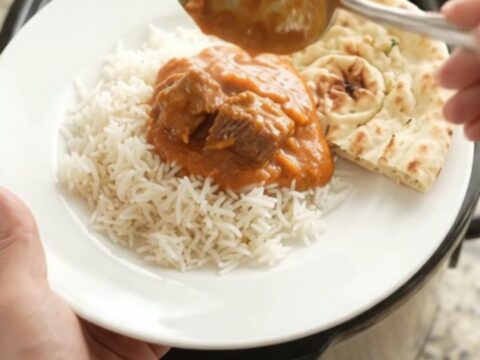
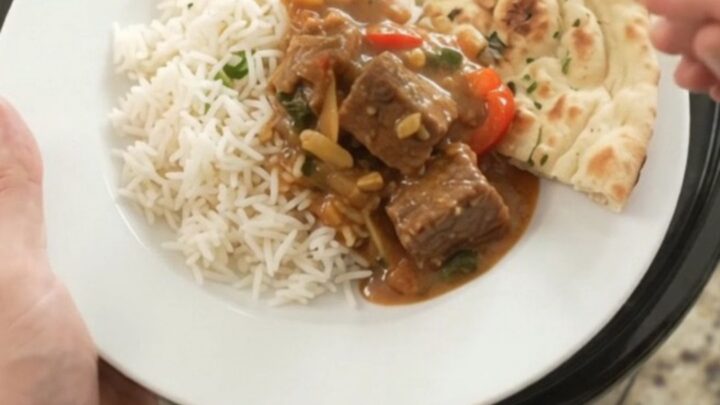
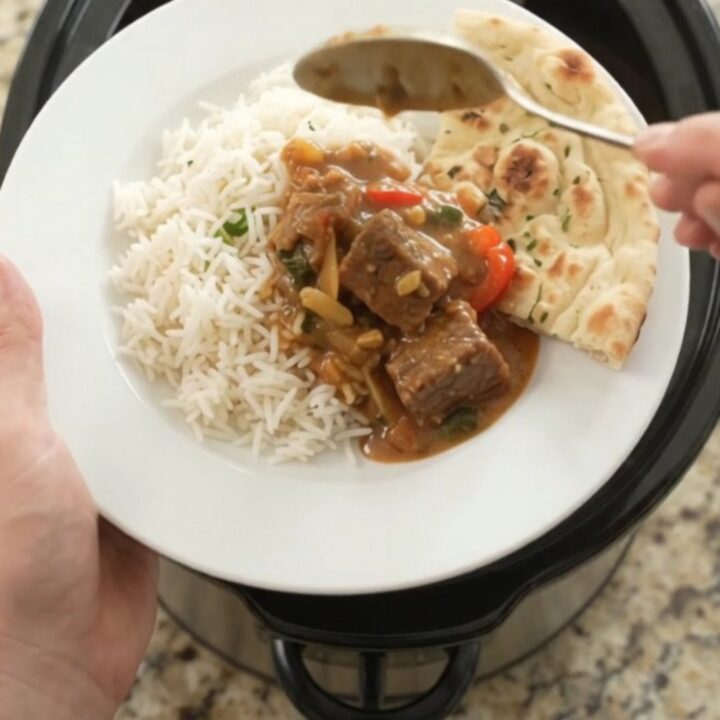
Serve the red curry beef brisket over steamed basmati rice, spooning plenty of sauce over the top. The rice soaks up the rich, spicy liquid, making every bite satisfying.
Warm garlic naan on the side is perfect for scooping up the curry and wiping the bowl clean. For a fresh contrast, add a handful of cilantro leaves or a squeeze of lime juice before serving.
This dish is hearty enough to be a main course on its own, but it also pairs well with a simple cucumber salad or pickled vegetables to cut through the richness.
For a low-carb option, serve over cauliflower rice or zucchini noodles. Leftovers can be transformed into a quick lunch by stuffing them into a wrap or serving over a baked potato. The possibilities are endless.
Frequently asked questions
Can this recipe be made with chicken instead of beef?
Is it necessary to brown the beef before adding to the slow cooker?
Can this curry be made on the stovetop or in an Instant Pot?
Why does the yogurt sometimes curdle?
Can this dish be frozen?
Garlic Butter Red Curry Beef Brisket: Slow-Cooker Dump Dinner
Ingredients
- 2 lb beef brisket, cut into 1-inch cubes
- 3 tbsp Thai red curry paste
- 1 cup sliced bamboo shoots, drained
- 2 red bell peppers, sliced into strips
- 1/2 cup plain Greek yogurt
- 4 tbsp garlic herb butter, sliced into medallions
- 1 tsp kosher salt
- 2 cups steamed basmati rice, for serving
- 1 garlic naan, warmed, for serving
Instructions
- Place the cubed beef brisket in the bottom of a 6-quart slow cooker. Sprinkle with kosher salt. Spoon the Thai red curry paste over the meat, then scatter the sliced bamboo shoots and red bell pepper strips on top. Do not stir.
- Dollop the Greek yogurt over the curry paste and vegetables. Place the garlic herb butter medallions on top. Do not stir—the butter will melt and create a rich sauce as it cooks.
- Cover the slow cooker with its lid. Cook on LOW for 6 to 8 hours, or on HIGH for 3 to 4 hours, until the beef is fork-tender and easily pulls apart. Do not lift the lid during the first 4 hours to retain heat. Let it rest for 3 minutes before slicing.
- After 6 hours on LOW, check the beef. It should be fork-tender and easily shred with a fork. If not, continue cooking for another 30 minutes. The internal temperature should read at least 145°F (63°C) for food safety, but the meat will be more tender at higher temps. Let it rest for 3 minutes before slicing.
- Turn off the slow cooker. Let the beef rest in the sauce for at least 3 minutes before serving. This allows the juices to redistribute, keeping the meat moist and tender.
- Spoon the steamed basmati rice onto plates. Ladle the red curry beef brisket over the rice, making sure to include plenty of sauce and vegetables. Serve with warm garlic naan on the side.
Estimated nutrition per serving
- Calories
- 520
- Protein
- 38 g
- Carbohydrates
- 32 g
- Fat
- 28 g
- Fiber
- 4 g
- Sugar
- 7 g
- Sodium
- 780 mg
Next recipe
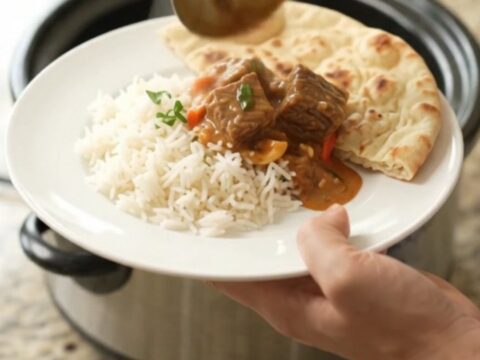
Crockpot Cashew Cream Red Curry Beef Brisket
See the recipe → →This recipe is based on a short cooking video and is published under the pen name Clara Weller. It was checked before publication, but errors can slip through. Nutrition, when shown, is an estimate. Read more in our editorial policy and on our food safety page.
More recipes to try
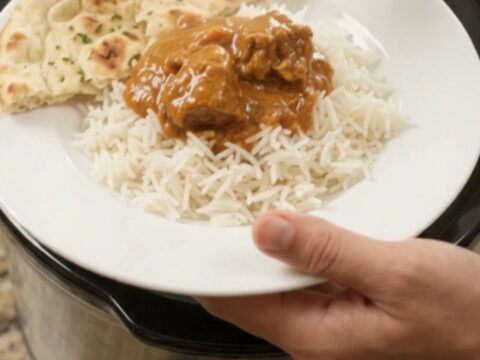
Creamy Ghee Makhani Masala Beef Brisket: Slow Cooker Set-and-Forget
Total time: 8 h 15 min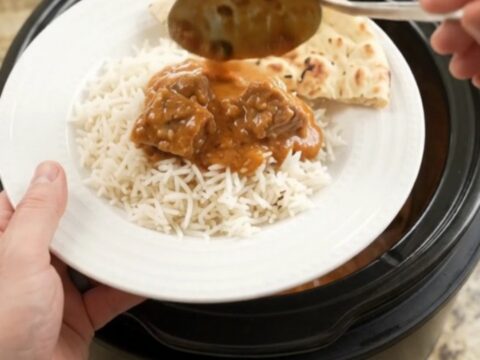
Slow Cooker Garlic Butter Makhani Beef Brisket
Total time: 8 h 15 min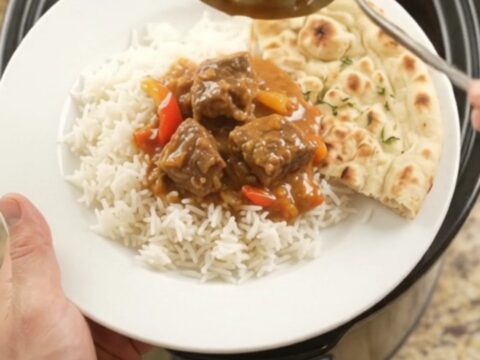
Creamy Ghee Red Curry Beef Brisket: Easy Slow Cooker Dinner
Total time: 6 h 15 min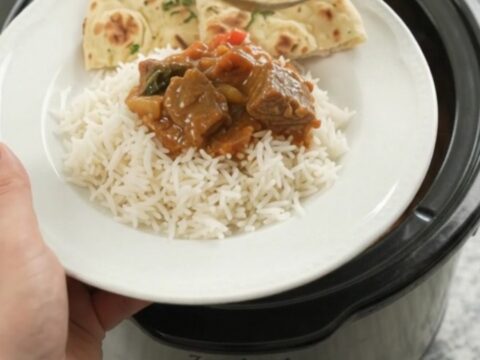
Slow Cooker Coconut Cream Red Curry Beef Brisket
Total time: 8 h 15 min
Coconut Cream Makhani Masala Beef Brisket: Slow-Cooker Comfort
Total time: 6 h 10 min