Dinner · Part 2 of 3: Instructions
Garlic Butter Clams and Prawns Skillet with White Wine Step-by-step instructions
- Prep
- Cook
- Total
- Serves
- 2
Before you start
Set up the station before you turn on the burner, because the skillet sequence is quick. Rinse the littleneck clams under cold water and discard any with cracked shells or that stay open when tapped. Peel and devein the prawns, pat them dry, and keep them chilled. Halve the cherry tomatoes, mince the garlic finely with a large chef's knife, and chop the parsley.
Grate the hard cheese on a handheld rasp grater into a small bowl. Measure the white wine and butter and place them beside the stove, so you can add each ingredient the moment the pan is ready. Have a lid or foil and a wooden spoon within reach for covering the pan.
Ingredients at a glance (9)
- 1 lb fresh littleneck clams, scrubbed
- 8 raw prawns, peeled and deveined
- 1 cup cherry tomatoes, halved
- 4 cloves garlic, minced
- 4 tbsp unsalted butter
- 1/2 cup dry white wine
- 1/4 cup chopped fresh parsley
- 2 tbsp finely grated hard cheese, such as Parmesan
- kosher salt to taste
Instructions
Prep and butter-garlic base
- Prepare the seafood and aromaticsRinse the clams under cold water and discard any with broken shells. Peel and devein the prawns. Halve the cherry tomatoes. Mince the garlic finely with a large chef's knife, then chop the parsley and set everything aside on the board.Look for Clams are clean, shells intact, and garlic is finely minced.Tip Keep the prawns in the refrigerator until the skillet is hot, and cook them within 30 minutes of taking them out.
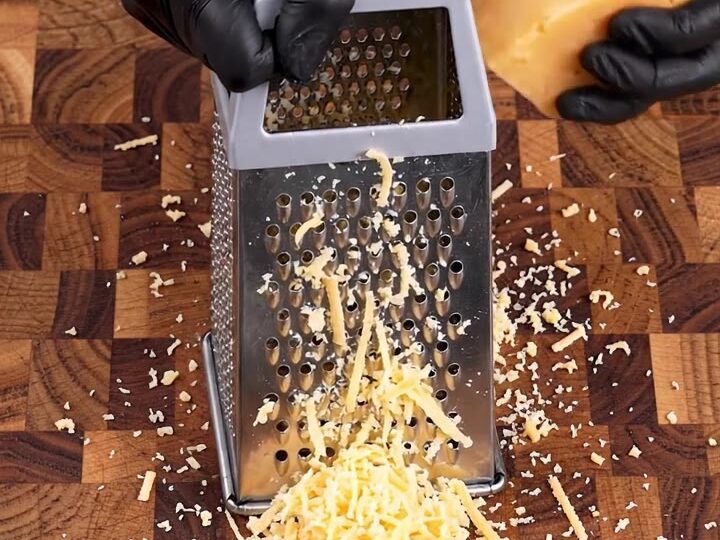
- Grate the cheese finelySet a handheld rasp grater over the board or a small bowl. Grate the hard cheese finely until you have a fluffy pile of shreds. Set it aside for the final garnish.Look for The cheese forms a light, fluffy pile of fine shreds.Tip Grate the cheese just before serving so it stays bright and aromatic.
The clams are scrubbed, the prawns are peeled and chilled, and the garlic is minced. Once the butter melts in the cast iron skillet, the garlic should smell sweet and fragrant within about a minute, with the edges just turning pale gold.
The surface of the butter should look smooth and foamy, not dark or smoking. If the garlic starts to brown, lower the heat before you add anything else, because burnt garlic will taste bitter throughout the sauce and cannot be fixed later in the process.
Wine, prawns and clams
- Melt butter and bloom garlicPlace the cast iron skillet over medium heat and melt the butter. Add the minced garlic and stir for about 1 minute, until it turns fragrant and just golden. Do not let it brown or turn bitter.Look for Butter is fully melted and garlic smells fragrant and sweet.Tip Lower the heat if the garlic starts to darken before the wine goes in.
- Deglaze with white winePour in the white wine and let it bubble for 1 to 2 minutes, scraping up the bits from the pan, until the liquid reduces slightly and looks like a light, glossy sauce.Look for The wine is simmering and has reduced a little, turning glossy.Tip Use a wine you would be happy to drink, since its flavor carries into the sauce.
- Sear the prawnsLay the prawns in the skillet in a single layer, along with the halved cherry tomatoes. Turn them with tongs for 1 to 2 minutes, until they just begin to turn pink on the outside. Season lightly with kosher salt.Look for Prawns turn pink at the edges while the tomatoes start to soften.Tip Work in two batches if the skillet looks crowded, so the prawns sear rather than steam.
- Add the clams and coverNestle the clams with their closed shells among the prawns. Cover the skillet with a lid or foil, or stir gently with a wooden spoon, and cook for 4 to 6 minutes, until the clams pop open. Discard any clams that stay closed.Look for Most clams have popped open and the sauce is bubbling around them.Tip Shake the pan gently to move the shells, so every clam touches the hot liquid.
After the white wine has simmered for a minute or two, the liquid should look slightly reduced and glossy, with the pan bits loosened from the bottom. The prawns should be just turning pink at the outer edges when they are turned, and the cherry tomatoes should begin to soften. Before covering the pan, check that the clams sit with their shells upright and that the liquid bubbles around them. Covering traps the steam that opens the shells within several minutes.
Basting and final garnish
- Baste with butter and finishSpoon the melted garlic butter over the shellfish several times. Cook for 1 to 2 minutes more, until the prawns are opaque and curled and the clams are fully open. Make sure the prawns reach 145°F (63°C) internal temperature.Look for Prawns are opaque and curled, and every clam has opened.Safe temperature 145°F (63°C) internal temperature (shellfish)Tip Remove the pan from the heat as soon as the prawns curl to keep them tender.
- Garnish and serve from the skilletScatter the chopped parsley over the skillet and dust with the grated cheese, then add a light extra grating over the top. Serve straight from the cast iron skillet with extra sauce spooned over the shellfish.Look for The sauce glistens gold and the parsley and cheese sit bright on top.Tip Serve with crusty bread to soak up the garlic butter sauce.
The clams should be open, with their shells gaping and the meat visible, and the prawns should be opaque and curled into a loose C shape. Spoon the melted garlic butter over the shellfish, then check that the sauce is glossy and no longer foamy. Discard any clam that remains closed after cooking. The dish is ready to serve once the prawns reach 145°F (63°C) internal temperature, and the parsley and grated cheese should go on just before the skillet leaves the stove.
Common mistakes
The most frequent error is overcooking the prawns, which turn rubbery when they stay in the pan after they have curled. Add the clams once the prawns are nearly done, and remove the skillet from the heat as soon as the clams open and the prawns are opaque. Another common problem is burning the garlic.
Keep the heat at medium and stir the garlic constantly, since it can go from fragrant to bitter in less than a minute. Crowding the pan is also a problem, because too many prawns release water and steam instead of searing. Work in batches if needed. Finally, do not skip discarding the clams that stay closed after cooking, since they may not be safe to eat.
How to tell it’s done
The dish is done when every clam has opened and the prawns have turned opaque and curled into a loose C shape, with no translucent centers. For food safety, the prawns should reach 145°F (63°C) internal temperature. Use an instant-read thermometer inserted into the thickest prawn to check.
The sauce should be glossy and bubbling, coating the shellfish without any raw wine taste. Any clam that does not open after cooking should be thrown away. Once the parsley and cheese are added, serve immediately while the shellfish is at its best, since the sauce will thicken slightly as it cools in the skillet.
- Shellfish: 145°F (63°C) in the thickest part
Up next · Part 3 of 3
4 variations · storage & make-ahead · 5 answers · printable card
Tips, FAQ & printable recipe (Part 3)← Back to the ingredients (Part 1)