Dinner · Part 2 of 3: Instructions
Garlic Butter Cajun Chicken Penne in Parmesan Cream Sauce Step-by-step instructions
- Prep
- Cook
- Total
- Serves
- 4
Before you start
Before you begin cooking, organize all your ingredients to ensure a smooth process. Measure out the heavy cream, grate the parmesan cheese, and chop the fresh parsley. Mince the garlic cloves and set them aside.
Place the raw chicken breasts on a clean cutting board, pat them dry with paper towels, and apply the Cajun seasoning. Keep the seasoned chicken refrigerated until you are ready to sear it to maintain food safety.
Ingredients at a glance (8)
- 12 oz penne pasta
- 1 1/2 lb boneless skinless chicken breasts
- 2 tbsp Cajun seasoning
- 4 tbsp unsalted butter, divided
- 4 cloves garlic, minced
- 1 1/2 cups heavy cream
- 1 cup parmesan cheese, freshly grated
- 2 tbsp fresh parsley, chopped
Instructions
Pasta Preparation
- Cook the PenneBring a large pot of salted water to a rolling boil. Add the penne pasta and cook according to the package directions until it reaches an al dente texture. Drain the pasta in a colander, reserving a half cup of the starchy pasta water for adjusting the sauce later, and set the drained pasta aside.Look for The pasta should be tender but still retain a firm bite at the center.Tip Salting the boiling water generously is the only chance to season the pasta itself.
The penne pasta should be boiled to a perfect al dente texture. When you bite into a piece, it should be tender but retain a slight firmness at the center. Once drained, the pasta should look clean and dry, but make sure to reserve some starchy pasta water, which is a valuable tool for adjusting the final sauce consistency.
Searing the Cajun Chicken
- Season the ChickenPat the boneless skinless chicken breasts dry with paper towels to ensure a good sear. Rub the Cajun seasoning evenly over all sides of the chicken breasts, pressing the spices into the meat so they adhere well.Look for The chicken breasts should be completely coated with a uniform layer of spices.Tip Keep raw poultry refrigerated until right before seasoning to maintain proper food safety.
- Sear the ChickenMelt two tablespoons of the unsalted butter in a large skillet over medium-high heat. Add the seasoned chicken breasts and sear for about six to eight minutes per side. Cook until the exterior is beautifully charred and a meat thermometer inserted into the thickest part reads 165°F (74°C). Transfer the chicken to a clean plate and let it rest for five minutes before slicing.Look for The chicken should have a rich, dark crust and register 165°F (74°C) internally.Safe temperature 165°F (74°C) internal temperature (poultry)Tip Do not crowd the skillet; cook in batches if necessary to get a proper sear.
The chicken breasts should emerge from the skillet with a deep, golden-brown, and slightly charred Cajun crust. The meat will feel firm to the touch, and a quick check with a digital meat thermometer must confirm an internal temperature of 165°F (74°C). The skillet should have flavorful browned bits stuck to the bottom.
Sauce Assembly and Toss
- Sauté the GarlicReduce the skillet heat to medium and melt the remaining two tablespoons of unsalted butter in the same pan, scraping up the browned bits left behind by the chicken. Add the minced garlic and sauté for about one minute, stirring constantly, until the garlic is highly fragrant but not browned.Look for The garlic should smell rich and aromatic without turning dark brown.Tip Scraping the pan releases the fond, which adds immense flavor to the cream sauce.
- Simmer the Parmesan Cream SaucePour the heavy cream into the skillet and bring the mixture to a gentle simmer. Reduce the heat to low and gradually whisk in the freshly grated parmesan cheese. Continue to whisk constantly until the cheese is fully melted and the sauce becomes smooth, thick, and velvety.Look for The sauce should coat the back of a spoon in a glossy, uniform layer.Tip Use freshly grated parmesan rather than pre-shredded cheese, which contains anti-caking agents that prevent smooth melting.
- Combine and GarnishAdd the cooked penne pasta to the skillet, tossing it thoroughly to coat every piece in the creamy sauce. Slice the rested Cajun chicken breasts into strips. Plate the sauced pasta, arrange the sliced chicken alongside or on top, and scatter the freshly chopped parsley over the dish before serving immediately.Look for The pasta should be dripping with glossy sauce, garnished with bright green parsley.Tip If the sauce seems too thick, splash in a little of the reserved pasta water to thin it out.
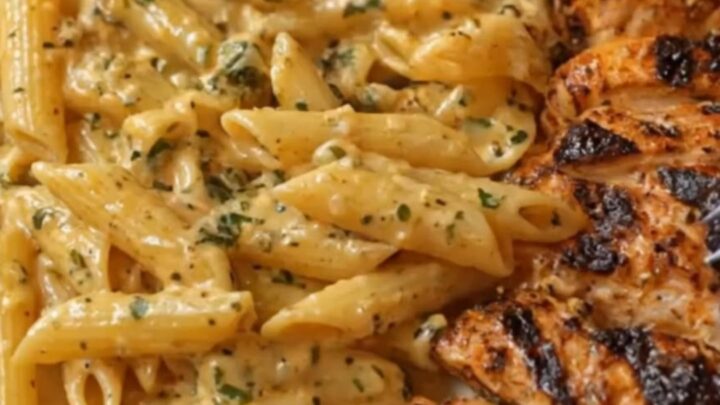
The completed dish features glossy, cream-coated penne pasta sitting alongside juicy, sliced Cajun chicken. The parmesan cream sauce should be smooth, thick, and completely free of clumps, clinging elegantly to the pasta.
The bright green parsley scattered over the top adds a fresh contrast to the rich, golden tones of the dish.
Common mistakes
One common mistake is letting the skillet get too hot when cooking the garlic, which can burn it in seconds and impart a bitter flavor to the entire sauce. Always lower the heat after searing the chicken before adding the butter and garlic.
Another error is using pre-shredded cheese, which leads to a gritty, separated sauce. Grate your own parmesan cheese from a block for a perfectly smooth, restaurant-quality emulsion.
How to tell it’s done
To ensure the chicken is perfectly cooked and safe to consume, insert a digital meat thermometer into the thickest part of the breast. It must register 165°F (74°C).
The meat should be opaque throughout with no pink remaining. Let the chicken rest on a clean plate for five minutes before slicing; this allows the juices to redistribute, ensuring every slice remains exceptionally tender.
- Poultry: 165°F (74°C) in the thickest part
Up next · Part 3 of 3
2 variations · storage & make-ahead · 4 answers · printable card
Tips, FAQ & printable recipe (Part 3)← Back to the ingredients (Part 1)