Dinner · Part 2 of 3: Instructions
French Onion Rigatoni Skillet with Gruyere and Parmesan Step-by-step instructions
- Prep
- Cook
- Total
- Serves
- 4
Before you start
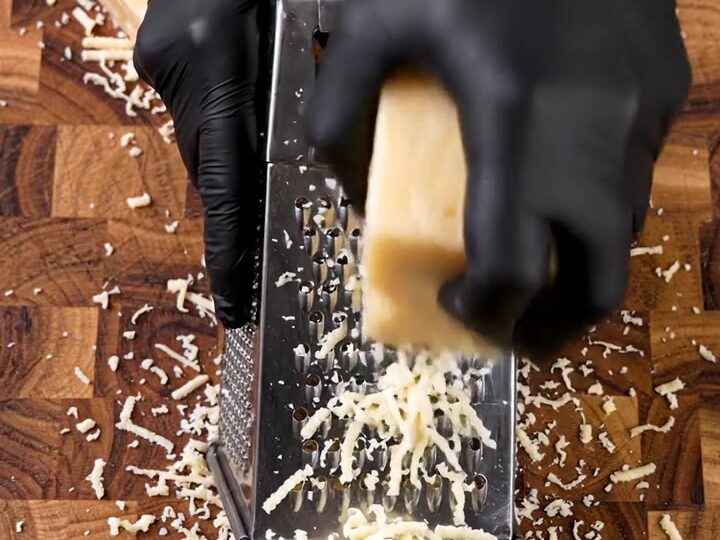
Start by setting out every ingredient and tool so the cooking flows without pauses. Halve the yellow onions, peel them and slice each half into thin half-moon rings of even thickness, which helps them caramelize at the same pace. Mince the garlic and strip the thyme leaves from their woody stems. Grate the Gruyere and the Parmesan on the large holes of a box grater and spread the piles on a plate so they are ready to fold in.
Measure the beef broth and the butter, and set a pot of salted water on the stove so it comes to a boil while the onions cook. Preheat the oven to 425°F (220°C) and position the rack in the upper third. Having everything within reach keeps the onions from scorching while you prepare the rest of the dish.
Ingredients at a glance (10)
- 3 large yellow onions, halved and sliced into thin half-moon rings
- 3 cloves garlic, minced
- 4 sprigs fresh thyme, leaves stripped, plus more leaves for garnish
- 3 tbsp unsalted butter
- 1 tbsp olive oil
- kosher salt and black pepper to taste
- 8 oz dry rigatoni pasta
- 2 cups beef broth
- 4 oz Gruyere cheese, finely grated
- 2 oz Parmesan cheese, finely grated, plus more for the top
Instructions
Caramelized Onions Ready
- Slice the onions and prepHalve the yellow onions, peel them and slice each half into thin half-moon rings. Mince the garlic and strip the thyme leaves from the sprigs. Grate the Gruyere and the Parmesan on a box grater and set the piles aside on the board.Look for Onion rings are thin and even, and the cheese forms fine, pale golden shreds.Tip Slice the onions evenly so they caramelize at the same rate.
- Caramelize the onionsHeat the olive oil and 1 tbsp butter in the cast iron skillet over medium heat. Add the onions with a pinch of salt and cook, stirring every few minutes, for about 30 minutes until deeply golden, sweet and jammy. Stir in the garlic and thyme leaves for the last minute.Look for Onions are deep amber, soft and jammy, with a sweet, toasty smell.Tip Lower the heat and add a splash of broth if the onions start to stick.
After about 30 minutes, the onions should be deep golden amber, soft and jammy, with a sweet, toasty smell filling the kitchen. Stir in the garlic and thyme for the final minute and check that no pieces are burning. If the pan looks dry or the onions stick, add a splash of broth and lower the heat. The onions should cling together and coat the bottom of the skillet in a thin, sticky layer. Once that color and texture appear, the base is ready for the pasta and you can move on confidently to the next phase.
Pasta Glossy with Broth
- Cook the rigatoniBring a large pot of salted water to a boil. Cook the rigatoni until just al dente, about 2 minutes less than the package directions, then drain it well. Keep the pasta warm while you finish the sauce.Look for Pasta is firm to the bite with a slight bite at the center.Tip Reserve a little cooking water in case the sauce needs loosening.
- Toss pasta with broth and butterPour the beef broth into the skillet with the onions and bring it to a simmer. Add the drained rigatoni and the remaining 2 tbsp butter. Toss over medium heat until the pasta absorbs the savory onion liquid and turns glossy.Look for The liquid has reduced and coats the pasta in a glossy film.Tip Keep tossing so the pasta does not dry out or stick to the pan.
- Fold in the cheeseRemove the skillet from the heat. Scatter the grated Gruyere and most of the Parmesan over the pasta and fold them in until melted and smooth. Season with black pepper and adjust the salt to taste.Look for Cheese has melted into a smooth, glossy coating around every piece.Tip Fold gently so the cheese melts evenly without clumping.
After tossing the pasta with broth and butter, the liquid should have reduced to a glossy film that coats each piece of rigatoni evenly. The pasta should look tender but still hold its shape, with no standing liquid pooling at the bottom of the skillet. Taste a piece to confirm it has absorbed the savory onion flavor and is not raw in the center. If the skillet looks too dry, add a little reserved pasta water. When the pasta looks glossy and coated, remove the skillet from the heat and fold in the cheese.
Cheese Melted and Golden
- Top and bake until goldenScatter the remaining Parmesan over the surface. Bake the skillet in the oven at 425°F (220°C) for 8 to 10 minutes, until the top is bubbling and golden brown with browned spots.Look for Edges bubble and the top shows golden brown spots.Tip Set the oven rack in the upper third so the top browns well.
- Garnish and serveLet the skillet rest for 5 minutes so the cheese sets slightly. Scatter fresh thyme leaves over the top and serve straight from the skillet, pulling up the long cheese strands with a spoon and fork.Look for Cheese pulls into long strands and the surface looks golden and glossy.Tip Use oven mitts, as the skillet handle stays very hot.
Once the cheese is folded in, the mixture should be smooth, creamy and glossy with no clumps. The Parmesan on top should begin to bubble and brown in spots after roughly 8 to 10 minutes in the oven, with edges that look golden and crisp. The sauce should appear thick and moist, not separated or grainy.
Check the skillet for even browning across the top and make sure the cheese pulls into long strands when lifted with a spoon. When the surface looks bubbling and golden, take the skillet out and let it rest briefly before garnishing and serving.
Common mistakes
The most common error is rushing the onions. If the heat is too high, the outer layers burn before the centers soften, leaving a bitter taste and no real sweetness. Keep the heat at medium, stir regularly and add a splash of broth only when the pan starts to dry. Another frequent mistake is overcooking the pasta. Rigatoni should be firm to the bite when drained because it finishes cooking in the skillet with the broth.
Soft pasta will turn mushy and lose its texture. Adding all the cheese too early or over high heat can cause it to clump or turn grainy, so remove the skillet from the heat before folding in the Gruyere and Parmesan. Finally, avoid skipping the rest after baking, which lets the cheese settle so each serving holds together neatly.
How to tell it’s done
The dish is done when the onions are deep amber and jammy, the pasta is tender and coated in glossy sauce, and the top of the skillet is bubbling and golden brown with browned spots after about 8 to 10 minutes in the oven at 425°F (220°C). Cheese should pull into long strands when lifted with a spoon, and the sauce should look moist and creamy rather than dry or separated.
There is no raw protein in this recipe, so no internal temperature is needed. Judge the finish by color, texture and bubbling: the surface should look golden, the edges should sizzle gently, and the cheese should look smooth and fully melted throughout the skillet.
Up next · Part 3 of 3
4 variations · storage & make-ahead · 5 answers · printable card
Tips, FAQ & printable recipe (Part 3)← Back to the ingredients (Part 1)