Dinner · Part 2 of 3: Instructions
French Onion Rigatoni with Blistered Gruyere Crust Step-by-step instructions
- Prep
- Cook
- Total
- Serves
- 6
Before you start
Before starting, bring a large pot of salted water to a boil for the pasta. Grate the Gruyere and provolone on the large holes of a box grater and set them aside at room temperature — this helps them melt more evenly.
Slice the onions into thin, uniform crescents and strip the thyme leaves from their stems. Have a 12-inch cast iron skillet ready, as well as a colander for draining the pasta. The broiler should be preheated just before the final step.
Ingredients at a glance (8)
- 3 large Golden Vidalia onions, sliced into thin crescents
- 2 tbsp fresh thyme leaves, plus more for garnish
- 4 tbsp unsalted butter
- 1 cup heavy cream
- 12 oz rigatoni pasta
- 8 oz aged Gruyere cheese, grated
- 4 oz provolone cheese, grated
- cracked black pepper, for serving
Instructions
Building the Base
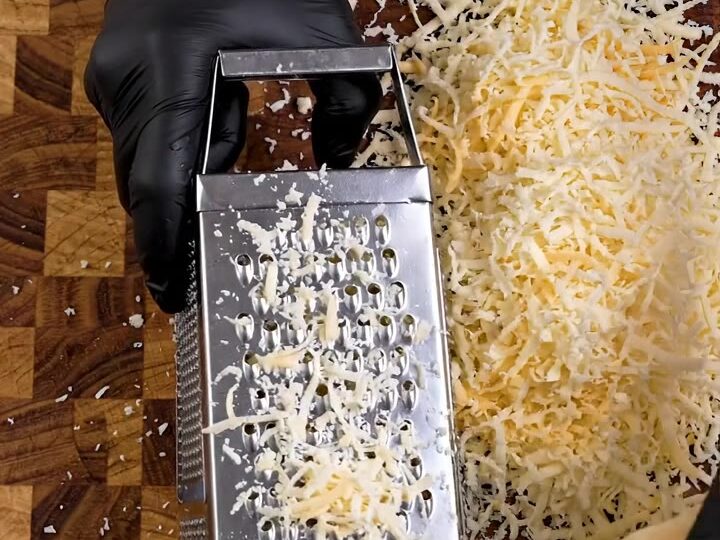
- Prepare the IngredientsSlice the Golden Vidalia onions into thin, uniform crescents. Strip the fresh thyme leaves from the stems, discarding the woody parts. Grate the aged Gruyere and provolone on the large holes of a box grater into separate piles. Bring a large pot of salted water to a boil.Look for Onions are thin and even; thyme leaves are stripped; cheeses are freshly grated and fluffy.Tip Chill the cheese before grating for cleaner shreds. Use the large holes for a better melt.
- Boil the RigatoniAdd the rigatoni to the boiling salted water and cook until al dente according to the package directions, about 10 to 12 minutes. Reserve about 1/2 cup of the pasta water before draining. Drain the rigatoni in a colander and set aside.Look for Pasta is tender but still firm to the bite; the reserved water is starchy and cloudy.Tip Undercook the pasta by 1 minute — it will finish cooking under the broiler.
- Caramelize the OnionsIn a 12-inch cast iron skillet, melt the butter over medium heat. Add the sliced onions and cook, stirring occasionally, until they are deeply browned and caramelized, about 20 to 25 minutes. The onions should be soft, jammy, and mahogany-colored.Look for Onions are deeply golden, sweet-smelling, and have reduced significantly in volume.Tip Do not rush this step — low and slow is key. If the onions start to scorch, add a splash of water.
The onions are deeply caramelized — soft, jammy, and mahogany brown. The pasta is cooked al dente and drained, with a bit of starchy water reserved. The cheese is grated and ready. The kitchen smells of butter and sweet onions.
Creating the Sauce
- Add Thyme and CreamStir the fresh thyme leaves into the caramelized onions and cook for 1 minute until fragrant. Pour in the heavy cream and bring to a gentle simmer. Let the sauce bubble for 2 to 3 minutes, until it thickens slightly and coats the back of a spoon.Look for The cream is lightly thickened and the thyme is aromatic; the sauce clings to a spoon.Tip Scrape the bottom of the skillet to incorporate any browned bits from the onions.
- Fold in the PastaAdd the drained rigatoni to the skillet and toss gently with tongs until every piece is coated in the creamy onion sauce. If the sauce seems too thick, add a splash of the reserved pasta water to loosen it. Season with a pinch of salt if needed.Look for Pasta is evenly coated in a glossy, creamy sauce; no dry spots remain.Tip Toss gently to avoid breaking the pasta. The sauce will continue to thicken as it sits.
- Top with CheesesSprinkle the grated provolone evenly over the pasta, then cover with the grated Gruyere, making sure the surface is completely blanketed. Press the cheese lightly into the pasta so it adheres.Look for The top is fully covered with a thick, even layer of cheese.Tip Use all the cheese — a generous crust is the best part.
The cream has thickened slightly and coats the pasta evenly. The thyme is fragrant, and the sauce clings to the rigatoni. The skillet is full of glossy, creamy pasta, ready for its cheese blanket.
Finishing Under the Broiler
- Broil Until BlisteredPlace the skillet under a preheated broiler, about 6 inches from the heat. Broil for 2 to 4 minutes, until the cheese is melted, golden, and blistered in spots. Watch closely to prevent burning.Look for The cheese is bubbling, browned in patches, and the edges are crisp.Tip Rotate the skillet halfway through for even browning. If your broiler runs hot, check at 2 minutes.
- Garnish and ServeRemove the skillet from the broiler and let it rest for 2 to 3 minutes. Scatter fresh thyme leaves over the top and finish with cracked black pepper. Pull a portion with a spoon, letting the cheese stretch, and serve hot.Look for The crust is blistered and golden; the cheese stretches when pulled.Tip Use a wide spoon or spatula to serve, and lift high to show the stretch.
The cheese is melted, golden, and blistered in spots, with crispy edges. The top is bubbling and browned. After a brief rest, the cheese stretches beautifully when pulled, and the dish is ready to serve.
Common mistakes
One common mistake is rushing the caramelization. If the onions are cooked over high heat, they will burn and turn bitter instead of sweet.
Be patient and use medium-low heat, stirring occasionally. Another mistake is overloading the skillet with too much pasta, which can make the dish dry.
Also, avoid using pre-shredded cheese, as it won’t melt as smoothly and may not form a cohesive crust. Finally, watch the broiler closely — the cheese can go from perfectly blistered to burnt in seconds.
How to tell it’s done
The dish is done when the cheese on top is melted, golden brown, and blistered in spots, and the edges are crispy and slightly darkened. The sauce should be bubbling around the edges of the skillet.
To check for doneness, insert a spoon into the center — the pasta should be tender and the sauce should be creamy, not watery. The cheese should stretch when pulled. Since there are no raw proteins, no internal temperature check is needed.
Up next · Part 3 of 3
4 variations · storage & make-ahead · 5 answers · printable card
Tips, FAQ & printable recipe (Part 3)← Back to the ingredients (Part 1)