Dinner · Part 2 of 3: Instructions
French Onion Dijon Cream Pork Sirloin Roast Step-by-step instructions
- Prep
- Cook
- Total
- Serves
- 6
Before you start
Before starting, pat the pork sirloin roast dry with paper towels and trim any large fat pieces. Thinly slice the Vidalia onions—about 1/4-inch thick—so they melt into the sauce.
Measure out the beef consommé, sour cream, Dijon mustard, and au jus so everything is ready to layer. No need to sear the meat or pre-cook the onions. Have a 6- to 7-quart slow cooker ready. The prep takes just 10 minutes, and then the cooker does the rest.
Ingredients at a glance (6)
- 3 1/2 lb boneless pork sirloin roast
- 2 large Vidalia onions, thinly sliced
- 1 cup beef consommé
- 1/2 cup sour cream
- 2 tbsp whole-grain Dijon mustard
- 1/2 cup au jus
Instructions
Layer and Set
- Layer the Roast and OnionsPlace the pork sirloin roast in the center of the slow cooker. Scatter the sliced Vidalia onions over and around the roast. Pour the beef consommé around the base, being careful not to rinse the onions off the meat.Look for The roast sits snugly in the pot, onions piled on top, consommé pooling at the bottom.Tip No need to sear the pork first—the long slow cook builds flavor and tenderness.
- Add Cream and MustardDollop the sour cream over the roast and onions. Spoon the whole-grain Dijon mustard over the top, spreading it slightly. Pour the au jus along the side of the pot, not directly over the sour cream.Look for The top of the roast is streaked with white and yellow, with dark liquid around the edges.Tip Stirring now is not necessary; the sauce will meld during cooking.
At the end of this phase, the slow cooker contains the raw pork roast, topped with sliced onions and a pour of beef consommé around the base. Sour cream and Dijon are dolloped on top, and au jus is added along the side.
The ingredients are not stirred—they will meld during cooking. The scene looks rustic and simple, with the pale pork, white and yellow dollops, and dark liquid pooling at the edges.
Slow Cook and Shred
- Cook Low and SlowCover the slow cooker and cook on LOW for 8 to 10 hours, or on HIGH for 4 to 5 hours, until the pork is fork-tender and shreds easily. Let it rest for 3 minutes before slicing.Look for The meat pulls apart with a fork and the onions have turned deep golden and soft.Safe temperature 145°F (63°C) internal temperature (steaks, chops and roasts)Tip Resist lifting the lid during cooking—each peek adds 20 minutes of cook time.
- Shred the PorkTransfer the roast to a cutting board. Let it rest for at least 3 minutes. Using two forks, shred the pork into bite-size pieces, discarding any large fat pieces.Look for The meat is moist and pulls apart easily into tender strands.Safe temperature 145°F (63°C) internal temperature (steaks, chops and roasts)Tip Resting the meat before shredding keeps it juicy.
After 8 to 10 hours on LOW, the kitchen smells richly savory and slightly tangy. The pork is fork-tender and shreds easily, the onions have turned deep golden and silky, and the sauce is a uniform, velvety brown. The meat rests for 3 minutes before shredding. The texture is moist and tender, with no resistance when pulled apart. The sauce coats the back of a spoon and has a glossy sheen.
Finish and Serve
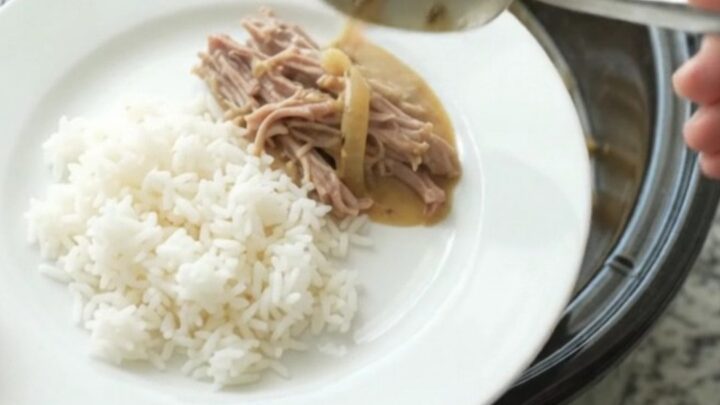
- Combine and ServeReturn the shredded pork to the slow cooker and stir it into the onion gravy. Serve hot over steamed rice or on its own, spooning extra sauce over each portion.Look for The pork is coated in a velvety, savory sauce with soft onion ribbons.Tip For a thicker sauce, simmer uncovered for 10 minutes before serving.
The shredded pork is returned to the slow cooker and stirred into the onion gravy. Each bite is coated in a creamy, tangy sauce with soft ribbons of onion. The dish is ready to serve over rice or on its own. The final texture is rich and comforting, with the pork melting in the mouth and the sauce adding a satisfying depth. A final taste for salt and pepper ensures the flavors are balanced.
Common mistakes
The most common mistake is lifting the lid to check on the roast—each peek releases heat and adds 20 minutes to the cooking time. Trust the recipe and keep the lid on. Another mistake is using a lean cut that is too small; a 3 1/2-pound roast is ideal for this amount of liquid.
If the roast is smaller, reduce the cooking time slightly. Also, do not skip the resting time after cooking—it helps the meat stay juicy. Finally, if the sauce tastes flat, add a pinch of salt or a splash of Worcestershire sauce.
How to tell it’s done
The pork is done when it is fork-tender and easily shreds with two forks. The internal temperature should reach at least 145°F (63°C), but because it cooks low and slow, it will likely be higher—that is fine.
The onions should be soft and translucent, and the sauce should be thick enough to coat a spoon. If the sauce seems thin, remove the pork, shred it, and simmer the sauce on the stovetop until it reduces. Taste and adjust seasoning with salt and pepper before serving.
- Steaks, chops and roasts: 145°F (63°C) in the thickest part, then a 3-minute rest
Up next · Part 3 of 3
4 variations · storage & make-ahead · 5 answers · printable card
Tips, FAQ & printable recipe (Part 3)← Back to the ingredients (Part 1)