Dinner · Part 1 of 3: Ingredients
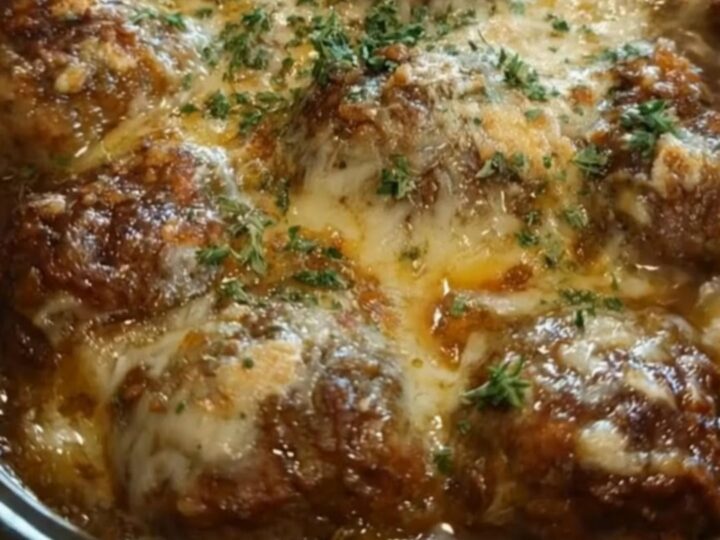
French Onion Beef Meatballs with Melted Cheese
- Prep
- Cook
- Total
- Serves
- 4
Transform humble ground beef into an elegant, restaurant-quality meal with this French onion meatball recipe. It captures the essence of the classic soup in a convenient, hearty format that is perfect for busy evenings.
These meatballs are tender, juicy, and coated in a deeply savory, onion-infused gravy that pairs perfectly with the melted cheese topping. Follow this simple method to bring a touch of French bistro comfort directly to your dinner table with minimal effort and maximum satisfaction.
French onion soup is beloved for its deep, caramelized onion flavor, rich beef broth, and signature blanket of melted, bubbly cheese. This recipe takes those iconic elements and reinterprets them into a substantial main course featuring tender, savory meatballs. By utilizing a slow cooker, the onions have ample time to break down into the broth, creating a concentrated gravy that permeates every part of the dish.
It is an ideal solution for those who crave complex, slow-cooked flavors without spending hours actively watching the stove. Whether serving a family dinner or hosting friends, this recipe provides a sophisticated yet accessible option that is consistently delicious and visually appealing when served straight from the pot.
Ingredients
Meatballs
- 1 lb ground beef
Gravy
- 2 cups beef broth
- 2 large onions, thinly sliced
Topping
- 1 cup shredded cheese
Garnish
- 2 tbsp fresh parsley, chopped
Why this recipe works
The slow cooker method provides a gentle, consistent heat that is ideal for coaxing deep flavors out of simple ingredients. By cooking the meatballs submerged in the broth along with the onions, the meat remains moist and absorbs the savory essence of the gravy throughout the process.
The long cooking time is essential for transforming the onions from raw slices into a silky, sweet, and savory foundation that defines the French onion profile.
This approach also simplifies the cooking process by combining multiple steps into a single vessel. By layering the ingredients and allowing them to meld together over several hours, the flavors integrate more thoroughly than they would with faster methods.
The final addition of cheese creates a protective layer that keeps the meatballs succulent while providing that iconic, gooey finish that makes the dish so satisfying to eat.
Notes and substitutions
For the best results, use a high-quality beef broth or stock, as it serves as the base for the entire gravy. If you prefer a thicker sauce, you can stir in a small amount of cornstarch slurry during the final ten minutes of cooking. When choosing your cheese, Gruyere is the traditional choice due to its excellent melting properties and nutty flavor profile, but Swiss or even a mild Fontina will produce similar results.
Regarding equipment, any standard slow cooker with a capacity of at least four quarts will work well for this recipe. If you notice the meatballs are not browning as much as you like, you can quickly sear them in a skillet before adding them to the slow cooker, although this is entirely optional. Always ensure the meatballs are of a uniform size to promote even cooking throughout the entire batch.
- Shredded cheese: Gruyere, Swiss, or Fontina cheese
- Beef broth: Vegetable broth
Equipment
- Slow cooker
- Chef's knife
- Cutting board
- Measuring cups
- Serving spoon
Up next · Part 2 of 3
3 steps · 2 h of cooking · what to look for at each stage
Step-by-step instructions (Part 2)