Breakfast · Part 2 of 3: Instructions
Fragrant Pandan Pancakes with Rich Kaya Coconut Jam Step-by-step instructions
- Prep
- Cook
- Total
- Serves
- 4
Before you start
Before beginning, ensure all your ingredients are measured and ready to use. Wash the pandan leaves thoroughly under cold running water to remove any debris and pat them dry with a clean kitchen towel. If using store-bought kaya jam, have it at room temperature so it spreads easily over the warm pancakes.
Prepare your workspace by laying out the blender, a whisk, and a heat-resistant spatula. Having everything within reach makes the process smooth and prevents the batter from sitting too long before cooking. Ensure your griddle is clean and lightly wiped with a neutral oil if necessary.
Ingredients at a glance (7)
- 6 leaves fresh pandan leaves, washed and cut
- 150 ml coconut milk
- 150 g all-purpose flour
- 1 egg
- 20 g palm sugar
- 35 g kaya coconut egg jam, store-bought or made ahead
- 1 tbsp toasted coconut flakes
Instructions
Extracting the pandan flavor
- Prepare the pandan extractPlace the fresh pandan leaves into a high-speed blender with the coconut milk. Blend on high until the leaves are completely pulverized and the mixture turns a bright, vibrant emerald green. Pour the mixture through a fine-mesh strainer into a clean bowl, pressing down on the solids to extract as much liquid as possible. Discard the fibrous leaf remains.Look for The mixture should be bright green and fragrant.Tip Ensure the leaves are washed thoroughly before blending to remove any field dust.
The pandan and coconut milk mixture should be a vibrant, uniform emerald green color. It should smell intensely floral and sweet, characteristic of fresh pandan. Ensure the blender has broken down the leaves completely so that no large pieces remain before you move on to the straining process.
Creating the pancake batter
- Mix the pancake batterIn a large mixing bowl, combine the all-purpose flour, the egg, and the palm sugar. Gradually pour in the strained emerald pandan-coconut extract while whisking constantly. Continue to whisk the batter until it is smooth, uniform in color, and free of any large flour lumps. The batter should have a pourable consistency that coats the back of a spoon.Look for The batter should be smooth and vibrant green.Tip Whisking gently helps maintain the desired airy texture of the finished pancakes.
The batter should have a consistent, pourable texture that is smooth and free of large flour clumps. It will have a beautiful light green color. Check that the palm sugar has fully dissolved into the mixture, as this ensures a balanced sweetness in every bite of the finished pancake.
Cooking to perfection
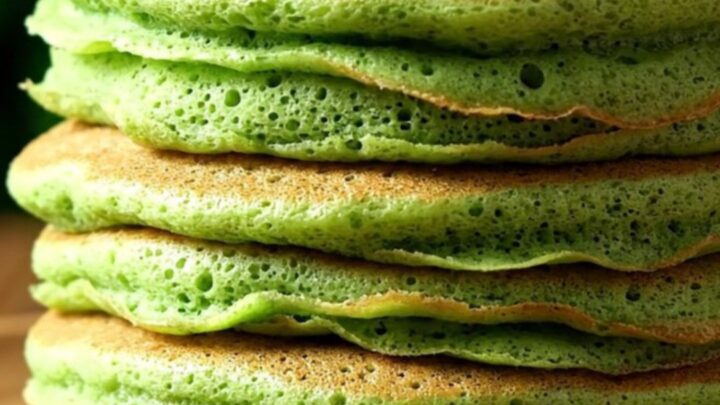
- Griddle the pancakesHeat a non-stick griddle over medium heat to approximately 340°F (170°C). Pour small portions of the batter onto the hot surface. Cook for about 2 minutes per side until the pancakes are fragrant and the surfaces are covered in tiny honeycomb air pockets. To ensure the egg in the batter is fully cooked through, heat until the center reaches 160°F (71°C). Remove from the heat and serve immediately topped with the kaya coconut egg jam and toasted coconut flakes.Look for Look for the appearance of tiny air bubbles on the surface.Safe temperature 160°F (71°C) internal temperature (egg dishes)Tip Keep the heat steady to prevent the delicate pandan aroma from scorching.
The pancakes are ready when they puff up and display a characteristic honeycomb pattern of tiny air holes on the surface. They should feel light and springy when touched. The aroma should be warm and fragrant, signaling that the pancakes are perfectly cooked and ready for the kaya jam.
Common mistakes
A common mistake is using too much heat, which can cause the outside of the pandan pancakes to brown too quickly before the center is cooked through, masking the delicate green color.
Another error is failing to strain the blended pandan mixture well, which can leave fibrous bits in the batter that affect the texture.
Finally, avoid over-mixing the batter once the wet and dry ingredients are combined; a few small lumps are perfectly acceptable and actually help keep the pancakes light and airy rather than tough or rubbery.
How to tell it’s done
The pancakes are done when they are fragrant, firm to the touch, and the surfaces are covered with small, evenly distributed air pockets. While the recipe suggests a soft finish, the safe internal temperature for the egg is 160°F (71°C).
The edges should look set and slightly crisp, while the interior remains moist and fluffy. If the pancakes seem too soft or doughy in the middle, continue cooking for an additional 30 seconds on lower heat until the desired texture is reached.
- Egg dishes: 160°F (71°C) in the thickest part
Up next · Part 3 of 3
2 variations · storage & make-ahead · 3 answers · printable card
Tips, FAQ & printable recipe (Part 3)← Back to the ingredients (Part 1)