Dinner · Part 2 of 3: Instructions
Fork-Tender Mediterranean Red Wine Braised Octopus Step-by-step instructions
- Prep
- Cook
- Total
- Serves
- 4
Before you start
Before you begin, ensure your octopus is properly cleaned. If you have purchased a whole octopus, verify that the beak, eyes, and ink sac have been removed. Rinse the octopus under cold running water and pat it dry with paper towels.
Peel the shallots and prepare your other ingredients so that you can layer them quickly into the slow cooker. Having everything ready in advance ensures that you can start the cooking process immediately without needing to open the slow cooker later.
Ingredients at a glance (8)
- 2 lb cleaned octopus
- 1 lb calamari rings
- 6 whole shallots
- 1 cup Kalamata olives
- 2 tbsp capers
- 15 oz crushed plum tomatoes
- 1 tbsp dried oregano
- 1 cup dry red wine
Instructions
Layering the ingredients
- Assemble ingredients in the slow cookerPlace the cleaned octopus, calamari rings, whole shallots, Kalamata olives, capers, crushed plum tomatoes, dried oregano, and dry red wine into the ceramic insert of your slow cooker. Ensure the ingredients are evenly distributed to allow for consistent heat distribution throughout the cooking process.Look for All ingredients should be submerged or well-coated in the tomato and wine mixture.Tip Layer the octopus tentacles at the bottom to ensure they remain fully submerged in the liquids during the long braise.
At this stage, the slow cooker should be filled with the raw octopus, calamari, and aromatic base. The liquids should just barely cover the seafood. Ensure the shallots are distributed evenly so they can soften throughout the long cook. The mixture should smell fresh and herbaceous from the dried oregano.
Slow-cooking process
- Slow cook until tenderSet the slow cooker to the LOW setting and cover with the lid. Cook for exactly five hours without opening the lid. This gentle, low-temperature cooking method is essential for breaking down the tough connective tissues in the octopus, resulting in a perfectly tender texture.Look for The octopus should be easily pierced with a knife and the sauce should have thickened into a rich glaze.Safe temperature 145°F (63°C) internal temperature (shellfish)Tip Avoid lifting the lid during the first four hours to prevent heat loss, which can extend the cooking time significantly.
During the five-hour cook, the kitchen will fill with the rich aroma of red wine and tomatoes.
Through the glass lid, you will notice the octopus shrinking slightly and the sauce beginning to darken and thicken as the liquid reduces. The seafood will look significantly more tender compared to its raw state.
Final glazing and plating
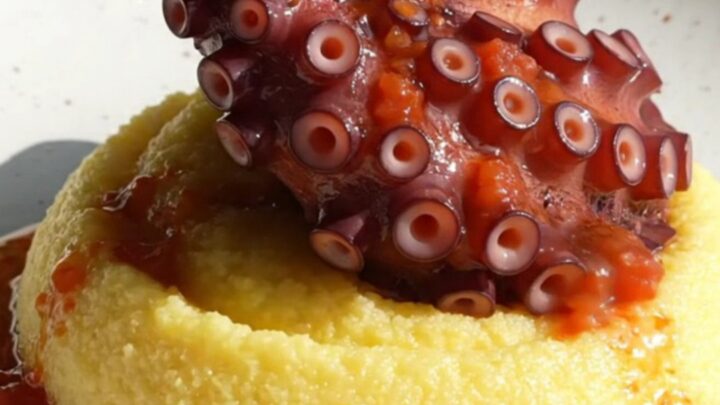
- Final glaze and serviceCheck that the octopus has reached an internal temperature of 145°F (63°C) and is fork-tender. Once cooked, let the octopus rest for 5 minutes before serving. Plate the tender octopus tentacles over warm polenta and spoon the reduced red wine and tomato jus over the top to serve.Look for The sauce should cling to the octopus, and the meat should be opaque and tender.Safe temperature 145°F (63°C) internal temperature (shellfish)Tip If the sauce is too thin, you can remove the octopus and continue cooking the sauce on high for 15 minutes with the lid off to reduce further.
The final result should be a deeply colored, glossy dish with tender, curled octopus tentacles. The sauce should have a thick, jammy consistency, and the shallots should be tender enough to melt in your mouth. Check the temperature one last time to ensure it is at 145°F (63°C) before serving.
Common mistakes
A common mistake is failing to ensure the octopus is fully submerged in the braising liquid, which can lead to uneven cooking and tough, leathery texture in the parts exposed to the air.
Another error is opening the lid too frequently, which allows heat to escape and disrupts the slow-cooking process. Finally, avoid using a wine that is too sweet, as the sauce will become cloying once reduced; always opt for a dry red wine to maintain the classic Mediterranean flavor profile.
How to tell it’s done
The octopus is done when it is completely fork-tender and reaches a safe internal temperature of 145°F (63°C). You should be able to insert a paring knife into the thickest part of the tentacle with zero resistance.
The calamari rings should be opaque and tender, not rubbery. If the octopus still feels resistant, continue cooking for another 30 minutes. The sauce should be glossy and thick enough to coat the back of a spoon, indicating it has reduced properly.
- Shellfish: 145°F (63°C) in the thickest part
Up next · Part 3 of 3
2 variations · storage & make-ahead · 3 answers · printable card
Tips, FAQ & printable recipe (Part 3)← Back to the ingredients (Part 1)